Parkinson’s Disease: An Incurable Neurological Disorder
Many people with Parkinson’s disease live for a long time. However, advances in medical science have made it possible to keep the symptoms of this incurable neurological disorder under control for years with various medications. Medication, physiotherapy, speech therapy and cognitive behavioural therapy can help manage some of the physical and psychological problems associated with the disease. As a result, many patients can lead relatively normal lives despite physical limitations. However, treatment does not produce satisfactory results for everyone.
Legendary boxer Muhammad Ali lived for another 32 years after being diagnosed with Parkinson’s disease. However, his physical condition deteriorated considerably during the final years of his life. In fact, the disease may begin much earlier, but patients often fail to recognise it at the initial stage because the symptoms are not clearly visible. Hollywood actor Michael J. Fox was diagnosed with Parkinson’s disease in 1991, at the age of just 29. In 2000, he established a foundation to support Parkinson’s disease treatment and research. Despite his illness, he continues to work in acting and raise public awareness. He regularly relies on physiotherapy and speech therapy to maintain his physical abilities.
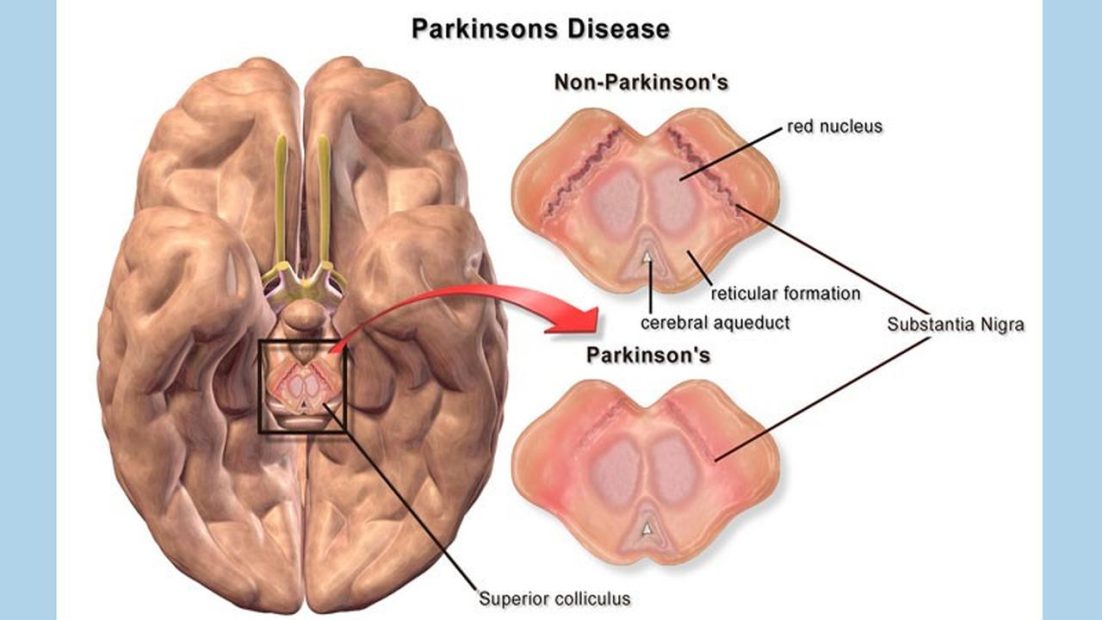
Parkinson’s disease is a progressive neurodegenerative disorder of the brain. In this disease, dopamine-producing nerve cells in the brain gradually deteriorate. As a result, control over muscle movement and normal bodily movements decreases. Symptoms usually appear very gradually at first. A slight tremor may be felt in one hand. Although the disease is commonly associated with tremors, symptoms may also include stiffness in the hands and legs, slowness of movement, reduced natural arm swing while walking, diminished facial expressions, a softer voice and slurred speech.
The initial symptoms vary from patient to patient. The disease usually begins on one side of the body and later spreads to the other side. However, symptoms generally remain more severe on the side initially affected. Tremors in the hand or fingers may be the first sign. In particular, the thumb and index finger may repeatedly move involuntarily.
The hands may also tremble on their own even when they are inactive or at rest. Gradually, the disease reduces the body’s ability to move normally. Walking becomes slower, with shorter steps and a tendency to drag the feet. Getting up from or sitting down on a bed or chair may also become difficult. Stiffness in different parts of the body can cause pain and discomfort. Reduced muscle movement interferes with daily activities. Difficulty maintaining an upright posture may cause the body to lean forward while walking. The risk of losing balance and falling also increases. Automatic movements such as blinking, smiling and swinging the arms naturally while walking may gradually decrease.
When speech problems develop, patients may speak softly or slur their words. They may sometimes try to speak rapidly or struggle to find the right words.
Another symptom is monotone speech. The voice lacks variation, and emotional expression in speech also diminishes. As Parkinson’s disease progresses, further complications may develop. The first is a decline in memory and thinking ability. These problems may occur in some patients at later stages of the disease. Some may also develop dementia. The second includes depression, fear, excessive anxiety, frequent mood swings and a loss of interest in activities. Medication and appropriate psychological treatment, under a doctor’s advice, may help manage these mental health symptoms.
The disease gradually causes various other problems. For instance, patients may have difficulty swallowing food because the movement of the muscles in the throat and mouth may also be impaired. Saliva may even accumulate in the mouth and spill over the lips. Insomnia is another major problem associated with Parkinson’s disease. Patients may wake up repeatedly during the night or wake up early in the morning. Even when they feel sleepy during the day, their sleep may not be deep enough. As a result, they remain physically and mentally exhausted. Doctors may recommend appropriate treatment depending on the cause of the sleep problems. Other symptoms include difficulty controlling urination, frequent urination and constipation, which may result from changes in bladder function and disruptions in the nervous system’s regulation of the digestive tract.
Now, let us turn to treatment. A cure for the disease has not yet been discovered. However, medication, physiotherapy, exercise and other treatments can help control symptoms and reduce problems with walking, movement of the limbs and tremors.
Levodopa is the principal medication used to treat Parkinson’s disease. It is converted into dopamine in the brain. Levodopa is generally administered with carbidopa to reduce the likelihood of the medication breaking down before reaching the brain. The primary objective of this treatment is to compensate for the dopamine deficiency and help patients maintain their mobility. However, after prolonged treatment, the duration of the medication’s effectiveness may decrease in some patients. Excessive doses may also cause side effects, such as involuntary movements of the hands and legs. In such cases, doctors adjust the dosage and timing of medication as necessary.
In 2015, the US Food and Drug Administration (FDA) approved an intestinal gel combining carbidopa and levodopa for patients with advanced Parkinson’s disease. It is known as Duopa. A tube is inserted into the small intestine through a minor surgical procedure involving the abdominal wall, allowing the medication to be delivered directly to a specific part of the small intestine. A portable pump administers the medication continuously over a prescribed period. This helps reduce fluctuations in medication levels in the blood and makes it easier to manage movement-related symptoms. However, the treatment is not suitable for everyone, and doctors make decisions based on the patient’s condition.
**Author: Journalist and columnist.**