Outrage, Despair, and Stunned Silence Over Bail for Bilkis Bano’s Rapists in India
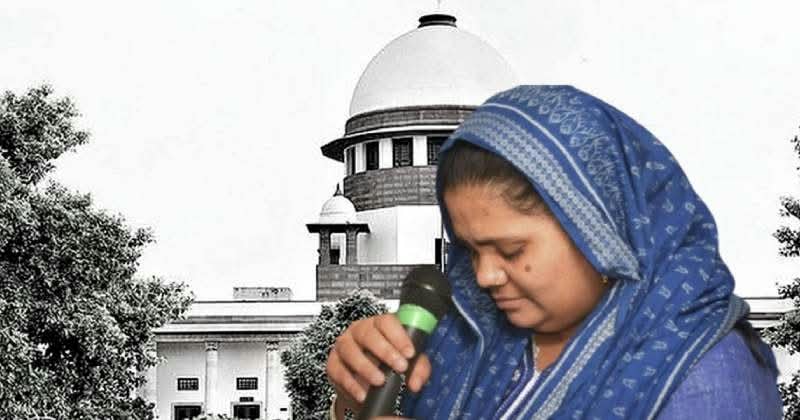
The Supreme Court of India has suspended the life sentences and granted bail to two convicts, Bipinchand Kanhaiyalal Joshi and Pradip Ramanlal Modhiya, in the high-profile Bilkis Bano gang-rape and murder case stemming from the 2002 Gujarat riots. Passed on October 28 by a bench comprising Justices M. M. Sundresh and P. B. Varale, the order was made public on the court’s website on November 15, citing the fact that both men had already served over 17 years in prison. Mr. Joshi and Mr. Modhiya belong to a group of 11 Hindu nationalist mob members sentenced to life imprisonment in 2011 for the brutal assault on Bilkis Bano and the massacre of 14 members of her family in Limkheda, Dahod district.
The horrific incident unfolded during the 2002 anti-Muslim communal riots when a Hindutva mob attacked Bilkis Bano’s village and set Muslim homes ablaze, forcing her and 16 relatives to flee for their lives. At the time, Ms. Bilkis was just 19 years old, pregnant with her second child, and carrying her three-year-old daughter, whom the rioters snatched from her arms and killed by smashing her head against the ground. The broader violence, which erupted across Gujarat on February 28, 2002, in retaliation for a train fire in Godhra that killed 59 people, mostly Hindu pilgrims returning from Ayodhya, lasted over two months and claimed approximately 2,000 lives, predominantly Muslims.
Bilkis Bano expressed profound anguish and disbelief upon learning through media reports that the two convicts had been granted bail without her knowledge or input. In an emotional public statement, she said, ‘Even as fresh tears of pain, shock, and disbelief roll down my face and words fail me, I am issuing this statement. I still cannot believe that once again, for the second time, the Supreme Court has passed such an order without calling me and without hearing a word from me.’ Her reaction underscores the deep trauma of a survivor who has spent more than two decades fighting an arduous legal battle to hold the perpetrators accountable for one of the worst episodes of communal violence in India.
This latest judicial development follows a controversial sequence of events regarding the convicts’ incarceration. In August 2022, coinciding with the 75th anniversary of India’s independence, the Gujarat government prematurely released all 11 convicts despite strong objections from the Central Bureau of Investigation, whose chief had warned against showing leniency for such a heinous, grave, and serious crime. Their release, accompanied by a celebratory hero’s welcome from Hindutva activists, sparked nationwide outrage and prompted legal challenges. Ultimately, in 2024, the Supreme Court intervened and quashed the Gujarat government’s remission order as illegal, sending all 11 men back to prison to serve out their life sentences.
Legal experts have strongly criticized the procedural exclusion of the survivor during the recent bail proceedings. Former judge Jyotsna Yagnik, who famously convicted 32 individuals, including former Gujarat cabinet minister Maya Kodnani, for the 2002 Naroda Patiya massacre, emphasized that Bilkis Bano had a fundamental right to be heard. Speaking to The Wire, Mr. Yagnik stated, ‘In the international context, the concept of victimology or victims’ rights is now so well-established that whichever authority handles criminal justice, it cannot be ignored. Even under the Bharatiya Nagarik Suraksha Sanhita (BNSS), the victim must be heard.’ While noting that the bail order is merely interim rather than a final verdict, she stressed that justice must be seen and felt by a survivor scarred for life.
Human rights defenders have similarly condemned the suspension of the sentences as a troubling reversal of judicial accountability. Activist Shabnam Hashmi described the Bilkis Bano case as one of the most horrific examples of planned communal and sexual violence, noting the immense courage required for a survivor to pursue justice against overwhelming odds. Reacting to the Supreme Court’s decision, Ms. Hashmi told The Wire, ‘In 2024, the Supreme Court itself quashed the illegal remission granted to the convicts. Now, the court has gone against its own ruling- this is extremely shocking.’ She warned that granting bail under these circumstances represents a major setback to the rule of law and undermines the hard-won progress made by survivors of mass violence.
Minority rights advocates have echoed these concerns, arguing that the judicial process cannot treat the survivor as an afterthought when deciding the fate of convicted perpetrators. Mujahid Nafees, convener of Gujarat’s Minority Coordination Committee, remarked, ‘We respect the authority and independence of the Supreme Court and fully acknowledge the legal rights every accused or convict holds under the law. However, the rights of the victim cannot disappear in this process.’ Mr. Nafees insisted that Bilkis Bano cannot be treated as a silent spectator after enduring unimaginable violence and fighting for over twenty years, asserting that she deserves the legal right to be notified of release proceedings and to voice concerns regarding her personal safety and dignity.
Among survivors and witnesses of the 2002 carnage, the news has reopened deep emotional scars that have never fully healed. Junaid Pathan, who was just 12 years old during the riots, recalled how Bilkis Bano’s relentless pursuit of justice had once offered a rare sense of solace to countless victims who suffered in silence. Reflecting on the bail order, Mr. Pathan said, ‘Bilkis was one of countless women who were assaulted in this manner. Seeing her step forward to bring the perpetrators to justice gave other riot victims some solace; but now, it feels like all our old wounds are burning afresh.’ Another anonymous eyewitness lamented that the Muslim community has never forgotten the horrors of 2002, adding bitterly that the authorities are mocking her pain.
The 2002 riots remain a deeply contentious chapter in modern Indian history, particularly concerning the accountability of the state administration led by then-Chief Minister Narendra Modi, who faced severe domestic and international criticism for failing to halt the days-long bloodshed. Although a Supreme Court-appointed Special Investigation Team reported in 2012 that it found no prosecutable evidence of a larger state-sponsored conspiracy against Modi and 63 officials, a finding upheld by the Supreme Court in June 2022 when it dismissed a final appeal by Zakia Jafr, the struggle for individual justice in cases like Bilkis Bano’s continues to test the integrity and compassion of India’s legal system.