November 21: An Enduring Chapter in the History of Bangladesh’s Liberation War
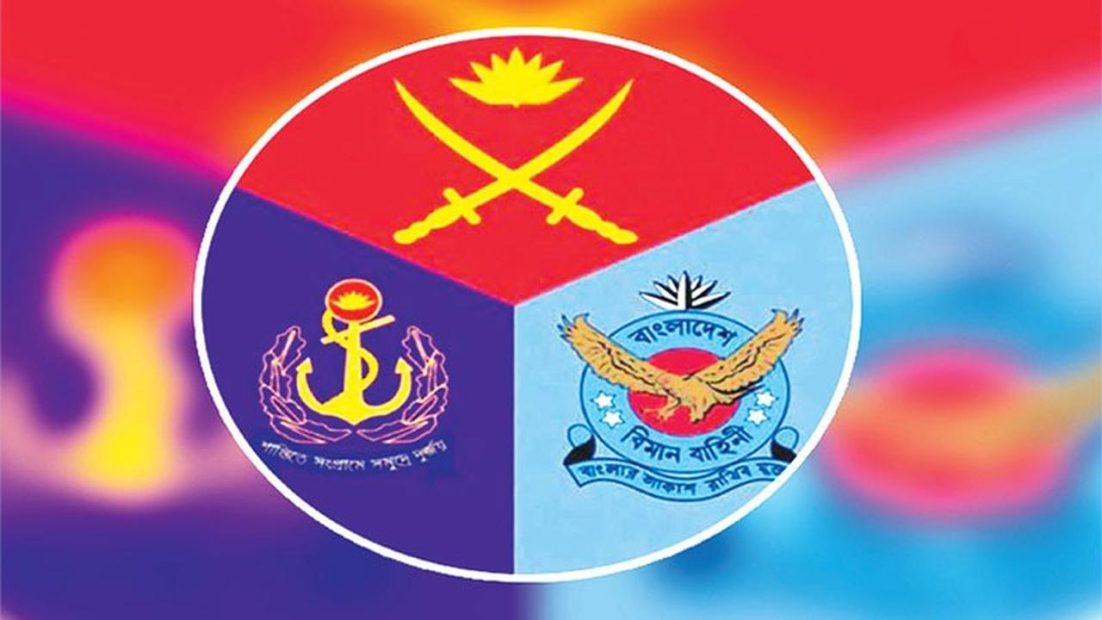
Bangladesh observes Armed Forces Day every year on November 21. The day commemorates the beginning of coordinated operations by the country’s Army, Navy and Air Force against the Pakistani occupation forces in 1971. By then, freedom fighters had been fighting across different parts of the country for months. They had attacked Pakistani positions in some areas and disrupted communication and supply lines in others. In the final weeks of November, pressure from these scattered battlefronts came together under a broader military objective. This is the significance of November 21. The day reminds us how a people’s demand for independence moved towards victory through political leadership, organised military resistance and public participation.
The background to this struggle lay in the 1970 general election, in which the people delivered a clear mandate, and the Pakistani ruling authorities’ refusal to transfer power to the elected representatives. On the night of March 25, 1971, the Pakistani military launched Operation Searchlight. Attacks were carried out at University of Dhaka, Rajarbagh Police Lines, Pilkhana and other locations in the capital. The crackdown and killings soon spread to other parts of the country.
Members of the East Bengal Regiment, East Pakistan Rifles and police resisted the Pakistani forces in different areas. Students, workers, farmers and people from various professions joined them. Much of the initial resistance was organised locally. From the beginning, people had to find answers to several urgent questions: where to fight, how to collect weapons and ammunition, where to take the wounded and how to maintain communication between different regions.
The meeting of military officers at Telipara Tea Garden in Habiganj on April 4 was an important step towards coordination. The Government of Bangladesh was formed on April 10 and took oath on April 17 at Baidyanathtala in Meherpur, later renamed Mujibnagar. Under the leadership of Prime Minister Tajuddin Ahmad, the government organised the war, sought international support and worked to assist refugees.
MAG Osmani was appointed Commander-in-Chief of the Bangladesh Forces. The country was divided into 11 sectors to conduct the war. Three regular military brigades were formed: Z Force, K Force and S Force. They were led by Ziaur Rahman, Khaled Mosharraf and KM Shafiullah, respectively. This structure helped bring military operations in different regions under a national strategy.
The roles of regular forces and guerrilla fighters in the land war were closely connected. Regular units launched operations against Pakistani bases and defensive positions, while guerrilla groups attacked roads, railways, bridges and communication networks inside the country. As a result, the occupation forces had to spread their manpower to guard their bases and supply routes.
Local people played an important role by showing fighters safe routes, providing shelter and food, sharing information about enemy positions and helping evacuate the wounded. Their knowledge of rivers, canals and rural paths also helped the freedom fighters move through different areas. Much of this contribution was not recorded in military reports. Yet the success of an operation, the safe arrival of a team at its target or the evacuation of a wounded fighter often depended on such support.
The naval operations during the Liberation War demonstrated how Bangladesh’s geography could be used strategically. Sea ports and inland waterways were important for the Pakistani forces to transport supplies. In mid-August, during Operation Jackpot, Bangladeshi naval commandos launched coordinated attacks on Chittagong, Mongla, Chandpur and Narayanganj. They attached mines to ships, disrupting naval transport and supply operations.
Later, two vessels named Padma and Palash also took part in the war. On December 10, the vessels came under an air attack near Khulna. Ruhul Amin, who was in charge of the engine room of Mr. Palash, tried to save the vessel but was killed. He was posthumously awarded the Bir Sreshtho title. The naval commandos demonstrated that even with limited equipment, careful target selection, training and coordination could produce a major military impact.
Bangladesh’s Air Force also began its journey with only a few aircraft. On September 28, 1971, the Kilo Flight was formed at Dimapur in India’s Nagaland. India provided a DC-3 transport aircraft, an Otter aircraft and an Alouette III helicopter. Pilots and technical personnel prepared for flights, maintenance and operations with limited resources.
In early December, Kilo Flight attacked fuel installations at Patenga in Chittagong and Godnail in Narayanganj. This timeline is important: November 21 commemorates the coordinated war efforts of the three services, while Kilo Flight’s first attacks took place in early December, when Bangladesh’s own air operational capabilities were deployed directly in combat.
The military history of the Liberation War is inseparable from the experiences of civilians. According to the United Nations refugee agency UNHCR, around 10 million people took shelter in India in 1971. Many families were also forced to leave their homes and flee to safer places within the country.
Despite the crisis, people sheltered freedom fighters, treated the wounded and passed on vital information. Women took part directly in combat, medical services and organisational activities. The experiences of women who suffered sexual violence at the hands of Pakistani forces and their collaborators are also an inseparable part of this history. Properly recognising their experiences and dignity helps us understand the enormous human cost of the war and the lasting scars many people carried even after victory.
India’s role is important to understanding the final phase of the Liberation War. India provided shelter to refugees and supported freedom fighters with training, weapons and supplies. In the final weeks of November, the direct involvement of Indian forces in border areas increased.
On December 3, Pakistan attacked Indian airbases, triggering a full-scale war between the two countries. The joint forces of Bangladesh and India then advanced towards Dhaka from different directions. The prolonged resistance of freedom fighters, information provided by local people and earlier attacks on Pakistani communication networks helped this advance.
On December 16, Lieutenant General AAK Niazi, commander of the Pakistani forces in the eastern region, surrendered to Lieutenant General Jagjit Singh Aurora, commander of the joint forces, at the Racecourse Ground in Dhaka. The nine-month struggle of the people of Bangladesh and the joint military operations in the final phase culminated in victory.
After independence, the three forces that had emerged during the war had to be transformed into permanent defence institutions of a sovereign state. Alongside training, leadership development and equipment maintenance, they took on new responsibilities. The Armed Forces assist the civilian administration in rescue operations, relief distribution and emergency medical services during cyclones and floods.
Bangladesh began participating in United Nations peacekeeping operations in 1988. Since then, it has consistently ranked among the leading contributing countries. Whether responding to disasters at home or serving in peacekeeping missions abroad, a major test of the Armed Forces’ professional competence is their ability to work with institutions carrying out different responsibilities and earn the trust of people in danger.
The experience of 1971 remains relevant to today’s defence planning. At that time, control over roads, railways and waterways influenced the course of the war. Today, electricity, telecommunications, port operations and digital networks are also essential for maintaining military and civilian activities during a crisis.
Therefore, investment is needed not only in acquiring new equipment but also in joint training for the three services, reliable communication systems, maintenance capabilities and coordination with civilian agencies. An exercise could test how quickly instructions can be delivered through alternative channels if major communication systems fail, who is responsible for evacuating the wounded and how reliable information can be shared with the public. The results of such exercises can help identify which weaknesses need to be addressed first.
Paying tribute at Shikha Anirban on Armed Forces Day is an important part of the nation’s remembrance. To deepen this remembrance, it is necessary to preserve the war diaries of different sectors, the experiences of naval commandos, the testimonies of Kilo Flight’s technical personnel and the memories of people living in border villages.
These records can help younger generations understand how wartime decisions were made, the limitations under which operations were conducted and how ordinary people became part of the struggle. Listening to the experiences of wounded freedom fighters and the families of martyrs can also highlight the human significance of the day.
Carrying forward the legacy of November 21 means fulfilling the responsibility towards an independent Bangladesh for which people risked their lives in 1971. For the Armed Forces, this responsibility is reflected in professional competence, loyalty to the Constitution, public trust and preparedness to defend the country’s sovereignty.
During the Liberation War, the relationship between the military forces and the people was built around a common goal. Preserving the dignity of that relationship requires remembering not only the sacrifice of the martyrs but also the people whose shelter, information, medical assistance and courage helped the freedom fighters continue their struggle.
Only by recognising these collective contributions can we fully understand the historical connection between November 21 and the victory achieved on December 16.