Awami League’s Continued Terrorism: Is the Party Set to Be Banned Through Constitutional Amendments?
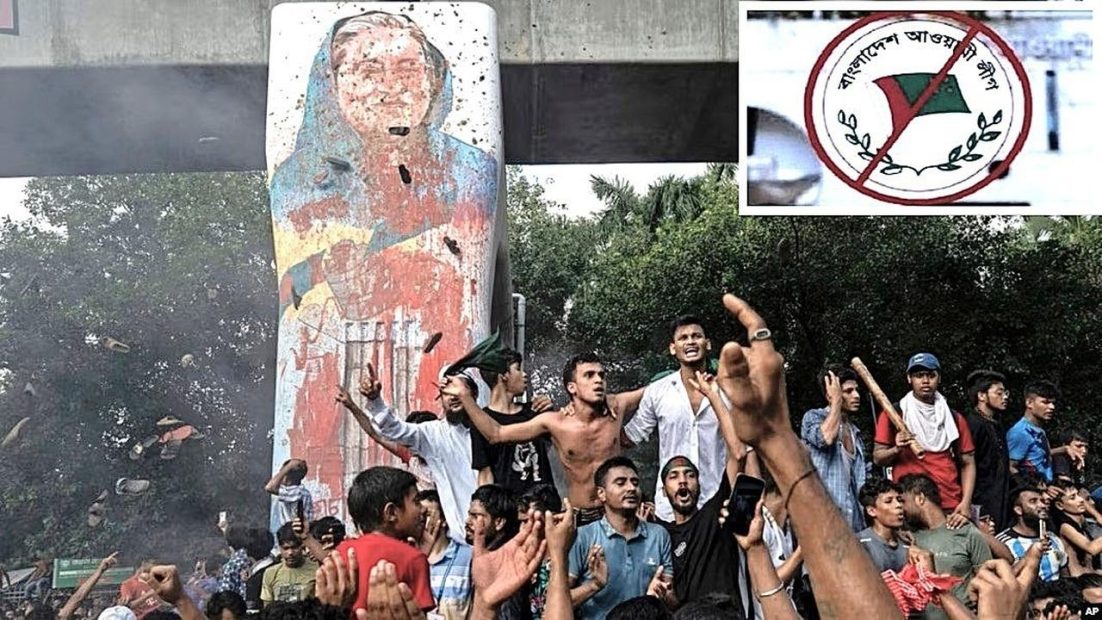
The demand to permanently and constitutionally ban the Bangladesh Awami League as a “terrorist organisation” over allegations of genocide and crimes against humanity during the July-August student-public uprising is now widely discussed in the country’s political and legal circles.
In May 2025, the interim government banned all activities of the Awami League through an ordinance. In April 2026, the 13th Parliament passed the Anti-Terrorism (Amendment) Bill. The party’s activities remain banned, and its registration with the Election Commission has been suspended. However, political parties, non-political organisations, constitutional experts and lawyers are presenting strong arguments for permanently banning the party under the Constitution and existing laws.
Senior Supreme Court lawyers and constitutional experts say suspending the party’s activities through an executive order is not enough. They argue that the Awami League must be permanently declared a “terrorist organisation” under Article 38 of the Constitution and through the judicial process of the International Crimes Tribunal to prevent its return through legal loopholes.
Continued Awami Terrorism
The Awami League’s alleged violence is not limited to the killing of around 1,450 students and members of the public during the July 2024 movement. Around 14,370 people were also blinded, disabled or injured.
From November 7 to 19, Awami League terrorists allegedly threw cocktails at 78 places and set fire to 78 vehicles. They also carried out sabotage in 23 districts and set fire to two trains and railway lines.
On November 17, the Tongipara Police Station in Gopalganj was set on fire. On November 19, the Muksudpur police outpost was attacked and burned. Several vehicles were also set on fire.
On the same day, the ancestral home of former chief adviser Dr Muhammad Yunus in Chattogram’s Panchlaish area was set on fire. In addition, 37 branches of Grameen Bank, founded by Dr Yunus, were set on fire.
On November 18 and 19, hundreds of trees were cut down in Ghonapara, Gopalganj, and along the Dhaka-Khulna highway and regional roads, disrupting communication.
The banned party’s activists marched with local weapons, including sticks, machetes, spears and rods. At least four people were killed in at least 18 districts, including the capital. One was a bus helper, while the other three were BNP activists. Raju Molla was killed in Bhanga, Faridpur, and a Krishak Dal and JASAS leader was killed in Kalia, Narail. On November 18, Police Inspector Abu Alam was seriously injured after being stabbed in Gopalganj.
On November 21, the banned Awami League attacked a BNP peace march in Pabna. To prevent the party’s alleged terrorist activities, law enforcement agencies have increased raids and special operations across the country. From November 1 to 17, 528 people were arrested on suspicion of involvement in violence. During operations on November 18 and 19, police arrested more than 100 Awami League leaders and activists, including former Education Minister Nurul Islam Nahid and former state minister Mohammad Nazrul Islam Hiru.
Growing Demand for a Permanent Ban
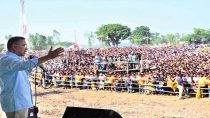
The recent violence has strengthened demands from political and non-political groups to permanently ban the Awami League. On November 19, Prime Minister and BNP Chairman Tarique Rahman described the Awami League as a “terrorist group” while warning about its activities at an event in Lalmonirhat.
Earlier, BNP Acting Secretary General Ruhul Kabir Rizvi demanded strong action against the party’s alleged sabotage. Jamaat-e-Islami said the Awami League must accept responsibility for its past crimes and face trial. The National Citizen Party (NCP) also demanded that the party be declared a “terrorist organisation”. Gono Odhikar Parishad called for banning it under the Anti-Terrorism Act, 2009. A Supreme Court lawyer also sent a legal notice to the government seeking a permanent ban.
Hefazat-e-Islam Bangladesh said no one has the right to decide the fate of the “genocidal and fallen fascist Awami League” against the wishes of the victims, families of martyrs and injured people.
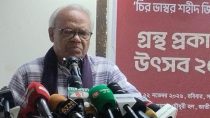
In a statement on Saturday, its Amir Allama Muhibbullah Babunagari and Secretary General Allah Sajedur Rahman said the banned Awami League is no longer a political party. They said its leaders and activists fled to India after the July uprising and proved themselves to be agents of hegemony. They alleged that, with support from Delhi, the defeated Awami fascist forces were again carrying out arson and terrorist activities to destabilise Bangladesh. “We will turn their dream of creating another One-Eleven into a nightmare, InshaAllah,” they said. They also said the martyrs and injured people of the Pilkhana, Shapla, July and anti-Modi movements are still waiting for justice. They warned that Bangladesh’s independence and sovereignty would remain at risk unless Awami terrorism and fascism were removed. They demanded a strong tribunal trial and a permanent ban on the party for its alleged responsibility for genocide.
Mahfuz Alam’s Statement
Former interim government adviser and Alternatives organiser Mahfuz Alam said Sheikh Hasina’s fate should be extradition and surrender, not return. He said reconciliation would be impossible unless the Awami League accepted the truth about 17 years of fascism, faced trial and announced an end to terrorism.
In a verified Facebook post on Friday, Mahfuz said he had raised the issue of reconciliation on August 21, 2024, to avoid a possible civil war. He added, “Perhaps I was the first among the organisers of July to say this. But there is terrorism in the core of the League, with no regret or self-review.”
Legal Grounds for a Ban
Analysts point to Article 38 of the Constitution, which gives citizens the right to form associations and unions, subject to reasonable restrictions imposed by law in the interest of public order and morality. According to legal experts, when a political party uses state power to carry out killings, enforced disappearances and violence against unarmed citizens, it goes against public order and morality.
Under clauses (c) and (d) of Article 38, the state can ban an organisation through law if it threatens national security, sovereignty or public order or is involved in terrorist activities.
Under the Anti-Terrorism Act, 2009, creating public fear and killing or seriously injuring people to threaten national unity, public safety or sovereignty are considered terrorist acts. Lawyers argue that the alleged violence by the Awami League and its affiliated organisations, especially the Chhatra League and Jubo League, meets the conditions of terrorist activities under Section 6. Section 18 allows the government to list and ban an organisation if there are reasonable grounds.
International Crimes Tribunal and Current Legal Status
The International Crimes (Tribunals) Act, 1973 was amended to allow the trial and punishment of organisations or political parties for genocide and crimes against humanity. Under Article 47(3) of the Constitution, this special law cannot be challenged under the basic rights provisions. Legal experts refer to the Nuremberg Trials, where the Nazi Party was declared a criminal organisation, as an established principle of international law supporting the possibility of a similar trial.
Under Article 90J of the Representation of the People Order, 1972, the Election Commission can cancel a political party’s registration if its constitution or activities conflict with the Constitution or it is involved in terrorist activities.
The interim government banned the Chhatra League as a “terrorist organisation” on August 23, 2024. On May 10, 2025, it banned all Awami League activities under the Anti-Terrorism Act. On May 12, the Election Commission suspended the party’s registration. Under the amended International Crimes Tribunals Act, the tribunal can ban or suspend an organisation’s activities, cancel or suspend its registration or licence and order the seizure of its property if its involvement in a crime is proved.
On October 29, an observation in an International Crimes Tribunal judgment identified the Awami League, Jubo League, Chhatra League and the 14-party alliance as “criminal organisations” in connection with crimes during the July 2024 uprising.
Parliament passed a related bill in April 2026, keeping the ban in force until the trials of the party and its leaders at the tribunal are completed. Earlier, on October 2, 2024, a complaint was filed with the International Crimes Tribunal against the Awami League and its 14-party alliance over allegations of genocide and crimes against humanity. The complaint also named the Workers Party, Jasad (Inu), Samyabadi Dal, Tarikat Federation, Gano Tantri Party and NAP.
International Crimes Tribunal Chief Prosecutor Mohammad Aminul Islam told Inqilab on Saturday that State Minister for Primary and Mass Education Bobby Hajjaj had filed an application seeking the party’s trial. He said the complaint is now at the investigation stage.