Unregulated Roads and Highways: 45,252 Killed in Road Accidents From 2020 to October 2026
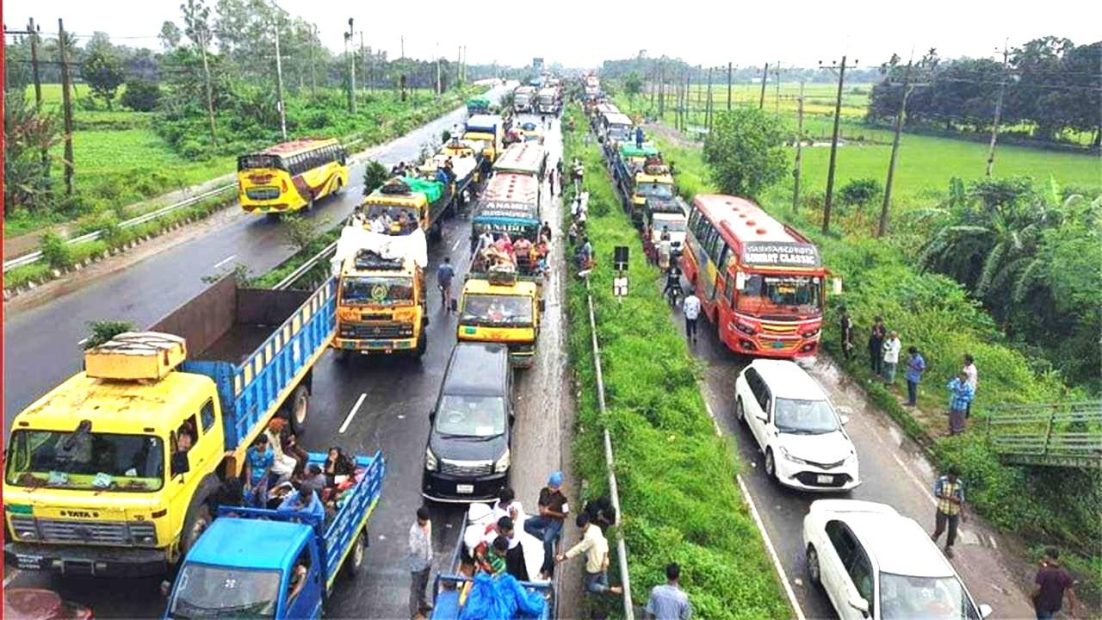
Reckless driving, dangerous overtaking, violation of traffic laws, unfit vehicles and drivers’ lack of skills are contributing to a growing number of road deaths across the country. The government has taken several initiatives to reduce road accidents and restore discipline in traffic movement. These include reforming existing laws and introducing new legislation, training thousands of drivers, raising awareness among passengers and the general public through campaigns and leaflet distribution, installing clear warning signs at road bends, and strengthening law enforcement on roads and highways.
Dr Mohammad Ziaul Haque, Secretary of the Road Transport and Highways Division, said the government was working in a coordinated manner to establish discipline on roads and reduce accidents. To this end, it is reforming existing laws, introducing new legislation, providing training to improve drivers’ skills, raising public awareness, installing warning signs at risky road bends and strengthening law enforcement on highways. The government is working to create a safe and disciplined road environment through stricter action against violations and greater public awareness. However, government initiatives alone cannot ensure road safety. Responsible behaviour is required from drivers, transport owners, passengers and pedestrians alike.
According to the Road Safety Foundation, at least 45,252 people died in road accidents in Bangladesh between 2020 and October 2026. From 2020 to 2025, a total of 40,605 people were killed and 67,364 injured in 38,357 accidents. Meanwhile, 4,647 people died in 5,093 accidents between January and October 2026.
Around 300 families were completely wiped out in road accidents during the period from 2020 to October 2026. The fatalities involved motorcycles, auto-rickshaws, microbuses, private cars, buses and pickup trucks. The annual statistics for 2025 also reveal an alarming road safety situation. A total of 7,359 people were killed and 16,476 injured in 7,584 road accidents across the country that year. Motorcycle accidents, pedestrian safety and the uncontrolled movement of public transport have emerged as major concerns.
The Road Safety Foundation has identified excessive speed and reckless driving as two of the leading causes of accidents. Other contributing factors include defective vehicles, poor road infrastructure, drivers’ lack of skills, excessive working hours, the movement of slow-moving vehicles on highways and frequent violations of traffic laws.
Saidur Rahman, Executive Director of the Road Safety Foundation, said road accidents were increasingly claiming multiple lives from the same family, in addition to causing widespread fatalities. The main reasons are violations of traffic laws, excessive speed and reckless driving. Regular and impartial enforcement of traffic laws is essential to reduce accidents. Driver training, regulation of working hours and restoring discipline in road management are also necessary.
The Road Transport Act, which came into effect on November 1, 2019, defines the responsibilities of drivers, transport owners, passengers and pedestrians and provides for various penalties for violations. However, the government has taken steps to reform the existing law and introduce new legislation.
The second initiative focuses on improving drivers’ skills. The Bangladesh Road Transport Authority (BRTA) has started a programme to train several thousand drivers. The training places emphasis on traffic laws, driving at safe speeds, dealing with dangerous situations and responsible behaviour on roads.
Plans have also been made to raise awareness among passengers and the general public through campaigns and leaflet distribution. Road safety is not the responsibility of drivers alone. Passengers and pedestrians must also follow traffic rules. The initiatives aim to raise awareness about getting on and off vehicles at designated stops, avoiding boarding or leaving moving vehicles, and crossing roads safely.
Another initiative involves installing clearer warning signs at road bends and accident-prone locations. Many roads across the country lack adequate warning signs at bends, intersections and other risky points, or the signs are not clearly visible. As a result, drivers often fail to take precautions in advance. Clear directional and warning signs at these locations would help drivers control their speed and take necessary precautions in time.
The government is also placing importance on strengthening law enforcement on roads and highways. Regular monitoring and legal action are needed against speeding, dangerous overtaking, illegal parking, the operation of unfit vehicles and violations of traffic signals. Patrols in accident-prone areas, checks of vehicle documents and stronger action against those who violate traffic laws are particularly important.
Mohammad Habibur Rahman, Chairman of the BRTA and an additional secretary, said ensuring that drivers hold valid licences and that vehicles have valid fitness certificates and registration was crucial to establishing discipline on roads. The BRTA is carrying out regular activities in this regard. However, coordinated efforts by all relevant agencies are needed to develop a culture of obeying traffic laws. Drivers, owners and passengers must all be aware of their respective responsibilities. He also stressed the need to take action against lawbreakers under existing legislation.
Dr Mohammad Shamsul Haque, a professor in the Department of Civil Engineering at Bangladesh University of Engineering and Technology (BUET), said many roads lacked adequate footpaths, safe pedestrian crossings and effective traffic signals. Reducing accidents requires the development of safe road infrastructure alongside coordinated efforts in law enforcement and traffic management.
He said excessive working hours, inadequate rest for drivers and pressure from transport owners to complete more trips within a fixed period also increased the risk of accidents. Therefore, training drivers alone would not be enough. Transport owners must also ensure safe working conditions. He further stressed the need for effective vehicle fitness inspections to identify mechanical defects and measures to regulate the movement of slow-moving vehicles on highways.