Cyclone Akvan’s Impact: Continuous Rain Causes Heavy Damage to Paddy and Vegetable Crops
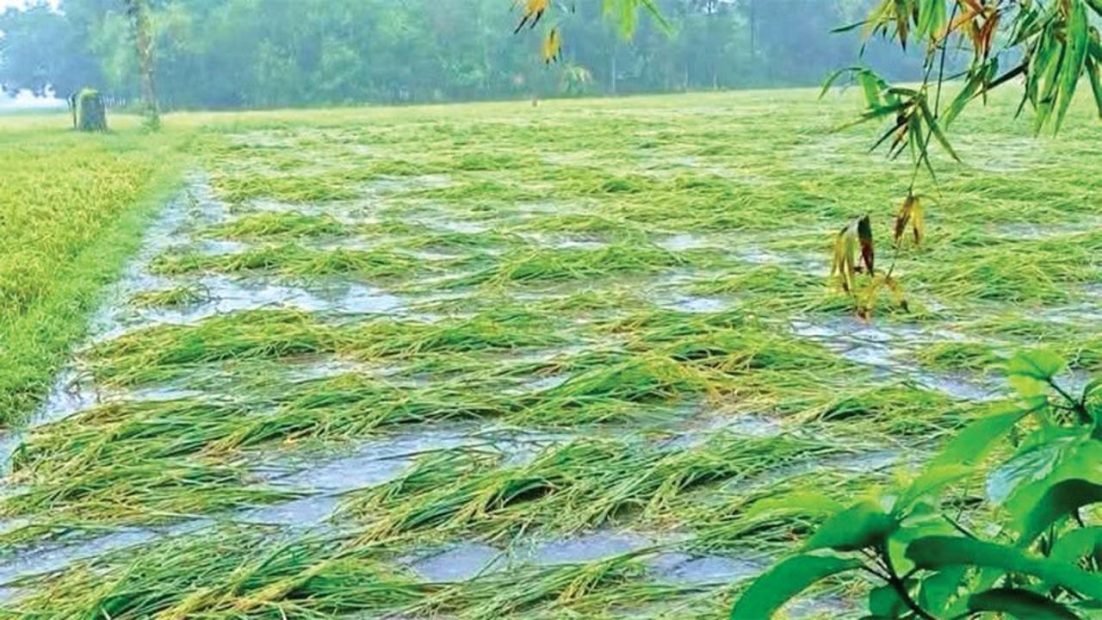
Farmers in different parts of the country are facing serious problems due to two days of continuous rain caused by Cyclone Akvan. Ripe and harvested Aman paddy, winter vegetables, onions and seedbeds have been affected. In some areas, paddy fields have gone under water, while strong winds have caused standing crops to fall. The rain has also caused losses for brick kiln owners. Many raw bricks have been damaged, while brick drying, burning and transportation have been disrupted. Details of the damage based on reports from our correspondents follow.
Kushtia: A special correspondent reports that farmers in Kushtia were busy harvesting a bumper Aman crop. However, two days of continuous light rain have caused water to collect in the fields, putting both harvested and unharvested paddy at risk.
Higher prices of fertiliser, pesticides, diesel and labour have raised the cultivation cost to Tk 10,000-12,000 per bigha. Farmers are getting 20-24 maunds of paddy per bigha. Mohammad Abdul Quddus, a farmer from Rifayetpur in Daulatpur upazila, said the harvest was good this year, but rising production costs and sudden rain had increased his worries.
Farmers demanded control over agricultural input prices and fair prices for paddy. They warned that high production costs could reduce interest in paddy cultivation and increase dependence on imported rice. Mohammad Wahiduzzaman, Additional Deputy Director of the Department of Agricultural Extension in Kushtia, said Aman paddy had been cultivated on 88,895 hectares this year, with an expected rice production of 3.64 metric tonnes per hectare.
Khulna: The Khulna Bureau reports that two days of heavy rain and strong winds have disrupted normal life in the southwestern coastal region. People living near vulnerable embankments fear that they may break and allow water to enter their homes. Day labourers, van drivers, construction workers, fishermen and low-income people are also suffering as they cannot go to work.
Farmers are worried about ripe and harvested Aman paddy, winter vegetables, potatoes and seedbeds. Waterlogging has damaged some fields, while harvested paddy has become wet. Continued rain may also damage potatoes, radishes, cauliflower, cabbage, eggplants and chillies.
Wet paddy cannot be dried properly due to a lack of sunshine, raising the risk of germination and rotting. Fish farmers are also worried about fish escaping from enclosures and damage to their banks.
Mohammad Nazrul Islam, Deputy Director of the Department of Agricultural Extension in Khulna, advised farmers to harvest Aman paddy quickly when 80 per cent of it becomes ripe and store it in higher, safe places. He also advised them to remove excess water from vegetable and Rabi crop fields and avoid artificial irrigation and fertiliser application for now.
Faridpur, Rajbari, Madaripur and Gopalganj: A Faridpur correspondent reports that at least 40,000 farmers in Faridpur are facing losses as rainwater has flooded ripe Aman paddy and onion fields.
In the low-lying areas of Charbhadrasan, Saltha and Nagarkanda, water has collected in early-planted onion fields and seedbeds for transplanted onions. Farmers fear that the seedlings will rot. Harvested Aman paddy has also become wet, while standing crops have fallen.
In Rajbari’s Baliakandi upazila, harvested Aman paddy is floating in rainwater. According to preliminary information from the agriculture office, early-planted onions cover around 5,000 hectares in the district, while seedbeds for transplanted onions were prepared on about 35,932 hectares. Continuous rain has submerged several hectares of seedbeds and damaged ripe paddy.
In Madaripur and Gopalganj, rain has disrupted harvesting and threshing. Wet paddy faces the risk of turning black and germinating. Wet straw may also rot, creating a shortage of cattle feed.
Farmers fear that damaged onion seedbeds will force them to spend an additional Tk 15,000-20,000 per bigha to prepare new seedlings. This may delay onion cultivation by at least 15 days.
Mohammad Enamul Haque, Deputy Director of the Department of Agricultural Extension in Rajbari, and Baliakandi Upazila Agriculture Officer Ratan Kumar Ghosh said agricultural officers were visiting fields to collect damage information.
Bhola: A district correspondent reports that intermittent rain and strong winds have made the Meghna and other coastal rivers rough. Workers are suffering because of the bad weather, while farmers are worried about watermelon seedbeds and ripe Aman paddy.
Shariful Islam, a farmer from Bairagi Char, said he feared heavy losses involving seedbeds worth lakhs of taka if the rain continued.
Kamrul Islam, Agriculture Extension Officer of Bhola Sadar Upazila, said the rain so far had benefited crops. However, continued rainfall could seriously damage watermelons, seedbeds and ripe Aman paddy.
Manikganj: A district correspondent reports that continuous rain has damaged large quantities of raw bricks kept for drying at different brick kilns.
Owners claimed that each kiln had suffered losses of around Tk 25-30 lakh. The disruption has also raised uncertainty over production targets for the current season.
Mohammad Lablu Mia, a brick kiln owner in Manikganj Sadar, said the rain had caused major financial losses. According to government records, Manikganj has 125 brick kilns, around 100 of which have started production this season.
Chauddagram, Cumilla: A correspondent reports that Aman farmers in Chauddagram are struggling to harvest ripe paddy and bring previously harvested crops home. According to the upazila agriculture office, Aman paddy has been cultivated on 18,190 hectares this season. Heavy rain over three days has caused paddy plants on 36 hectares to fall.
Water and mud in the fields have made it difficult to dry harvested paddy and take it home. Zubayer Ahmed, Agriculture Officer of Chauddagram Upazila, said some ripe Aman paddy had fallen due to the rain. He hoped losses would decrease if the rain stopped. Agricultural officers were advising farmers on how to protect their crops.
Rajshahi: A correspondent reports that rain has raised fears of serious agricultural losses in Paba, Godagari, Tanore, Mohanpur and Bagmara upazilas. Harvested Aman paddy has become wet, while water has collected in winter vegetable fields. According to the Department of Agricultural Extension, Aman paddy has been cultivated on around 83,500 hectares in the district this season. Around 40-45 per cent of the crop has been harvested. The district was expecting to produce around 250,000 metric tonnes of rice.
Shahana Parvin Laboni, Agriculture Officer of Durgapur Upazila, said rain caused by Cyclone Akvan could damage harvested paddy and winter vegetables in low-lying areas. She advised farmers to remove standing water quickly and move wet paddy to higher, dry places whenever the rain stops.
Mirsarai, Chattogram: A correspondent reports that continuous rain since Thursday night has made farmers in Mirsarai worried about their ripe Aman paddy. Harvested paddy left in the fields has also become wet. Aman paddy has been cultivated on 19,870 hectares across 16 unions and two municipalities in the upazila. Around 5 per cent of the crop has been harvested so far. Ichakhali Union has the largest cultivation area, covering 3,140 hectares.
Shamsul Haque, a farmer from Saherkhali Union, said rain had damaged paddy harvested by hired workers and left in the field. He was worried about drying and storing it. Pratap Chandra Roy, Agriculture Officer of Mirsarai Upazila, said there was no immediate risk of major crop damage. However, continued rain for another one or two days could damage vegetables and cause ripe paddy plants to fall.
Abhaynagar, Jashore: A correspondent reports that two days of continuous rain have affected farmers and nine brick kilns in Abhaynagar. Water has collected in vegetable fields, raising fears of damage to plants. Farmers are also struggling to harvest ripe Aman paddy.
Shawkat Hossain, a vegetable farmer from Gazipur village, said water had collected around the roots of his plants. He feared heavy losses if the rain continued. Raw bricks have also been damaged, while drying, burning and transportation activities have been disrupted. The losses at the nine kilns are estimated at several lakh taka.
Mst. Lovely Khatun, Agriculture Officer of Abhaynagar Upazila, advised farmers to remove excess water quickly to prevent the roots of vegetable plants from rotting.
Kalaroa, Satkhira: A correspondent reports that Cyclone Akvan has caused heavy damage to Aman paddy and winter vegetables in Kalaroa. Farmers who had hoped to earn good profits from their crops are now facing financial losses.
A visit to Deyara, Rayta Alaipur and Jhapaghat Chandannagar showed widespread damage.
Abdur Rashid, a farmer from Alaipur village, said around two and a half acres of his paddy fields were under water. Some grains had already started germinating, making them unsuitable for sale.
Mr. Jamal, a farmer from Jhapaghat village, said his tomato and cauliflower seedlings had gone under water. He feared losing his entire investment of Tk 100,000.
HM Enamul Islam, Agriculture Officer of Kalaroa Upazila, said water had collected in Aman paddy and vegetable fields. He said losses could be reduced if the water drained away quickly.
Aman paddy has been cultivated on 11,938 hectares in the upazila, and harvesting has been completed on 8,715 hectares, or around 70 per cent. Paddy on 315 hectares is partly under water, while harvested paddy from 13 hectares is fully submerged. Winter vegetables have been cultivated on around 2,000 hectares in the upazila.