US Approves Export of 900,000 AI Chips to Chinese Companies Linked to Military
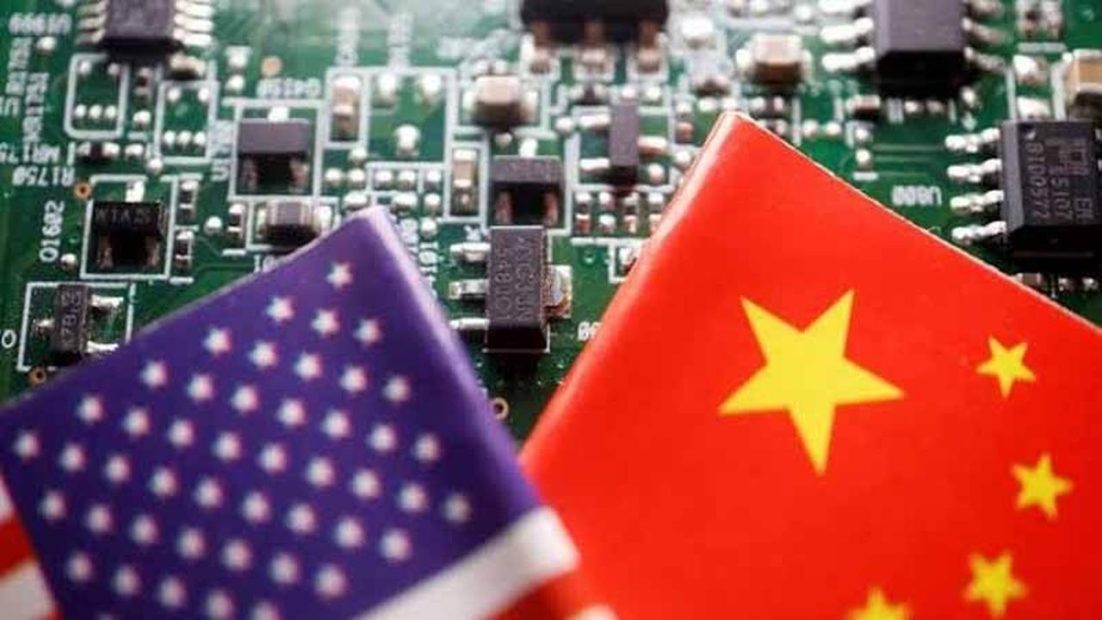
The administration of US President Donald Trump has approved the export of nearly 900,000 advanced artificial intelligence (AI) chips to various Chinese companies over a six-month period. Manufactured by US tech giants Nvidia and AMD, the approved shipments include firms identified as having ties to the Chinese military.
On Thursday, November 19, the US House Committee on Foreign Affairs released documents revealing that between December 2025 and May 11, 2026, the US Department of Commerce’s Bureau of Industry and Security (BIS) greenlit 21 applications to export, re-export, or transfer 879,868 chips.
The approved allocations feature major Chinese technology firms: 75,000 chips for Alibaba, 150,000 for Tencent, 43,000 for Baidu, and 4,000 for automaker BYD. All of these organizations appear on the US Department of Defense’s list of Chinese military-linked companies. During the same six-month window, companies had applied to ship a total of 3,444,160 chips to China. The approved items include high-performance models like Nvidia’s H200 and AMD’s equivalent MI325X. However, it remains unclear how many chips have actually reached China, as the committee’s records categorize the approved shipments as “approved, but not shipped.” House Foreign Affairs Committee Chairman Brian Mast published the export license data using powers granted under the Export Control Reform Act.
The revelation comes amid heightened scrutiny in Washington over China’s growing technological capabilities and potential national security risks. Additional controversy surrounds former Nvidia CEO Jensen Huang over alleged ties to Chinese spies, alongside reports of Nvidia AI chips being smuggled into China without adequate enforcement.
Critics, such as former US official and tech competition expert Chris McGuire, voiced strong concerns, noting that over 30 percent of the AI chips sent to China went to entities flagged as Chinese defense companies. He questioned whether the Department of Commerce properly evaluated national security risks before granting the licenses.
In response, Nvidia stated that the approvals were granted under strict conditions and limited quantities, and noted that they later halted shipments of H200 chips to China. AMD did not immediately respond to requests for comment. The previous administration under Joe Biden had restricted advanced AI chip sales to China to prevent strengthening Beijing’s military and protecting America’s technological edge. President Trump’s decision in December to permit H200 exports rolled back those restrictions, drawing criticism from lawmakers favoring a strict stance on China.
Following the report’s release, shares of Nvidia and AMD dropped in the stock market—Nvidia fell 3.3 percent and AMD declined 7.7 percent. The tech-heavy Nasdaq index dropped 2.2 percent, and the S&P 500 fell 1.8 percent.