Mecca Pact Creates Opportunity for China South China Morning Post
South China Morning Post
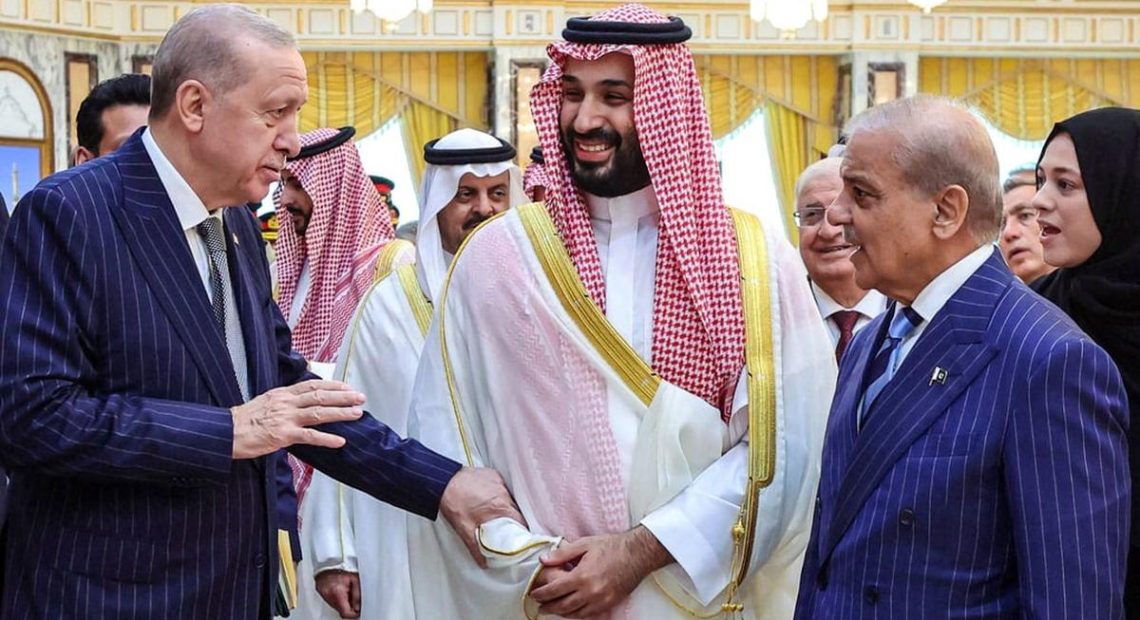
The recent agreement signed in Mecca is widely being viewed as a sign of a weakening security understanding between the United States and Gulf countries and their indication of moving away from the US security umbrella. Analysts believe that, at the same time, it is creating an opportunity for China to expand its influence in the region. The mutual defence pact between Saudi Arabia, Turkey and Pakistan states that an armed attack on any one of the countries will be considered an attack on all, echoing NATO’s Article 5.
The agreement brings together a major energy power from the Gulf, a NATO member and a nuclear-armed South Asian country under one pact. It also signals a reduced reliance on the US-led security architecture and has emerged as a potential model for other middle powers. Allison Minor, an analyst at the Atlantic Council, said the pact has strengthened Riyadh’s strategic position amid Iran’s increasingly assertive posture and the limitations of the US deterrence system. In her view, “It is further evidence that Saudi Arabia is moving away from efforts to obtain security guarantees from Washington modelled on NATO’s Article 5.”
Rich Outzen, a former adviser to the US State Department, described the agreement as a turning point in the emerging multipolar order in the Middle East and South Asia. John Spencer of the Madison Policy Forum said Pakistan’s military is heavily equipped with weapons from Beijing. Imran Khurshid, an analyst at the Middle East Forum, said Pakistan is a gateway to the region’s defence sector and that an “Islamic NATO” involving Pakistan and Turkey could further expand China’s arms market.
Khurshid said China has stepped up promotion of its weapons, including its claim of success for the JF-17 fighter jet during last year’s India-Pakistan conflict. Under last year’s Saudi-Pakistan defence agreement, Pakistan had deployed JF-17s and other Chinese-made military systems to Saudi Arabia. He said such agreements create long-term partnerships through maintenance, spare parts, training and military supply systems.
Meanwhile, Ali Chishti of the New Pakistan Foundation said China is extremely enthusiastic about the Mecca pact. As evidence, he cited the recent visit to Beijing by Saudi Foreign Minister Prince Faisal bin Farhan. In his view, the visit highlights the deepening of Riyadh’s relations with China. However, the agreement has complicated India’s strategic calculations. Kanwal Sibal, the country’s former foreign secretary, described it as a highly negative development for Indian interests. Calling for consultations with Iran, he said it was the result of disastrous US aggression against Iran.
The pact was signed after Iranian missile and drone attacks on energy infrastructure in the Gulf region and continued attacks by the Houthis. Despite the presence of US forces in the Gulf, they were unable to intercept all the attacks. The Strait of Hormuz was closed because of the US-Israel war involving Iran. At the same time, reports that stocks of some of America’s critical weapons were running low further increased Gulf countries’ concerns about relying solely on Washington.