Industrialization and Investment Now a Reality
Shafiul Alam / Rafiqul Islam Selim
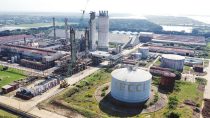
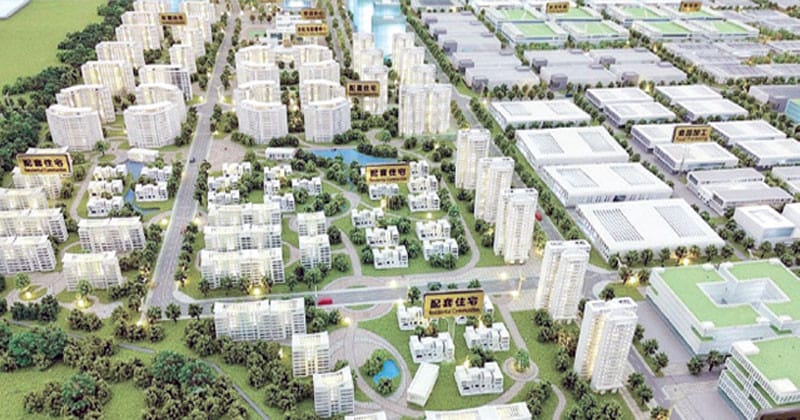
The ambitious goal of industrialisation, growth, and investment in the Chittagong region has already come to pass. These projects are beginning to develop. PM Tarique Rahman is spearheading a series of initiatives that are opening doors for both global and indigenous businesses. At the same time, enormous employment opportunities are being created. Anwara’s Chinese Economic and Industrial Zone (CEIZ) infrastructure development is now underway. An estimated $1.5 billion will be invested in that industrial zone. Millions of workers will be employed in hundreds of factories. The Korean EPZ, the nation’s first and biggest private EPZ, is also seeing significant investment in the same region. Mirsarai Industrial City is getting ready to open factories.
The Anwara Industrial Zone and the energy hub of Maheshkhali in Cox’s Bazar are connected by the Karnaphuli Tunnel, which is centred around Chittagong Port. In Matarbari, a deep seaport with numerous facilities is being built on the same model as Japan’s Kashima Port. Mirsarai Industrial City, the enlarged Bay Terminal of Chittagong Port, and the expansive coastline region from Teknaf to Feni are all receiving significant development investments in the housing, tourism, and industrial sectors. At the Mirsarai-Sitakunda industrial park, the process of establishing enterprises with full infrastructure facilities is in progress. The nation’s economy will become far more dynamic as a result of these projects. At the same time, this region’s potential in the housing and tourism sectors is growing.
At the Anwara end of the Karnaphuli Tunnel, a five-star resort worth 4.5 billion taka is ready. Parki Beach is being transformed into a top-notch tourist destination through a 5.5 billion taka project. Additionally, numerous initiatives have been undertaken to expand Cox’s Bazar Sea Beach, the longest beach in the world. In both the north and south of Chittagong, several satellite cities are planned. If massive maritime resources, such as fisheries, oil, and gas, are extracted, the nation’s economy will shift quickly.
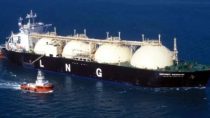
The primary barriers to both domestic and foreign investment, gas and electricity, are the focus of extensive initiatives to end the energy problem. In Kutubjom, Maheshkhali Upazila, work on the nation’s third LNG terminal has already started with Chinese assistance. Expanding solar generating plants over large tracts of land in the char regions and coastal islands is a low-cost solution to the nation’s electrical crisis. The administration has also adopted a long-term plan for the development of sustainable energy. The current 1,200 MW coal-fired power plant is part of the process to further enhance Maheshkhali’s energy hub.
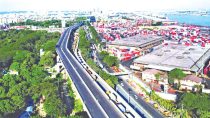
In this area, road infrastructure projects are also being undertaken. The city has launched the elevated motorway, Outer Ring Road, and Karnaphuli Tunnel. The PAB-Taitong regional highway in South Chittagong is being developed as part of a Tk 1,183 crore project. The six-lane Chittagong-Cox’s Bazar highway will be renovated. The Marine Drive will begin on the shore between Teknaf and Mirsarai. The need to establish the China-Myanmar-Bangladesh link with this economic center via Chittagong-Cox’s Bazar is growing as a result of these development initiatives. Utilising the Matarbari deep seaport and Chittagong port can also assist neighbouring nations like Nepal, Bhutan, and Myanmar. The nation’s seaports will see a boost in revenue as a result, and import-export activity will pick up speed.
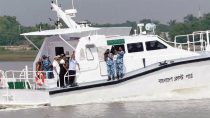
PM Tarique Rahman has taken numerous steps to provide a strong basis for the nation’s economy since assuming office. His efforts have put an end to the Chinese industrial zone’s ten-year impasse. There, infrastructure development work is now in progress. There will soon be factories operating there. Last Sunday, the Prime Minister visited Chittagong for a full day and used a helicopter to examine the development projects in a large area from Mirsarai to Maheshkhali. He later discussed transforming the nation’s industry at a sizable public gathering at Baharchhara Sea Beach in coastal Banshkhali, southern Chittagong. Additionally, he stated that the Chinese industrial zone would have hundreds of factories and job possibilities for locals. He also talked about making sure marine resources are used.
In order to draw in both domestic and foreign investment, he later brought up the topic of energy security at the Hathazari crowd. In the National Parliament, he also unveiled a long-term framework for renewable energy. The Prime Minister’s remark during his visit to Chittagong that this area would be developed as an economic corridor has energised the general public and those involved in development and investment.
Professor Muhammad Sikandar Khan, a renowned economist and former vice chancellor of East Delta University, stated that the Chittagong region is the best location for industrialisation and investment. Chittagong is the focal point of Bangladesh’s enormous potential for economic growth and job creation. A single Chinese investment will create hundreds of factories in Chittagong, creating jobs for a great number of people. We can become a self-sufficient country if we can extract the ports, the deep-sea port at Matarbari, tourism, and marine resources, particularly mineral resources from the oil and gas reserves surrounding Chittagong.
Those concerned say that to implement the roadmap for foreign investment, industrialization, and employment in the greater Chittagong region, it is essential to construct a marine driveway cum super dyke from Mirsarai-Sitaku to Anwara-Baanshkhali-Pekua-Chakaria-Maheshkhali Matarbari via Kattoli-Halishahar-Patenga in the city. This region, surrounded by islands and chars of the turbulent Bay of Bengal coast, is a disaster-prone area prone to cyclones, tidal waves, floods, and waterlogging. It is necessary to build a sustainable green belt here to protect the coast. Experts concerned believe that it is important to take steps to preserve the mangrove forest. The widespread effects of global warming and weather-climate change can be observed in the vast area of Chittagong. In this situation, environmental, nature, and climate-friendly plans cannot be ignored.