Gas, Electricity and Energy security are Key Requirements for Investment

For a decade and a half of fascist rule, almost all of the country’s financial institutions and economic systems had collapsed. Even after two years, the interim government led by Dr Muhammad Yunus has failed to overcome the situation. The continuing effects of the Ukraine war and the Iran war have made the challenges more complex. Over the past decade and a half, domestic and international organisations cited political instability, uncertainty, lack of democracy and bureaucratic corruption as reasons for the absence of investment. Following the July uprising and the changed political reality, a democratic government was established under the interim government through a fair, free and participatory election. Uncertainty consequently receded and political stability returned. Regional and international economic powers and development partners have since responded to the government’s call with proposals for new investment and development cooperation.
Increasing investment and employment is the government’s economic priority. Yet the gas, electricity and energy crisis has emerged as a new obstacle. Although the prime minister’s visits to China and Malaysia have opened major prospects for energy cooperation and investment, the energy security needed to guarantee even minimum investment conditions remains absent. After China, Japan and South Korea, American businessmen have now arrived with prospects of investing hundreds of millions of dollars in Bangladesh. During the visit to Dhaka last month by US Deputy Secretary for South and Central Asian Affairs Sergio Gore, indications had already emerged of a possible visit by American investors and business representatives.
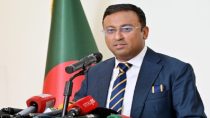
Against this backdrop, representatives led by AmCham Bangladesh President Syed Mohammad Kamal paid a courtesy call on Prime Minister Tarique Rahman last Tuesday. Urging major investment in Bangladesh, the prime minister assured them of all possible support for foreign investors. AmCham representatives are reportedly committed to helping bring in at least $5 billion in investment over the next five years. Expectations of at least $1 billion in new investment annually from the United States are not unrealistic. Under current circumstances, however, the energy crisis has become the biggest challenge to industrial investment. New industrial investment is impossible without ensuring gas, electricity and energy security. In most parts of the country, load-shedding continues for hours, day and night. Gas-dependent factories and power plants are shutting down because of shortages, while inadequate pressure prevents stoves from igniting in homes.
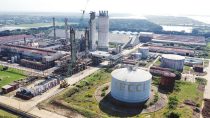
Hundreds of garment factories have closed in recent years. The government is now taking initiatives to reopen state-owned factories shut down for various reasons. Unless the causes behind the closure of old factories are properly identified and assessed and appropriate measures taken, efforts to attract investment and reopen closed factories will not succeed. Restoring discipline in the banking sector and other financial institutions and resolving the gas, electricity and energy crises are particularly essential. Representatives of AmCham and the US-Bangladesh Business Council also separately paid courtesy calls on Home Minister Salahuddin Ahmed, indicating that foreign investors want reassurance about the country’s broader law-and-order and security situation.
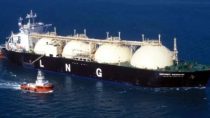
Under the “Invest Bangladesh” initiative, the home minister has assured investors of security while bringing expected facilities and services under one roof through a one-stop solution. Although these assurances and action plans are encouraging, investment-friendly policies will have limited value without visible progress in gas, electricity, energy and law-and-order conditions. As an immediate measure, Bangladesh has sought emergency financial assistance from Japan to address the energy crisis. During a seven-member Japanese delegation’s visit to Dhaka, led by Senior Deputy Minister Hiroyuki Nazamori for the seventh round of the Japan-Bangladesh Foreign Cooperation Dialogue, Bangladesh sought Japanese assistance. Japan has meanwhile called for advancing infrastructure development under the “Big-B”, or Bay of Bengal Industrial Growth Initiative. Against the backdrop of the Iran war, the Japanese government announced last April that it planned to provide $10 billion for energy security in developing Asian countries.
Bangladesh faces financial constraints in addressing the crisis on an emergency basis, and Japanese assistance could play a significant role. At the same time, Bangladesh must accelerate medium- and long-term measures by beginning energy extraction from potential oil and gas fields in the Bay of Bengal. Investment in renewable energy, including solar and wind power, must increase, while old gas fields are developed and production from new fields is rapidly connected to the national grid. Japan’s Gunze United Company has set an example in alternative energy by launching a solar power project at Dhaka EPZ. The electricity crisis could also be eased by connecting the Rooppur Nuclear Power Plant to the national grid as soon as possible and accelerating the project toward full production capacity. Effective initiatives are needed to advance energy cooperation with Iran, the Middle East, China and Russia. Resolving the energy crisis is essential not only for attracting foreign investment, but also for sustaining production at existing industrial facilities and ensuring relief and stability in people’s daily lives.