
Pentagon Stalls on Compensation For Fallen US Soldiers
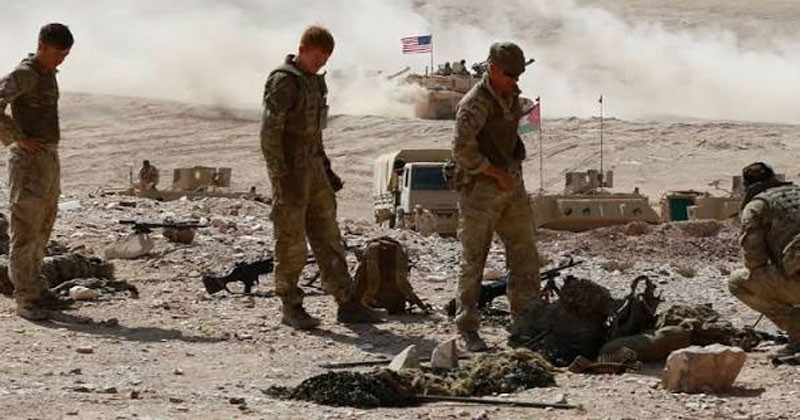
The US government has been accused of serious mismanagement and breaking its commitments over the payment of proper allowances and compensation to US soldiers killed in military operations against Iran. Families of the deceased soldiers claim that the Pentagon initially denied them the financial benefits they were entitled to, using the legal argument that Congress had not formally declared war against Iran. The information was reported by the UK-based newspaper The Telegraph.
According to the report, a KC-135 refuelling aircraft supporting a US military operation against Iran in western Iraq crashed in March this year. Six US service members, including 33-year-old Major Alex Kleiner, were killed in the crash. After his death, the US Air Force informed his wife, Libby Kleiner, that because the US Congress had not formally declared war against Iran, her family would not receive any additional benefits or hazardous-duty allowance under the rules.
Libby Kleiner later expressed her anger in a social media post, which quickly went viral. Following widespread criticism, the US Air Force clarified its position and admitted that it had made a mistake.
The Air Force said the deceased soldier’s final pay cheque did include a monthly $225 hazardous-duty allowance and tax benefits, but these were not properly mentioned. Expressing her frustration, Libby Kleiner told the Associated Press (AP), “My husband gave his life serving his country. Yet the Pentagon’s complicated language and bureaucratic process are causing unimaginable suffering to bereaved families.” It is worth noting that at least 18 US soldiers have been killed and around 780 wounded during the past six months since the war with Iran began.
US Vice President JD Vance expressed condolences to the families of the deceased during a briefing and assured them of all possible assistance. However, he refused to directly describe the operation as a “war”. US President Donald Trump, meanwhile, has described it as a “military conflict.”
The families of the soldiers, however, say that regardless of the political terminology, those who sacrificed their lives for the country and their families should not be denied the respect and compensation they deserve because of legal loopholes.
Tehran to Establish Restricted Zone and New Shipping Route in Strait of Hormuz
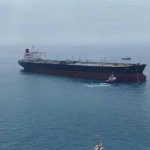
Iran is preparing to take new measures around the Strait of Hormuz, one of the world’s most important routes for global trade and energy transportation. The country is expected to soon declare a designated “restricted zone” in an area near the strait. At the same time, Iran is expected to formally announce within the next few days a new commercial shipping route agreed upon with Oman.
Mohsen Rezaei, secretary of Iran’s Supreme National Security Council and the country’s top security official, confirmed the information in an interview with Iranian state television. Mr. Rezaei said the new restricted zone would be introduced within the next few days. It would mainly extend from the US naval blockade area to various parts of the Persian Gulf. He issued a clear warning that any vessel or commercial ship entering the restricted zone without Iran’s permission or prior coordination would be placed on Iran’s sanctions list.
As a result, the vessels concerned could face insurance-related complications and severe restrictions on using the route in the future.
Meanwhile, after lengthy discussions with Oman, a key mediator in the Middle East, Iran has finalised a map for a new international shipping corridor. The new route will pass through the territorial waters of both Iran and Oman, and Tehran will be responsible for operating it.
The ongoing tensions and military conflict in the Middle East have put global energy supplies from the region under serious threat. The Strait of Hormuz is a major route for transporting energy supplies, carrying about one-fifth of global seaborne oil trade. Economic analysts fear Iran’s new measures could create fresh pressure on international markets.
Iran Warns of Retaliatory Attacks on US Oil and Gas Companies
Iran has strongly warned of retaliatory attacks against US oil and gas companies operating in the Middle East in response to US threats to destroy Iranian oil tankers. Iranian Parliament Speaker Mohammad Bagher Ghalibaf made it clear that if Iranian assets are attacked, the US energy sector would face the same consequences.
In a message posted on X, formerly Twitter, Mr. Ghalibaf wrote, “If you strike our assets, you will also be hit in return. There is a huge network of American oil and gas companies in the waters and facilities of this region, which is directly within our reach.” He added, “We have already proven this. Ask the US military bases that are no longer operational for the truth.”
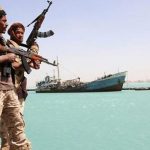
Recently, US Defense Secretary Pete Hegseth and the US Central Command (CENTCOM) threatened that any attack on US warships would lead to severe economic and military measures, including the complete destruction of Iran’s oil tanker fleet. The political and military war of words intensified after the US claimed to have disabled three Iranian oil tankers amid recent military tensions in the Persian Gulf and the Strait of Hormuz.
Gulf States Can No Longer Rely Solely on US: Qatar
The ongoing war with Iran has shown that Gulf countries cannot blindly rely only on strategic partnerships with the United States for their security and defence. The countries in the region now need to achieve “self-reliance” to ensure their own security, said Majed Al-Ansari, spokesperson for Qatar’s Ministry of Foreign Affairs.
Speaking at the Hili Forum in Abu Dhabi, the senior Qatari official said, “The presence of international forces in the Gulf region or strategic alliances with superpowers such as the United States are extremely important, but they are not enough for security. Building our own capabilities or self-reliance in defence and security is now the only way forward.” He further said, “We need our international partners and allies, but it is not possible to ensure our own security by relying only on them.”
Qatar is home to Al Udeid Air Base, the largest US military base in the Middle East. Although Qatar has played a mediating role in the Iran-US crisis, indirect attacks in the region and insecurity surrounding energy infrastructure during the war have raised major questions about the Gulf states’ policy of relying on a single security partner. Against this backdrop, Doha is calling for major changes to its security strategy.
Oil Prices Rise Further in Global Market
Concerns over global oil supplies have increased amid tit-for-tat attacks by the United States and Iran in and around the Strait of Hormuz. As a result, crude oil prices rose further in international markets on Monday. According to Reuters, at 5:12pm GMT on Monday (September 7), the price of Brent crude rose by 79 cents, or 0.82 percent, to $97.07 a barrel.
At the same time, the price of US West Texas Intermediate (WTI) increased by 80 cents, or 0.87 percent, to $92.28 a barrel. The oil market also saw a sharp rise last week. During that period, Brent crude prices increased by 7.8 percent, while WTI prices rose by nearly 10 percent. The expected disruption to supplies from the Middle East due to reduced oil transportation through the Strait of Hormuz is putting further pressure on prices in the global market.
Sources: The Telegraph, Al Jazeera, Reuters, TASS and IRNA