
Bangladesh First: ‘Save Rivers, Save the Country,’ Independent Dredging Authority Needed
Bangladesh is a riverine country. Therefore, if the rivers survive, the country will survive. Rivers are an inseparable part of the country’s economy, agriculture, fisheries, navigation, public life and environment. Protecting the navigability of rivers is not a luxury; it is one of the state’s fundamental responsibilities.
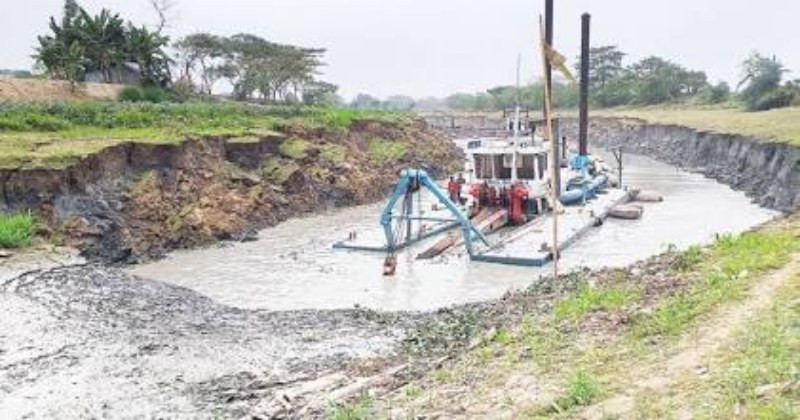
There is no alternative to regular dredging to keep rivers functional. A river that remains full of water during the monsoon often becomes shallow in the dry season because of silt accumulation. As a result, waterways become narrower, navigation is disrupted, and agriculture and fisheries are affected.
Against this reality, dredging is an essential part of Bangladesh’s river management. However, years of experience show that the major problem is not dredging itself but the planning, methods, supervision and accountability of dredging activities. If the desired navigability is not restored despite spending huge amounts of public money, questions will naturally arise about the use of funds, project planning and, most importantly, the overall structure of dredging management.
According to a reliable source, the Bangladesh government is moving towards forming a separate dredging authority. The government has reportedly already reached a decision on the matter. If properly implemented, the initiative could mark a historic turning point in the country’s river management. A dedicated dredging authority could eliminate duplication among different agencies, increase transparency in dredging operations and make overall supervision easier.
Rivers Dying in a Riverine Country
Bangladesh takes pride in being a riverine country. Rivers are deeply connected with its history, heritage, agriculture and culture. But the reality is now a matter of concern rather than pride. Since independence, Bangladesh has had more than 1,500 rivers, but most of them, or nearly half, have effectively disappeared. Around 80 percent of the country’s canals and small rivers have been filled up, encroached upon or blocked by silt.
The Karangi River in Habiganj is one example. Once a fast-flowing river, it has now turned into a dead canal, with rice being cultivated on its bed. This single example shows the seriousness of the situation. According to Bangladesh Inland Water Transport Authority (BIWTA) data, of the country’s potential 24,000 kilometres of waterways, only around 8,000 kilometres remain suitable for mechanised vessels during the monsoon. The figure falls to just 6,200 kilometres in the dry season.
This crisis is not only about transportation. It affects agriculture, fisheries, the rural economy and climate resilience. As river navigability declines, waterways become narrower, transportation costs rise, irrigation costs increase and fishermen’s incomes fall. In some places, cultivation is taking place directly on riverbeds. This transformation is not merely an environmental disaster. It is also a major warning for the economy and public life.
Dredging Master Plan and the Reality
Recognising this need, the government has spent large amounts of money on river dredging for years. A Dredging Master Plan adopted in 2012 set a target of creating 10,000 kilometres of new waterways through river excavation. In the first phase, dredging of 24 rivers was completed.
According to BIWTA, around 3,700 kilometres of waterways were added between 2010 and 2023. As a result, around 8,000 kilometres of waterways have now been developed. These are not minor achievements; they are evidence of the state’s long-term efforts to restore river routes.
The problem is that despite such a large programme, the expected benefits are still not visible in many rivers. Therefore, the issue is not whether dredging is necessary, but whether dredging is being carried out properly and managed effectively.
A major project has been undertaken to dredge a 227-kilometre stretch of the Old Brahmaputra River. Dredging has also continued for years in rivers such as the Dharla, Tulaai and Punarbhaba. The objectives of these initiatives are undoubtedly positive.
However, if dredged rivers quickly become filled with silt again because of heavy sediment coming with upstream water, disrupting navigation, it becomes clear that dredging alone is not enough.
Dredging must take into account the river’s course, sediment flow, water flow, riverbed characteristics and changes in surrounding areas. Most importantly, dredging must be followed by preservation and regular maintenance.
Without morphological studies, simply excavating canals with excavators may consume public money without restoring the desired navigability. There must be scientific answers to questions such as where and how much sediment is accumulating, the annual rate of sedimentation, the required depth and width of the channel, how water will flow after dredging, and where the extracted sediment will be placed.
Bangladesh’s rivers carry huge amounts of sediment. Therefore, dredging cannot be treated as a one-time project. It must be a continuous maintenance system. If a river is dredged today and left without monitoring for the next five years, sediment will naturally accumulate again.
Therefore, maintenance dredging must receive equal importance alongside capital dredging.
Allegations of irregularities linked to dredging also require strict investigation. In highly sediment-prone areas, alternatives should be considered instead of repeatedly carrying out dredging.
Another important issue is the management of extracted sand and sediment. Large amounts of sand and silt are removed from rivers. If properly managed, these materials could help reduce dredging costs, generate revenue and support land development. The safe and tested use of sediment in agriculture, land reclamation, embankment construction and suitable construction materials could be explored. However, transparency must be ensured so that dredged sand does not become an uncontrolled resource for vested interests.
Fragmented Authority Over River Dredging
The biggest weakness is the division of authority. Several ministries and agencies, including those responsible for shipping, water resources and local government, are involved in river and canal management. As a result, one agency may dredge one section of a river while another agency dredges a different section. In some places, necessary work is not carried out because responsibilities are unclear. Such fragmented management makes long-term river planning difficult.
Against this backdrop, the initiative to establish an independent and specialised dredging authority is timely. The purpose of such an authority should not be to take away the responsibilities of existing agencies. Rather, it should ensure integrated national planning, quality standards, technical supervision, data management and accountability for dredging.
Benefits of an Independent Dredging Authority
The greatest strength of a new authority should be data and technology. Every river should have a digital bathymetric survey. GIS, satellite imagery and modern hydrographic technology should be used to measure changes in riverbeds before and after dredging.
Information on how many cubic metres of sediment were removed, where it was placed, how much was spent and how much navigability improved after dredging should be made public. The idea that a project is successful simply because it has been completed must end. The real measure of a dredging project should be how long the river remains functional and how much practical benefit it brings to navigation.
The government has already formulated the Dredging and Dredged Material Management Policy, 2025. It has also set a target of re-excavating 20,000 kilometres of rivers, canals and water bodies over the next five years. Such a large programme requires a strong institution and transparent management.
The New Authority Must Not Become Bureaucratic
The biggest condition is that the new authority must not become another bureaucratic institution. It should have skilled professionals, including river engineers, hydrologists, hydrographers, environmental experts and economic planners. Its management structure must be free from political and contractor influence. Independent audits and expert evaluations should be conducted at every stage of projects.
Economic Importance of Dredging
The economic importance of dredging also needs to be reconsidered. Functional waterways allow large quantities of goods to be transported at lower costs. This would reduce pressure on roads, lower transportation expenses, help agricultural products reach markets faster and revive river-based local economies.
Functional rivers would also play an important role in flood management, irrigation, fisheries and environmental protection. Therefore, the priority now should not be to stop dredging but to stop waste, irregularities and inefficiency in the name of dredging. For Bangladesh, dredging is a necessary national activity. The ultimate goal should be to restore natural river flows, revive waterways, strengthen agriculture and fisheries, and improve flood and waterlogging management.
An independent dredging authority could play an important role in achieving these goals. But establishing the authority alone will not be enough. Scientific planning, regular maintenance, modern technology, transparent sand and sediment management, independent audits and strict accountability will also be essential.
Divided Authority and Lack of Accountability
The main cause of Bangladesh’s dredging crisis lies not only in corruption but also in structural disorder. Several ministries and agencies are performing similar tasks, but there is no clear system of accountability.
The Bangladesh Water Development Board (BWDB) works under the Ministry of Water Resources. BIWTA, Mongla Port Authority, Chattogram Port Authority and Payra Port Authority operate under the Ministry of Shipping. The Ministry of Local Government also has its own programmes for excavating canals and water bodies.
As a result, one section of the same river may be dredged by BIWTA, another by BWDB, while some sections remain untouched because responsibility is unclear. This fragmentation means there is neither an overall plan nor central monitoring. Contractors and syndicates can exploit these gaps.
Water resources expert and former Director General of the Water Resources Planning Organisation (WARPO) Saiful Alam said the government’s approach to river dredging is not scientific, resulting in the waste of crores of taka.
He said dredging is sometimes carried out in less important areas instead of locations where it is most needed, while areas facing the actual crisis remain untouched. Hydrologist Professor Ainun Nishat also agrees with this analysis. According to him, dredging alone is not enough; channels must be maintained and embankments protected. Otherwise, sediment will quickly accumulate and block the river again.
The lack of scientific methods in river management is also clear. Bangladesh’s rivers carry around 2.4 billion tonnes of sediment every year, much of which reduces the navigability of waterways. A scientific strategy for managing this sediment is necessary, but such a strategy is still lacking.
Lessons from Around the World
Many countries have faced similar problems and found solutions.
India: The Inland Waterways Authority of India (IWAI) coordinates dredging on 111 national waterways under the National Waterways Act 2016. India’s Ministry of Ports also issued standard dredging guidelines in 2021. A key strength of the Indian model is its use of a central authority for overall planning rather than fragmented departments.
The Netherlands: Known as the world’s dredging capital, the Netherlands enforces strict environmental regulations. Companies operate under clear permits and guidelines. Global dredging companies such as Royal Boskalis and Van Oord have developed within this regulatory framework.
Singapore: The Maritime and Port Authority of Singapore has operated as a statutory board since 1996, regulating maritime activities under one institutional framework.
Belgium: DEME Group began operating on the Belgian coast in 1875 and, with long-term state support, grew into one of the world’s largest dredging companies.
A common feature of these countries is that they do not treat dredging as an isolated departmental task. They consider it part of national infrastructure planning, supported by specialised institutions and transparent regulatory systems. Bangladesh has already adopted the Bangladesh Delta Plan 2100 with support from the Netherlands. Its goal is to ensure long-term water security, flood management and climate resilience. However, the institutional structure needed to fully implement this long-term plan is still lacking. A dredging authority could help fill that gap.
Challenges: Hope Alongside Doubts
Several challenges must be recognised.
Bureaucratic resistance: A new authority would mean transferring some powers from existing ministries and agencies. This could face resistance at every stage.
Political influence: Dredging has long faced allegations of syndicates benefiting from large public spending. Whether a new authority can remain free from such influence will be crucial.
Skilled manpower: Hydrologists, hydrographers, river engineers and environmental experts are needed, but Bangladesh still has a limited pool of such professionals.
Risk of remaining on paper: Bangladesh has many examples of institutions that exist formally but lack effective capacity. Repackaging old failures as a new authority would serve little purpose.
Recommendations: Building the Authority the Right Way
1. Ensure independence: The dredging authority must be genuinely independent. The law should prevent political influence in the appointment of its chairman and board.
2. Make data public and introduce digital tracking: Complete information on every dredging project—including contractors, costs, progress and the volume of sand extracted—should be made public online. GIS and satellite imagery should be used to digitally track dredging progress.
3. Establish a transparent commercial model: A transparent system should be developed for managing and using sand and sediment. Under the existing policy, an effective system for selling or using dredged material could help projects partially finance themselves.
4. Involve local communities: Local communities should participate in monitoring. River protection committees at the village level, similar to India’s water conservation initiatives, could improve both project sustainability and social accountability.
5. Form an independent expert panel: An independent panel of experts, rather than government officials, should evaluate the authority’s work and determine whether project costs are reasonable and whether the work meets required standards.
Save the Rivers, Save the Country
Bangladesh’s rivers are not merely part of its geography; they are part of its national identity. When rivers die, farmers suffer, fishermen suffer and rural economies suffer. Economic decline then pushes people towards cities, increases poverty and creates social pressure.
River conservation should therefore be viewed not as an expense but as a long-term economic investment. To make this investment successful, Bangladesh needs an efficient, transparent, politically independent and accountable dredging authority. The government’s move in this direction is positive. But turning the decision into reality will require careful and firm action at every stage.
The rivers are waiting—and they cannot afford to wait much longer. Neither can the country.
Saving the rivers means more than restoring waterways. It means restoring agriculture, fisheries, livelihoods, communication and the economic vitality of the country. If the rivers survive, the country will survive. And to save the rivers, dredging must become more planned, scientific and accountable.