China’s Ships in the Arctic Ocean: Purely Trade or a Geopolitical Power Struggle?
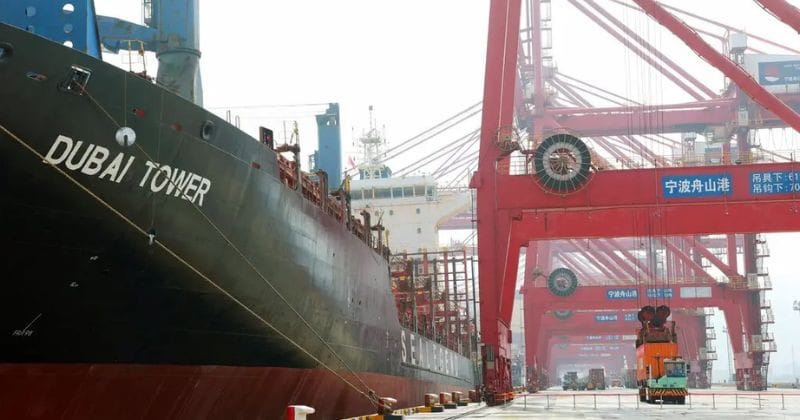
Despite being located over 800 miles from the polar region, China, self-proclaimed as a ‘Near-Arctic State’, has initiated regular cargo shipping operations via the ice-bound Northern Sea Route to transport goods from Europe to Asia. Recently, a Chinese cargo vessel named Dubai Tower departed from Qingdao, China, bound for Teesport in England. This three-week voyage aims to inject new momentum into the commercial utilization of the short Arctic route, sparking intense debate among global analysts as to whether it is a profitable commercial move or a major geopolitical display of power.
Utilizing the Northern Sea Route reduces travel distances by thousands of miles, saves about two weeks of travel time, and avoids volatile regions in the Middle East. However, maritime experts note that the path remains risky and costly due to short-term usability restricted primarily to August and September, specialized icebreaker requirements, high insurance premiums, and unpredictable weather. Ms. Vidya Mani, a global supply chain professor at the University of Virginia, stated, ‘From a commercial standpoint, this is neither a profitable nor a sustainable route at the moment’.
Beyond immediate profitability, analysts believe Beijing is advancing its long-term ‘Polar Silk Road’ initiative. Mr. Dexter Roberts, a China specialist at the Atlantic Council, remarked, ‘Among non-Arctic countries, only China is undertaking such a bold initiative. China always initiates projects that may not seem commercial at first, but ultimately transform into geopolitical victories.’ Measuring 575 feet in length, the Dubai Tower departed in mid-August carrying 1,300 containers, including electric vehicles and renewable energy equipment, with plans for eight total commercial voyages this season.
A major portion of this route extends along Russia’s northern coast, requiring vessels to pay hefty passage fees to Moscow. Amid sweeping Western economic sanctions on Russia over the war in Ukraine, this partnership deepens bilateral ties. Mr. Lyle Goldstein, a researcher at Washington’s Defense Priorities, believes this maritime connectivity will bring Russia and China even closer politically and economically, establishing a transformative new equation in international trade and geopolitics.