China Is Now Bangladesh’s ‘Strategic Comprehensive Cooperation Partner’: Commerce Minister in Hong Kong
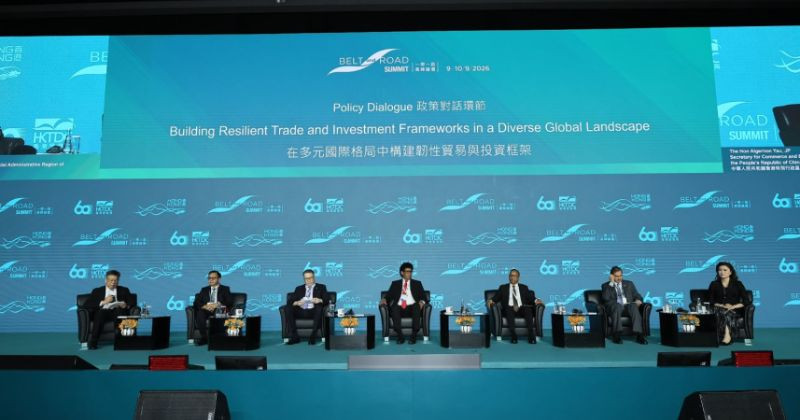
In view of growing bilateral trade and the strategic importance of the relationship, ties between Bangladesh and China have now been elevated to a ‘Strategic Comprehensive Cooperation Partnership’ (SCCP). Commerce, Industry, Textiles and Jute Minister Khandaker Abdul Muqtadir made the remarks while participating in a panel discussion at the 11th Belt and Road Initiative (BRI) Conference in Hong Kong.
According to a press release issued by the Ministry of Commerce, the Commerce Minister said that 17 important agreements had recently been signed between the two countries. Under these agreements, several mega projects are currently being implemented, including the modernisation of Mongla Port and the establishment of a Chinese economic and industrial zone in Chattogram.
As part of efforts to further strengthen commercial relations, the Commerce Minister said that ‘Invest Bangladesh’ has taken an initiative to open Bangladesh’s first overseas investment office in China. He also stressed the need to make effective use of Hong Kong as a gateway to global markets, particularly to connect Bangladesh with mainland China and international markets.
Speaking at a session titled “Building Stable Trade and Investment Frameworks,” the Commerce Minister said, “As an emerging and developing economy, Bangladesh’s economic capacity is not limited to coping with crises; rather, the main goal is to adapt to changes in the global market and create employment and new opportunities.”
Highlighting Bangladesh’s preparations for its final graduation from the list of Least Developed Countries (LDCs), the minister said Bangladesh is now moving towards growth based on productivity, innovation and competitiveness. Four areas are being given special priority to achieve this goal:
Export diversification: Alongside ready-made garments, efforts are underway to integrate pharmaceuticals, leather and leather goods, agro-processing, light engineering, information technology and man-made fibre sectors into global value chains.
Infrastructure and connectivity development: Improving the efficiency and dynamism of logistics and transportation systems.
Attracting productive investment: Welcoming investments that can facilitate technology transfer and connect local industries with global supply chains.
Transition to a green economy: Developing environmentally friendly infrastructure and reducing carbon emissions to address the impacts of climate change.
Khandaker Abdul Muqtadir said there are significant opportunities for joint partnerships in economic zones, logistics and renewable energy under the BRI framework. He also called for the expansion of digital trade, cross-border e-commerce and digital payment systems to connect small and medium-sized entrepreneurs, women entrepreneurs and local businesses with international markets.