
Houthis On The Verge Of Taking Control Of Bab El-Mandeb
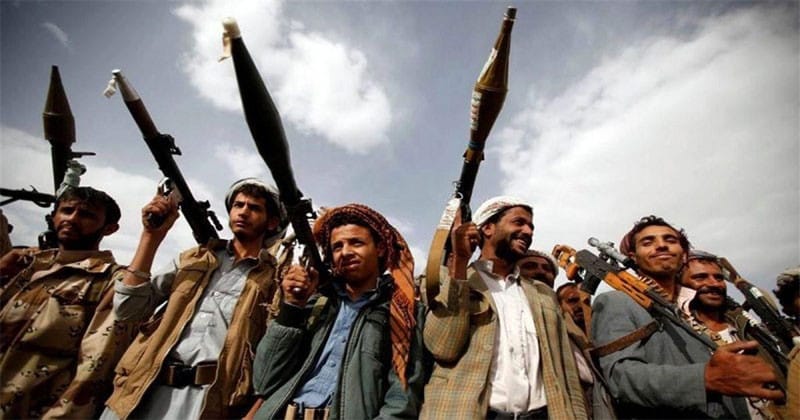
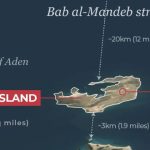
Iran-backed Houthi rebels in Yemen are nearing complete control of the Bab el-Mandeb Strait, a vital international maritime chokepoint. Following their capture of the historic port city of Mokha, the rebels have launched fierce offensives on the strategic Hanish Islands, forcing Yemeni government troops to retreat toward Dhubab. Military analysts warn that seizing Dhubab and Perim Island would grant the Houthis absolute military dominance over the strait. With Iran having already announced the closure of the Strait of Hormuz, this additional blockade threatens to completely cut off Gulf oil shipments and trigger an unprecedented global energy catastrophe.
Amid this escalating crisis, U.S. President Donald Trump has asserted that the ongoing conflict with Iran will conclude shortly after the upcoming U.S. midterm elections in November. Speaking to reporters before a Republican campaign convention in Dallas, Texas, President Trump predicted a subsequent dramatic drop in global oil prices. He alleged that Tehran is actively plotting to interfere in the American democratic process. ‘Iran wants to influence the US elections to bring a relatively weaker party to power, so they can easily develop nuclear weapons,’ Mr. Trump stated, adding, ‘I believe this war will end right after the midterms.’
The conflict has already seen direct military engagements, notably in Jordan, where several American warplanes were recently damaged during an Iranian missile strike. Jordanian air defense systems were heavily activated during the assault, detecting a total of twenty ballistic missiles fired from Iranian territory. According to the Jordanian Armed Forces, eighteen of these incoming projectiles were successfully intercepted mid-air, while the remaining two landed safely in unpopulated areas. Official authorities in Jordan confirmed that the aggressive barrage resulted in zero casualties, although American forces stationed in the region reportedly fired over thirty Patriot missiles to thwart the attack.
Despite the defensive efforts, the Iranian strike inflicted notable physical damage at Jordan’s Muwaffaq Salti Air Base. Citing CBS News journalist Ms. Jennifer Jacobs, Reuters reported that an American A-10 Thunderbolt II ‘Warthog’ sustained a direct hit during the bombardment, entirely losing one of its wings. Additionally, approximately eight F-15 fighter jets suffered minor damage in the barrage. While neither Washington nor Amman has released comprehensive official damage assessments, military personnel quickly repaired the affected F-15 jets. These resilient fighter aircraft were swiftly restored to operational status and immediately returned to active combat service following the unprecedented attack.
Meanwhile, technological warfare continues as Tehran prepares to reverse-engineer a modern American unmanned underwater vehicle captured in the Strait of Hormuz. Iran’s Islamic Revolutionary Guard Corps successfully seized an autonomous ‘Dive-LD’ maritime surveillance drone manufactured by U.S. defense contractor Anduril. While U.S. Central Command downplayed the incident by describing the drone as an older model lacking sensitive radar, military analysts warn that Iranian engineers possess the capability to replicate its mechanical and propulsion systems. This incident places renewed pressure on Washington’s technological security frameworks, echoing Iran’s successful reverse-engineering of a captured U.S. RQ-170 stealth drone in 2011.
Sources: Al Jazeera, Reuters, TASS.