
Economic Dynamism Is the Top Priority
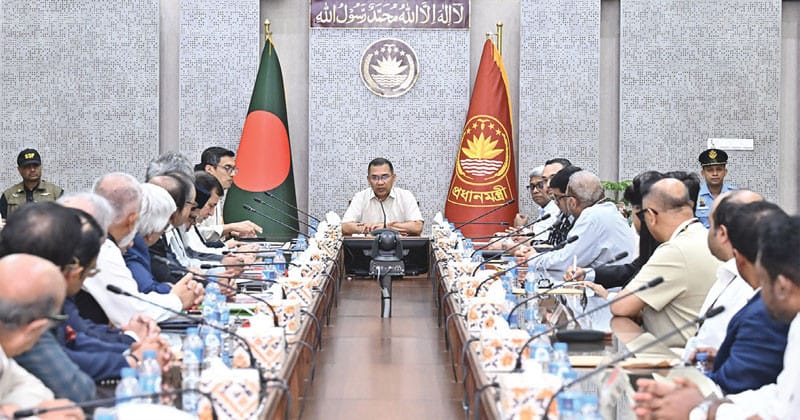
Prime Minister Tarique Rahman’s administration has taken charge amid an unprecedented economic crisis left behind by the previous government, which severely damaged the banking sector, stagnated investments, and fractured the national energy framework. To steer the country toward sustainable growth, the PM has placed economic revival, restoring investor confidence, and resolving the energy crunch as his absolute top priorities. Moving away from traditional bureaucratic methods, he has adopted a strategy of direct engagement with grassroots stakeholders, entrepreneurs, and trade bodies to find practical solutions to structural bottlenecks.
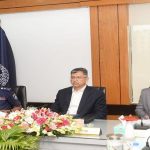
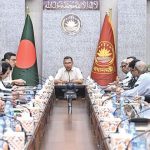
Most recently, the PM convened a high-level meeting titled ‘Challenges and Future Roadmap of Bangladesh’s Power and Energy Sector’ with prominent business leaders and media personalities. During the session, industry captains voiced grave concerns over continuous energy shortages, highway logistics bottlenecks, and complex port and customs procedures that hinder smooth import-export operations. They stressed that an immediate resolution to these issues is vital to keep the national economy functional and dynamic.
Following the open discussions, State Minister for Power, Energy and Mineral Resources Mr. Anindya Islam Amit delivered a comprehensive presentation detailing the government’s strategic roadmap to tackle the power and gas shortages. PM Tarique Rahman listened attentively and assured the business community that resolving their operational hurdles is a primary concern for his administration. He explicitly announced that power and energy supplies would begin returning to normal levels starting Tuesday, while urging leaders to report any disruptions in freight transport, ports, or customs directly to him for swift action.
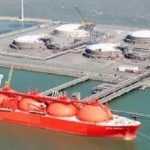
Elaborating on the current gas crisis, the PM explained that supply was heavily disrupted due to an accident at one of the nation’s two floating LNG terminals, though that technical issue has now been resolved. He announced, ‘We expect gas supplies to return from Tuesday evening to the levels of one to one-and-a-half months ago.’ To avert future vulnerabilities caused by single-terminal dependency, the government has accelerated preparations for a third floating LNG terminal under a government-to-government framework, targeting integration into the national supply network by December 2027.
Addressing the structural nature of the shortages, the Prime Minister described the energy crisis as an inherited problem that cannot be magically solved overnight within six months or a year. Nevertheless, he emphasized that his administration has formulated concrete short-, medium-, and long-term plans that are actively in the implementation phase. He noted that achieving the ambitious national target of a one-trillion-dollar economy by 2034 heavily depends on ensuring uninterrupted, adequate energy and power supplies for the industrial sector.
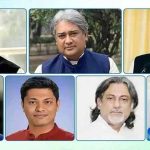
Mohammad Amirul Huq, President of the Chittagong Chamber of Commerce and Industry, expressed strong approval following the discussions, stating, ‘Our main focus in the meeting was the power and energy crisis, along with various issues at ports and customs. The PM listened to us and assured us that gas, electricity, and energy supplies will return to previous levels starting today.’ He added that the administration promised all-out cooperation to keep import-export activities running smoothly without factory disruptions.
Mr. Mahmud Hasan Khan, President of the Bangladesh Garment Manufacturers and Exporters Association (BGMEA), highlighted the renewed optimism within the apparel sector. He stated, ‘We are finding relief from the energy problem we have long suffered from. All problems may not be solved in a single day, but the PM has assured us, and we are optimistic after hearing his plan.’ He noted that the roadmap presented by the government provides clear hope for reviving industrial production capacities.
Mohammad Hatem, President of the Bangladesh Knitwear Manufacturers and Exporters Association (BKMEA), praised the transparent dialogue between the state and industry stakeholders. He remarked, ‘Since the energy crisis began, we have been asking for a detailed presentation from the government’s side. That has finally been done, and it was extremely fruitful.’ He expressed confidence that this open engagement successfully bridges the long-standing trust deficit between the government and the business community.
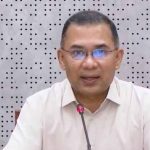
Providing further technical insights, PM’s Adviser and PMO Spokesperson Mr. Mahdee Amin detailed the multi-pronged strategy to secure national energy safety. He stated that the administration plans to expand floating LNG terminals from the current two to five units in the medium to long term, alongside drilling roughly 150 new domestic gas wells in an initial phase. Furthermore, the government aims to establish land-based LNG terminals, strengthen national gas pipelines, and balance oil, gas, and coal generation while prioritizing solar and renewable energy sources.
Beyond the energy sector, the PM has maintained intensive consultations with the Ministry of Agriculture to bolster domestic food production and curb import dependency. Urging a systematic shift toward modernization, high-yield crop varieties, and mechanized farming, he emphasized that domestic agriculture must be made both secure and highly profitable. Special policy emphasis is being placed on establishing nationwide cold storage networks, importing advanced packaging technology, and offering utility subsidies to the food processing industry to drive agro-exports.
The PM underscored the crucial role of media in translating policy objectives accurately to the public to prevent misinformation and confusion. He stressed that successfully executing major national tasks requires a unified team in which all branches of government, media professionals, and business leaders work hand in hand. Highlighting the importance of institutional stability, he remarked that domestic instability ultimately harms trade and commerce, noting that while citizens hold the democratic right to choose leadership, whichever administration is in office must be allowed to execute its plans.
The high-profile meeting drew a vast gathering of influential national figures, including Commerce Minister Mr. Khandaker Abdul Muktadir, Finance and Planning Adviser Mr. Rashed Al Mahmud Titumir, Education and Labor Adviser Mr. Mahdee Amin, Invest Bangladesh Authority Chairman Mr. Ashiq Chowdhury, Principal Secretary Mr. A.B.M. Abdus Sattar, and Bangladesh Bank Governor Mr. Mostakur Rahman. Top leaders from major trade organizations, such as the FBCCI, MCCI, DCCI, BGMEA, BKMEA, BTMA, and various industrial chambers, alongside prominent media editors and personalities, actively participated in the collaborative dialogue.
Concluding the comprehensive roadmap discussions, PMO Spokesperson Mr. Mahdee Amin reaffirmed the administration’s unwavering dedication to steering Bangladesh toward prosperity. He noted that despite inheriting mountain-like crises from years of misrule, the government operates with total sincerity, accountability, and clear strategic vision. Through continuous, joint public-private partnerships and targeted economic execution, the administration remains confident in building a resilient, self-reliant state powered by sovereign strength and sustainable economic progress.