Five Serious Questions on Modi’s Food Politics
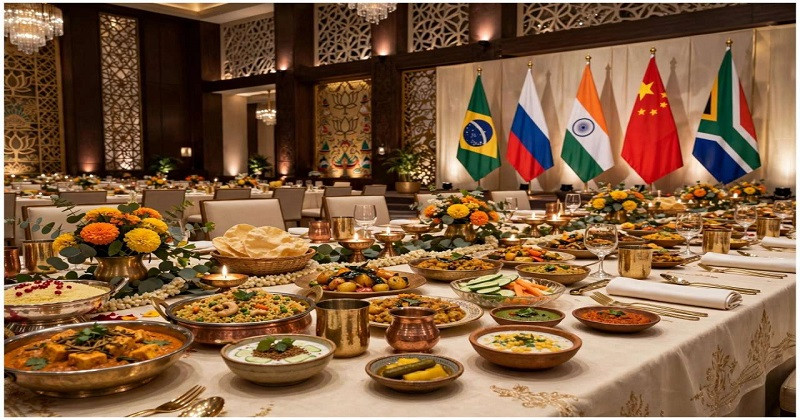
- Only Vegetarian Food for World Leaders
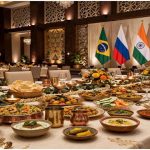
From foreign policy to the household dining table, sharp debate has erupted over allegations that India’s current Modi government is trying to spread its political and social ideology through food. This discussion resurfaced after the recent BRICS summit’s state dinner served only a vegetarian menu to visiting world leaders. India’s prominent news outlet The Wire has raised five key questions analyzing the politics, constitutional aspects and social impact behind this decision by the Indian government.
1. Why Is an All Vegetarian Dinner for BRICS Leaders a Concern?
According to international convention, when hosting heads of other states, their tastes and diversity are meant to be prioritized. But the Modi government instead imposed its own religious and social preferences. When fish, meat and eggs are entirely excluded from a government funded international event, it attempts to present India on the world stage as an upper caste, “Brahminical” and Hindutva oriented vegetarian nation. This denies India’s actual cultural and culinary diversity and turns diplomacy into a tool of domestic politics.
2. Is India Really a Vegetarian Country?
According to India’s National Family Health Survey (NFHS-5), about 80 percent of Indians, 83.4 percent of men and 70.6 percent of women, consume some form of animal protein or meat based food. Fish, meat and eggs are essential to the daily diets of most Dalits, tribal communities, backward classes, Muslims, Christians, Buddhists and Sikhs, as well as most people in Northeast India, West Bengal, Odisha and the southern coastal states. As a result, India’s self presentation as a vegetarian nation is the complete opposite of reality.
3. Is There Caste and Religious Politics Behind the Food?
The concept of “pure vegetarianism” in India is deeply intertwined with caste and social discrimination. Throughout history, upper caste Hindus have maintained untouchability by treating vegetarianism as pure and spiritual while branding meat eating as “unrestrained” and a marker of “lower caste” status. When the state encourages this notion, it socially demeans the vast meat eating population. This has led to incidents such as bans on meat sales in various places, removal of eggs from school midday meals, and violence against minorities and Dalits in the name of cow protection.
4. What Are the Economic and Diplomatic Effects?
Restrictions on cattle trade, obstacles to meat sales and vigilante violence by cow protection groups have severely damaged the country’s leather, dairy and meat industries, directly affecting millions of marginal farmers, butchers, fishermen, transport workers and small traders. Additionally, suppressing India’s vast meat and seafood culinary heritage in favor of promoting only vegetarian food on the world stage is harming the tourism and culinary export sector. Nutritionally, children are also being deprived of necessary protein.
5. Is Promoting Only Vegetarianism Unconstitutional?
India’s constitution does not require the government to serve any specific food, nor does it grant vegetarianism a higher status than other foods. Under Article 21, the right to eat food of one’s choice is part of personal liberty, and Article 29 guarantees the protection of regional culture. When a government funded by taxpayer money seeks to establish vegetarianism as the sole “national ideal,” it runs counter to the country’s secular and pluralistic constitutional framework.