

Relief in Energy, Momentum in Production
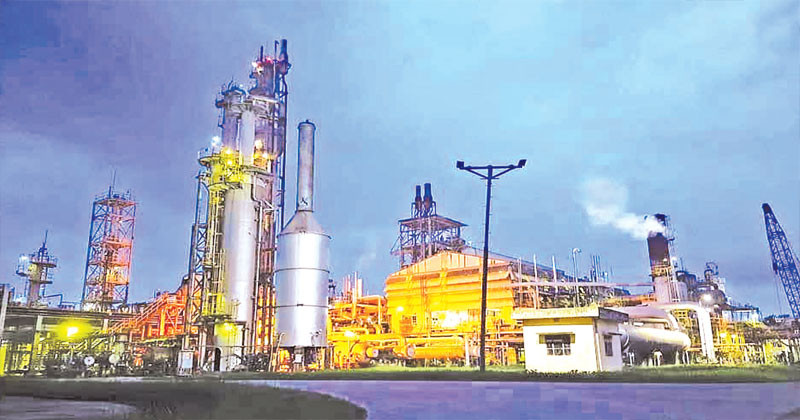
- Gas Supply from LNG Terminal Nears a Thousand Million Cubic Feet After Nearly Two Months
- Power Plants and Factories See Renewed Activity, CUFL Back in Production After Six Months
Rafiqul Islam Selim
Prime Minister Mr. Tarique Rahman has kept his word. As promised in a meeting with business leaders, gas and electricity supply across the country began rising from yesterday, Tuesday, and has returned to nearly normal levels. Following Monday’s meeting, gas supply from the floating LNG terminals in Maheshkhali began increasing that very night. Yesterday morning, when supply from the two terminals there rose to nearly one thousand million cubic feet, the situation changed rapidly. Gas supply returned to normal after nearly two months. Supply to the national grid exceeded 2,600 million cubic feet. With the rise in gas supply, industrial production gained momentum. Gas-fired power plants, fertilizer factories, and public transport began operating at full capacity. From CNG filling stations to residential consumers, adequate gas supply is now being received. This has brought relief to businesspeople, industrialists, investors, and ordinary consumers alike. With power plants running, load-shedding is also decreasing. After being shut for six months due to gas shortage, the state-owned Chattogram Urea Fertilizer Limited (CUFL) in Anwara, Chattogram, resumed fertilizer production from yesterday afternoon.
The gas crisis had become acute after a mysterious fire on July 21 disabled the terminal operated by the US company Excelerate Energy. Although the terminal was later restored, the arrival of LNG-carrying ships declined due to the effects of the Iran war, and supply from the two terminals was reduced because of the resulting LNG shortage. Since August 22, as scheduled imported LNG cargoes began arriving again, supply was gradually increased. This month, after four LNG cargoes arrived by Monday, supply was increased further. Of the gas supplied nationally, 35 to 40 percent comes from imported LNG, with the rest from domestic gas fields. Apart from one arriving today, four more LNG cargoes are scheduled to arrive this month. As a result, preparations are also underway to soon raise supply from the LNG terminals to their full capacity of 1,100 million cubic feet.
With increased LNG supply from the two floating terminals in Maheshkhali, total national gas supply has risen to 2,610 million cubic feet per day. According to Petrobangla data, as of the last update yesterday, of the total 2,610 million cubic feet supplied, 1,620 million cubic feet came from domestic gas fields, with the remaining 990 million cubic feet coming from the LNG terminals. The gas situation in the national grid had begun improving from Monday night as LNG supply increased. Previously, at 10:00 PM on September 14, total gas supply stood at 2,582 million cubic feet. Once the LNG terminals reach their full capacity of 1,100 million cubic feet, total supply is expected to remain between 2,600 and 2,700 million cubic feet. Current gas demand in the country stands at 3,800 million cubic feet, but the situation is being managed with 2,600 to 2,700 million cubic feet.
Meanwhile, the increase in gas supply has brought momentum back to industrial production. Relief has returned to the city’s industrial zones. In particular, factories in the gas-dependent garment and steel sectors have seen renewed activity. Following July 21, many factories had to halt production during the gas crisis that lasted more than a month; some had to cut production in half. However, as gas supply gradually increased from August 22, production also began rising. Gas pressure increased from Monday night, and from yesterday morning, factories began receiving full gas supply, bringing renewed momentum to production.
Chattogram Chamber President Mr. Mohammad Amirul Haque said factory owners and investors are pleased that the energy crisis has eased for now. “We are grateful to Prime Minister Mr. Tarique Rahman — he has kept his word,” he said. Noting that the energy crisis is now a global problem, he said the Prime Minister’s far-sighted master plan for addressing this crisis and ensuring energy security going forward must be implemented quickly, and that management in this sector needs to become smarter to sustain the current progress. He added that under the Prime Minister’s leadership, the country is on the verge of a revolution in foreign investment, and to capitalize on that toward building a trillion-dollar economy, sustainable energy must certainly be ensured.
More cargoes on the way: Another LNG cargo is arriving today. An official of Rupantarita Prakritik Gas Company Limited (RPGCL), responsible for LNG imports on behalf of Petrobangla, said that the arrival of LNG cargoes is now becoming nearly normal, with cargoes beginning to arrive regularly. A plan has been made to bring in 10 LNG cargoes this month, of which 9 have been confirmed — including two from the US company Gunvor under long-term contract, two from Aramco under short-term contract, and five purchased from the open market. This month, two Aramco cargoes and one from British Petroleum have already supplied LNG. Most recently, on Monday, LNG was supplied from a cargo by the Korean company POSCO. A Gunvor cargo is expected today (Wednesday), followed by Aramco on September 18, TotalEnergies on September 23, Aramco again on September 25, and Gunvor on September 28. This has created an opportunity to further increase LNG supply. Purchases of LNG cargoes for October have also begun, with 6 October cargoes already confirmed and tenders invited for 5 more.
CUFL back in production: After being shut for more than six months due to gas shortage, Chattogram Urea Fertilizer Limited (CUFL) has resumed production. When the multinational fertilizer factory in the same area, KAFCO, went for annual maintenance, its gas supply was reduced from 63 million cubic feet to 3 million cubic feet, and gas supply to neighboring CUFL began at the same time. After gas supply was provided in late last month, CUFL authorities began the process of restarting production. The company’s Managing Director, Mr. Mizanur Rahman, told Inqilab in the evening that production had started a short while earlier. The plant’s restart process began once gas supply resumed; ammonia production had already started from September 9, and after fixing mechanical faults, urea fertilizer production has now begun. The factory’s production had been halted since March 4 due to the gas crisis. Over the past two years as well, the factory’s production had to be halted for extended periods multiple times due to mechanical faults and gas shortages, among other reasons.
Authority sources further said that the factory needs 48 to 52 million cubic feet of gas daily for full-capacity production. When operational, CUFL can produce about 1,100 metric tons of urea daily. At a price of 38,000 taka per metric ton, the factory has the capacity to produce urea worth about 4.18 crore taka per day. Alongside this, the plant can produce 800 metric tons of ammonia daily.
In agriculture-dependent Bangladesh, annual demand for urea fertilizer stands at around 2.6 million metric tons. Of this, CUFL and other factories under the Bangladesh Chemical Industries Corporation (BCIC) together produce about 1 million metric tons. The remaining roughly 1.6 million metric tons must be imported at high cost. As a result, the repeated shutdowns at this important fertilizer factory have both strained local fertilizer supply and increased dependence on imports.
CUFL was established by the government on October 29, 1987, with Japanese technical assistance, at Rangadia in Anwara upazila on the southern bank of the Karnaphuli River. At the time of its founding, the factory had a production capacity of 1,700 metric tons daily and 561,000 metric tons annually. Its current daily urea production capacity has fallen to around 1,100 metric tons.