
Ex-Major Sabbir Gives Chilling Account at Tribunal
15 Killed, Including BDR Massacre Witnesses, Their Bodies Disemboweled and Dumped in River
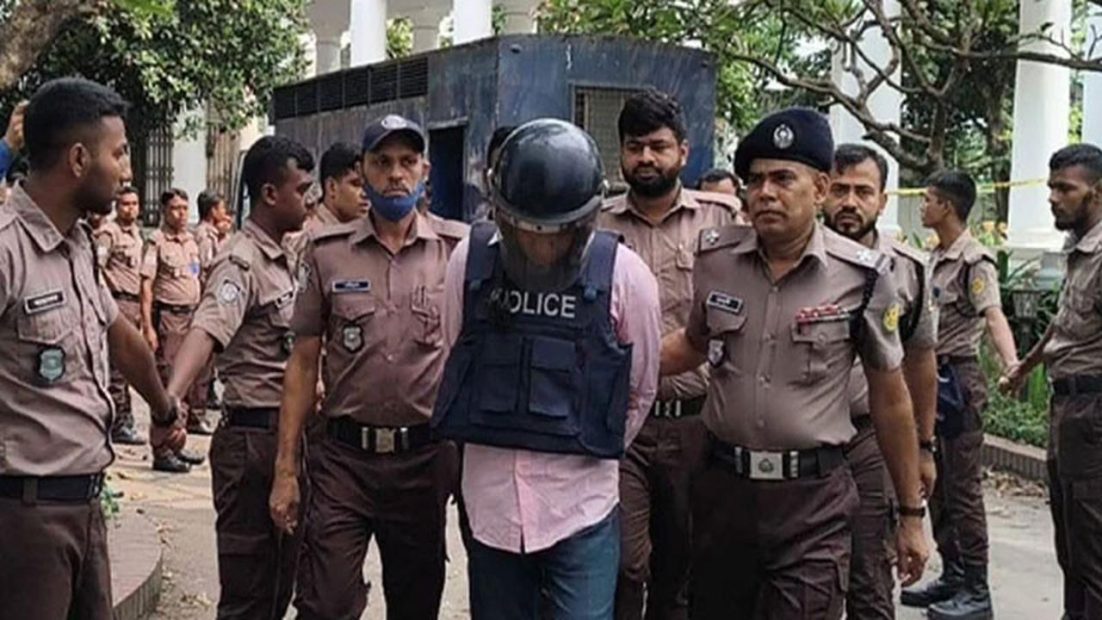
In May 2010, four people, including Nazrul Islam, a witness to the BDR Pilkhana massacre, were allegedly shot dead, their abdomens cut open, and cement-filled sacks tied to their bodies before they were dumped into a river by Major (retd) Ziaul Ahsan, known as the “butcher of Hasina.” Not only these four, but at least 15 people identified as political opponents of Sheikh Hasina and critics of the Awami League government were allegedly killed in the same manner and dumped into rivers.
Former RAB officer Major (retd) Sabbir Rahman Osmani, who took part in several operations with Ziaul Ahsan, gave this chilling account.
International Crimes Tribunal-1, led by Justice Md Golam Mortuza Mozumder, recorded Sabbir Rahman Osmani’s testimony. The witness said Ziaul Ahsan referred to such killings in coded language as “Golf Operations.”
After the testimony, International Crimes Tribunal Chief Prosecutor Mohammad Aminul Islam highlighted the witness’s account during a briefing.
The chief prosecutor said Major (retd) Ziaul Ahsan, then director of RAB’s Intelligence Wing and later director general of the National Telecommunications Monitoring Centre (NTMC), is the sole accused in the case before International Crimes Tribunal-1. Major (retd) Sabbir Rahman Osmani, who participated in several “Golf Operations,” testified against him.
The chief prosecutor said the witness had no personal dispute with Ziaul Ahsan and gave his testimony consciously out of a sense of conscience. He also said the single testimony was sufficient to establish Ziaul Ahsan’s crimes of brutality.
According to the chief prosecutor, Mr. Ziaul shot four victims, including Nazrul Islam, a direct witness to the BDR Pilkhana massacre, as well as at least 15 people identified at different times as political opponents and critics of the government. After killing them, their abdomens were cut open, cement-filled sacks were tied to them, and the bodies were sunk in rivers.
Nazrul Islam was a BDR member who fled Dhaka after the rebellion. His body was later identified through DNA testing. Nazrul and three others were taken on a fishing trawler from near Charduani in Patharghata, Barguna, to the Baleshwar River, with their faces and bodies covered. Their eyes were blindfolded and they were shot there.
In the case of crimes against humanity filed over the enforced disappearances and extrajudicial killings of more than 100 people during the Awami League government, eyewitnesses who participated in various operations had previously testified against Major General (retd) Ziaul Ahsan. Major (retd) Sabbir Rahman Osmani is considered a key witness in the case.
Mohammad Aminul Islam said Major (retd) Sabbir was one of the key eyewitnesses to the killings allegedly carried out by Ziaul Ahsan. The chief prosecutor then detailed several operations described by the witness.
Staged ‘Gunfights’ and Involvement of Some Journalists
Regarding staged “gunfights” and the involvement of some journalists, the chief prosecutor said Ziaul Ahsan allegedly presented the killings as so-called “gunfights” or staged dramas to conceal them.
Through then RAB Media Wing chief Rear Admiral (retd) Mohammad Sohayel, selected journalists and media workers were allegedly brought from Dhaka to the operation site at Charduani wearing life jackets. The staged gunfight was then reported in the media according to the briefing they were given.
The chief prosecutor indicated that these facts would be incorporated into the ongoing investigation against journalists as aiding or “abetment” of crimes against humanity.
According to him, Major Sabbir’s direct testimony could serve as a historical and conclusive document in uncovering what happened to the hundreds of people who remain missing after enforced disappearance. He said this single testimony was sufficient to prove Ziaul Ahsan’s crimes.
How Ziaul’s ‘Golf Operations’ Were Conducted
In his testimony before the tribunal, Major (retd) Sabbir said Ziaul Ahsan would travel from Dhaka to Charduani in Patharghata, Barguna, with his own trusted team and the victims.
There, the victims were covered in such a way that it was impossible to tell whether they were men or women. They were then taken onto a trawler, where pillows were pressed against their heads or beside their ears before they were shot.
Their abdomens were later cut open and cement-filled sacks were tied to their bodies so that the corpses would not float back to the surface. The bodies were then dumped into the river.
Just as a ball is dropped into a hole in golf, Ziaul Ahsan used the military code name “Golf” for the process of killing people and sinking their bodies in rivers so they would disappear forever.
Killing of BDR Massacre Witness Mr. Nazrul
According to the accounts of Sabbir Rahman Osmani and the prosecution, four people, including Mr. Nazrul, a witness to the BDR rebellion, were killed in the same manner and dumped into the river in May 2010.
Later, when Mr. Nazrul’s body surfaced from the river, Ziaul Ahsan did not order any further investigation or action and instead instructed others only to “follow up” on the matter.
The testimony before the tribunal indicated that the witnesses to the BDR massacre had been deliberately killed to silence them.
Killing of Alkas Majhi and Destruction of Evidence
A trawler was used to transport victims and dump their bodies into the river. The trawler was operated by Alkas Majhi.
Mr. Ziaul later allegedly killed Alkas Majhi as well to destroy evidence. Major (retd) Sabbir Rahman Osmani provided important information about the matter.
In his testimony, he said Alkas Majhi operated the trawler during almost every killing. Later, when Mr. Alkas began disclosing the matter at the local market, it came to Ziaul Ahsan’s attention.
Mr. Sabbir, the witness in the case, was then allegedly assigned to “eliminate” Mr. Alkas. When Sabbir expressed his inability to do so, Mr. Ziaul said he would handle the matter himself.
A few days later, Mr. Alkas left his home after receiving a phone call from Mr. Ziaul. He never returned. According to circumstantial evidence, he was also killed and his body was disappeared.
‘Orders from the Highest Level of the State’ and Helplessness of Other Officers
In his testimony, the witness said that when he sought action from the then battalion commander after protesting against the brutal killings, the commander clearly told him that there was nothing he could do.
The witness said no officer of RAB-8 or RAB-6 had the courage to disobey or oppose Ziaul’s orders because of his direct connection with the highest level of the government, including then Prime Minister Sheikh Hasina, and his sole authority.
After the first operation, when a tense silence fell inside the vehicle, Mr. Ziaul reportedly told everyone to remain normal and remarked arrogantly, “They are enemies of the state. They have to be finished this way.”
Later, Major Sabbir resigned from his job amid deep remorse and mental anguish.