
PM orders coordinated efforts to prevent pollution in multiple city lakes, including Gulshan and Dhanmondi; six secondary points identified as sewage entry channels in Gulshan Lake
Tarique Rahman Initiates Implementation of Mother Khaleda Zia’s Project
Gulshan-Banani-Baridhara is one of the capital’s upscale residential and diplomatic areas. More than two decades ago, the Rajdhani Unnayan Kartripakkha (RAJUK) undertook a mega project to beautify and protect the area’s lakes. However, despite repeated extensions to the project’s implementation period and budget, the main work has yet to begin.
During the four-party alliance government led by Khaleda Zia in 2001, boundary pillars were installed to prevent encroachment on lake land, and work began to strengthen the lake banks. RAJUK and the Dhaka City Corporation also took initiatives to monitor the lakes and prevent indiscriminate dumping of industrial and household waste.
Despite these measures, the Gulshan-Banani-Baridhara lakes could not be fully modernised or freed from pollution. The Hatirjheel project was later implemented during the one-eleven period, while progress on the Gulshan-Banani-Baridhara Lake project largely stalled.
The area is home to affluent residents and several foreign embassies, but polluted water continues to flow through the extensive lake system, causing foul odours. According to a research report, restoring the Gulshan-Banani Lake could generate economic benefits of about Tk 3,000 billion over 20 years.
Under the direction of Prime Minister Tarique Rahman, a fresh initiative is being taken to implement an integrated modernisation plan for the Gulshan, Banani, Baridhara and Niketan lakes. The plan includes stopping illegal sewerage connections, preventing sewage from entering the lakes, removing floating waste and sludge with mechanical boats, and improving the overall environment.
Tarique Rahman directed the authorities to strengthen coordination among relevant agencies, regularly remove waste, install sewage treatment plants (STPs), and accelerate ongoing activities.
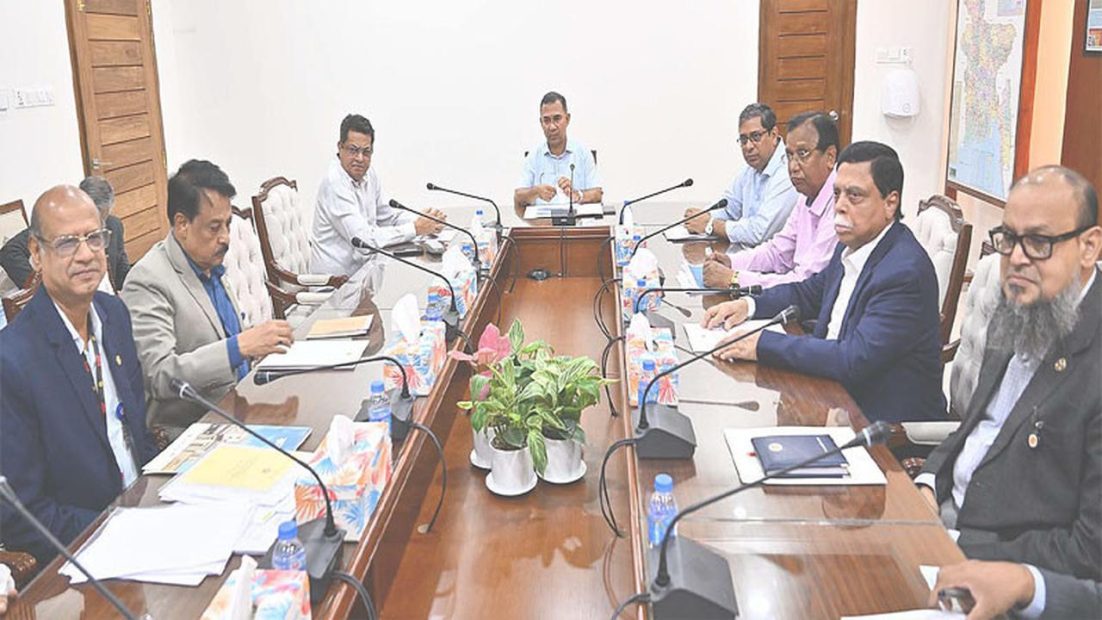
The directives were issued at a meeting at the Cabinet Division meeting room at the Secretariat on Thursday, chaired by the Prime Minister. His Deputy Press Secretary Sujauddoula Sujon Mahmud disclosed the information after the meeting.
The meeting reviewed the condition and pollution sources of the Gulshan, Banani, Baridhara and Niketan lakes, as well as renovation and development plans. Progress on the Dhanmondi Lake renovation, sludge removal and pilot project undertaken by Dhaka South City Corporation was also discussed.
Six primary and six secondary points have been identified as sources and channels through which sewage enters Gulshan Lake. A technical committee presented short-, medium- and long-term recommendations, including closing sewage entry points, installing building-level STPs and conducting a detailed survey of the existing sewerage network.
The meeting also discussed conditionally collecting sewerage bills in the Gulshan-Banani area and creating catchment areas to improve drainage.
To accelerate lake-cleaning operations, the Prime Minister directed that the number of mechanical boats used to remove floating waste be increased from two to 10. Floating excavators will also be used to remove accumulated sludge from the lakebed, with regular cleaning operations to continue.
The meeting stressed installing STPs in applicable buildings within the stipulated period under the Dhaka Metropolitan Building Construction Rules 2025. Dhaka WASA and Dhaka North City Corporation were asked to jointly identify illegal sewerage connections from residential and commercial establishments to rainwater drains or the lake and shut them down.
Proposals were also discussed to install aerators to increase oxygen levels in the water, use biological and chemical methods to control foul odours, and develop a long-term sanitation network.
Meanwhile, five special teams comprising 42 personnel have already been deployed under RAJUK for lake conservation, cleaning and maintenance.
Housing and Public Works Minister Zakaria Taher, State Minister for Local Government, Rural Development and Cooperatives Mir Shahe Alam, Dhaka South City Corporation Administrator Md Abdus Salam, Dhaka North City Corporation Administrator Md Shafiqul Islam Khan, Prime Minister’s Principal Secretary ABM Abdus Sattar and other senior officials attended the meeting.
The Gulshan-Banani-Baridhara Lake Development Project was undertaken during Khaleda Zia’s government to protect Dhaka’s environment and improve its aesthetics. Between 2001 and 2003, the project area from Mahakhali to Chairman Bari and Karail covered 33 acres of lake area.
After the Hasina government came to power in 2008, Tk 410.25 crore was allocated for the project in 2010, with completion scheduled for June 2013. However, the project did not progress as planned.
An initiative to rehabilitate slum dwellers before lake development also remained incomplete due to bureaucratic complications and a lack of coordination. The project implementation period has since been extended at least five times, while its budget has risen to nearly Tk 2,500 crore. Work, including payment of compensation for land acquisition, has yet to begin.
The Hatirjheel project was undertaken around the same time and completed ahead of schedule by the Army. There have also been repeated discussions about implementing the Gulshan-Banani-Baridhara project through the Army, but the project remained stalled amid prolonged delays and what the report describes as a lack of transparency.
A RE-WET research report on conserving degraded wetlands through environmentally friendly agricultural management provided the first economic valuation of urban wetlands in Bangladesh. It identified the Gulshan-Banani-Baridhara wetland as part of the urban wetland ecosystem, with the Karail slum, home to more than 250,000 people, located nearby.
According to the report, restoring Gulshan-Banani Lake through a co-production process involving Karail residents could generate annual benefits of Tk 106 billion, or Tk 10,600 crore, reaching Tk 3,000 billion over 20 years.
The report said the lake and its banks could provide livelihood opportunities for climate-resilient and smart agriculture, generating more than Tk 21.14 crore annually for marginalised and climate-vulnerable communities. It could also create opportunities for entrepreneurs and contribute to food security and poverty reduction.
Wetlands can store large amounts of water, reducing dependence on costly urban water-management systems. Proper management of Gulshan-Banani Lake could provide water worth Tk 18.75 crore.
Increasing its water-holding capacity could turn the lake into a natural reservoir and reduce waterlogging, potentially preventing property damage worth Tk 420 crore annually in Dhaka. Additional water retention could save Tk 43.24 crore, while around Tk 20 crore in flood-borne disease-related costs could also be avoided.
The lake could save energy worth Tk 50 crore annually. Heatwaves are estimated to reduce productivity and increase illness-related costs by Tk 1,773 crore annually.
The wetland system could also support fish, birds and plant species, preserving biodiversity valued at Tk 37 crore annually. If restored as an aesthetic and recreational space, Gulshan-Banani Lake could generate an estimated Tk 200 crore annually. Experts believe these benefits could increase further if the project is implemented.