
BJP’s Education System Isolated on the World Stage
‘Saffronisation’ and Repression Peak in Indian Educational Institutions
According to the annual Free to Think 2026 report by Scholars at Risk (SAR), an international organisation monitoring attacks on higher education institutions, academic freedom in India was “severely restricted” between July 2025 and June 2026. The report placed India in the “severely restricted” category alongside Hong Kong, Indonesia, Pakistan, the occupied West Bank and Ukraine.
India’s Academic Freedom Index fell sharply from 0.38 in 2022 to 0.14 in 2025. The index is based on freedom in research and teaching, institutional autonomy, institutional exchange and dissemination, campus integrity, and academic and cultural expression.
According to the report, 321 verified incidents involving 382 attacks were recorded across 59 countries and territories worldwide during the period under review. India recorded the highest number, with 42 attacks, including violence against teachers and students, imprisonment and dismissal.
Central Government and BJP Influence in Higher Education
The report stated that India’s central government has increased its control over university administration, leadership appointments and academic priorities. The ruling BJP government is using the University Grants Commission (UGC) as a key means of expanding its influence.
The report said the UGC had faced criticism over several policies, including relaxing eligibility requirements for university vice-chancellors and removing the previous 10 per cent cap on temporary and contractual teaching appointments, thereby encouraging temporary employment. University administrations have also taken steps to restrict free expression, including dismissing teachers, cancelling events and imposing strict rules on student expression.
Disciplinary Action Against Teachers
The report highlighted several teachers who faced disciplinary action over their views or teaching.
Professor Snehasish Bhattacharya: The South Asian University professor was dismissed in September 2025 for allegedly engaging in “conduct detrimental to the interests of the university.” Earlier, in October 2022, he had signed a letter criticising the authorities’ role in suppressing student protests.
Lora Santhankumar: The assistant professor at SRM Institute of Science and Technology was dismissed for criticising controversial actions by the Indian Army and opposing war.
Professor Virendra Balaji Shahre: The Jamia Millia Islamia teacher was suspended for including a question on “persecution of Muslim minorities in India” in an examination.
Restrictions on Research and Publication
The report said administrative and judicial measures had also restricted research, teaching and publication in higher education. In March 2026, India’s Supreme Court imposed a “lifetime ban” on three researchers from receiving government funding for curriculum development after the phrase “corruption in the judiciary” was included in an NCERT Class VIII social science textbook. However, in May, the court revised its ruling, allowing public universities and state governments to make independent decisions on the matter.
In addition, the Jammu and Kashmir government banned the sale and possession of 25 books on the region’s socio-political history, including books dealing with sensitive issues such as disappearances and feminist movements.
Restrictions on Campus Events and Student Protests
Events at several institutions, including Banaras Hindu University and the University of Mumbai, were cancelled because invited speakers were critics of the BJP-led government. In February, Delhi University cancelled a seminar titled “Land, Property and Democratic Rights,” citing “administrative reasons.”
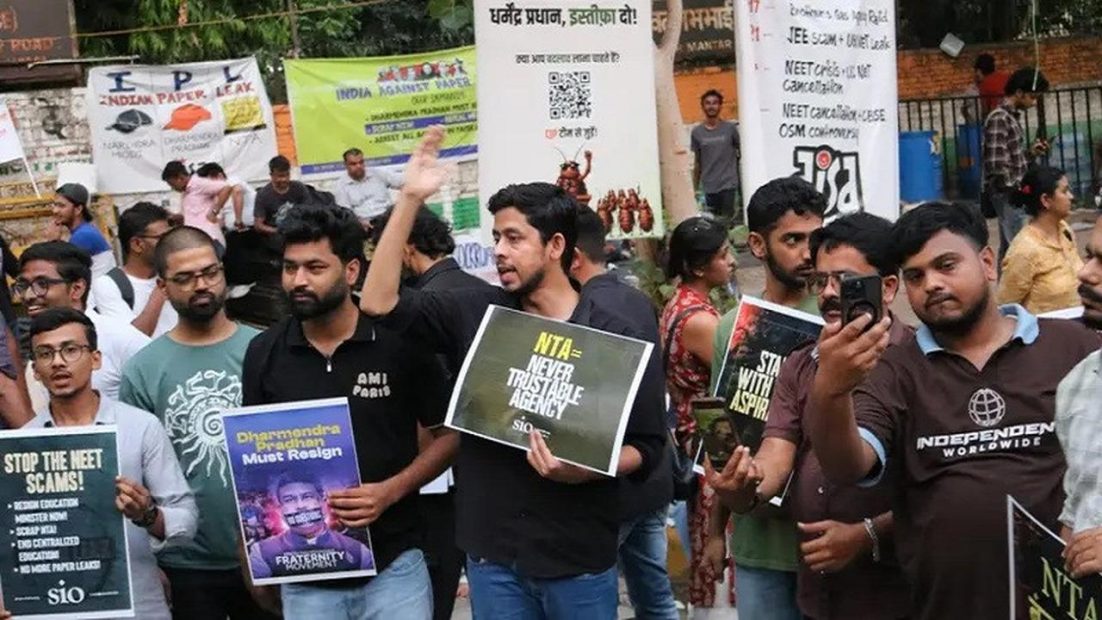
Citing repression of student protests, the report said students at the Tata Institute of Social Sciences (TISS) and Jamia Millia Islamia faced disciplinary action over alleged unauthorised gatherings. Delhi University has also made it mandatory to obtain permission at least 72 hours before any protest, with expulsion or police action threatened for violations.
Political Polarisation and Global Picture
The report noted that ideological conflicts between the right-wing Akhil Bharatiya Vidyarthi Parishad (ABVP) and left-wing student organisations such as the All India Students’ Association (AISA) and the National Students’ Union of India (NSUI) have turned campus events into politically charged flashpoints.
Globally, academic freedom has declined severely in 50 of 179 countries over the past decade, according to the report. Afghanistan, China, Gaza, Iran, Russia, Turkey, Syria, Venezuela and Zimbabwe were placed in the “completely restricted” category.