
Bangladesh Minister Meets IAEA Chief in Vienna for Nuclear Support
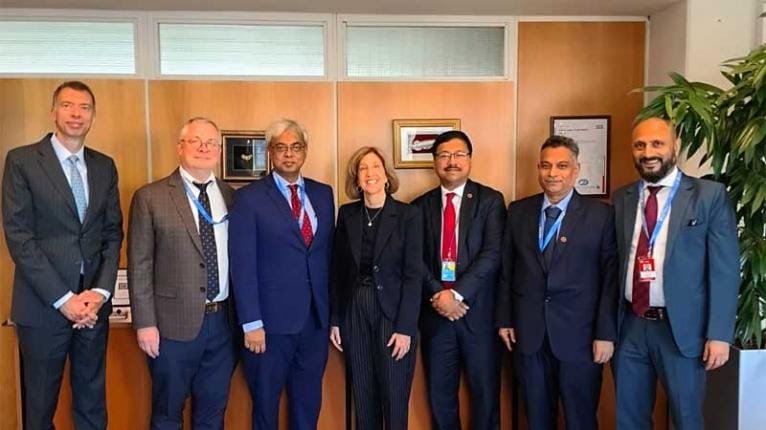
Bangladesh has officially sought technical assistance from the International Atomic Energy Agency (IAEA) to rapidly integrate electricity generated from the Rooppur Nuclear Power Plant into its national grid. The strategic request was formally conveyed during a bilateral meeting between IAEA Director General Mr. Rafael Mariano Grossi and a Bangladeshi delegation led by Minister for Science and Technology Mr. Fakir Mahbub Anam at IAEA headquarters in Vienna. Alongside transmission challenges, the discussions encompassed expanding peaceful nuclear applications, strengthening safety standards, and advancing human resource capacities.
Reviewing the nation’s long-standing partnership with the global atomic watchdog, the minister emphasized that Bangladesh has significantly benefited from IAEA technical assistance for over five decades across vital sectors like healthcare, agriculture, industry, and energy. Referring to the newly signed Country Programme Framework for 2026–2032, he noted that the structure will unlock vast opportunities for future collaboration. Furthermore, Bangladesh’s inclusion as South Asia’s first member in the Joint Convention on Spent Fuel and Radioactive Waste Management demonstrates its firm pledge toward safety.
Focusing on the immediate operational milestone of the nation’s flagship energy infrastructure, Mr. Fakir Mahbub Anam stated, ‘Fuel loading in Unit-1 represents major progress toward carbon-free electricity generation,’ adding that the project opens vital avenues to meet growing energy demand and mitigate climate risks. He reiterated Bangladesh’s commitment to maintaining top global safety standards. Beyond power, the minister highlighted joint healthcare initiatives, noting Bangladesh joined the IAEA’s ‘Rays of Hope: Cancer Care for All’ program in 2025 to build an integrated, patient-centric treatment center.
To maximize socio-economic impact, the Minister stressed that nuclear applications must directly improve living standards, enhance agricultural yields, expand healthcare access, and foster climate resilience. He solicited Director General Mr. Grossi’s direct support in broadening international education, specialized training, fellowships, and collaborative research opportunities for young Bangladeshi scientists. Creating a robust technical framework for future researchers remains a cornerstone of the country’s national strategy to successfully sustain and grow its atomic science capabilities.
The high-level meeting concluded with both parties agreeing to deepen bilateral ties, with senior officials including Science and Technology Secretary Md. Anwar Hossain, Ambassador Mr. Toufiq Hasan, BAEC Chairman Dr. M. Moinul Islam, and Joint Secretary Mr. Shaikh Muhammad Tauhidul Islam in attendance. Bangladesh remains focused on ensuring that nuclear energy acts as a safe, transformative force for its national development agenda, supported continuously by the IAEA’s expertise and international frameworks.