Houthis Did Not Attack Mecca; Saudi Arabia Lied to Gain Muslim World’s Sympathy
A new and complex equation has emerged in Middle Eastern geopolitics. Reports indicate that Saudi Arabia and Israel have increased diplomatic and intelligence contacts behind the scenes to counter the growing drone and military activities of Yemen’s Houthi rebels. According to the reports, the secret talks, facilitated by the US Central Command (CENTCOM), are aimed at developing a joint strategy against the Houthis and ensuring intelligence-sharing.
Citing regional diplomats and media sources, a report said the Jerusalem Post and several major US media outlets had confirmed the secret meetings. It claimed that the Israeli military was providing Riyadh with specific intelligence on Houthi military positions, drone launch sites and movements.
The report said that the Israeli military had previously demonstrated its advanced drone and technical intelligence capabilities while monitoring the movements of Iranian forces and their allies in the Strait of Hormuz and the Red Sea. Based on that experience, Israel is now assisting Saudi Arabia.
According to a report by international news network Al Jazeera, the United States has decided to supply Israel with advanced weapons worth $2.8 billion.
Belgian geopolitical analyst and journalist Elijah Magnier believes that the United States wants to protect Saudi Arabia and provide it with strategic weapons through Israel as a proxy, without directly becoming involved in a major war in Yemen or the region. Rather than receiving US weapons directly, Saudi Arabia is seeking assistance through the Israeli framework so that these weapons can be used effectively against Iran and the Houthis.
Recently, the Houthis carried out successful drone attacks on several oil pipelines and pumping stations in Saudi Arabia. Military installations and civilian sites in areas near the Yemeni border were also targeted.
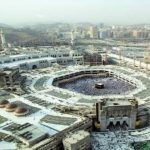
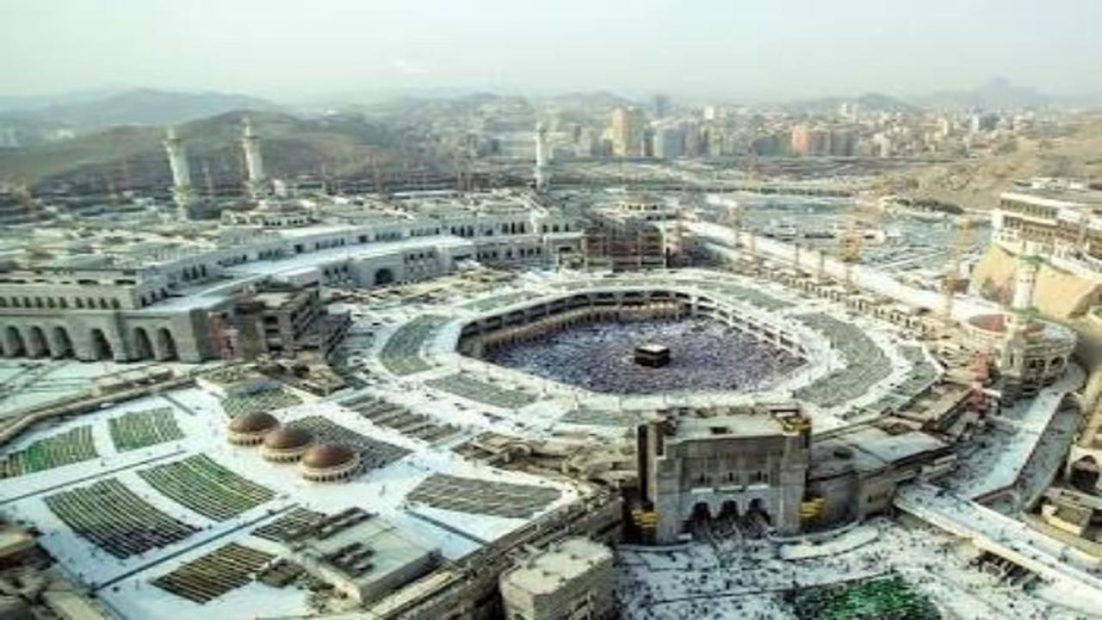
Amid this situation, the Saudi government claimed that the Houthis had attempted to attack the holy city of Mecca with a drone. However, the Saudi authorities have so far presented no internationally accepted evidence in support of the serious allegation.
Houthi political bureau members Hizam al-Asad and Mohammed al-Bukhaiti, influential figures in the Yemeni rebel group, responded to international media, saying clearly that every particle of the Kaaba is sacred to Yemenis and that Yemenis have historically been at the forefront of protecting the House of Allah. They said the Yemeni forces’ fight is directed only against Saudi military bases, oil infrastructure and the blockade they describe as illegal; Mecca and other holy sites are not their targets.
The Houthis said their attacks on military and energy facilities in Riyadh and Saudi Arabia were carried out with precision only in response to the destruction of Sanaa’s main airport and the humanitarian blockade.
Renowned US geopolitical analyst Professor Mearsheimer said in his analysis that Saudi Arabia had created a specific narrative or “story.” Its main objective, he said, was to gain the sympathy of the Muslim world and unite Muslim countries against Iran and Yemen.
According to Tehran University Professor of International Relations Marandi, the campaign surrounding the alleged attack on Mecca was entirely planned. He suggested that Israeli psychological warfare experts may have advised Riyadh to spread such a false narrative in order to isolate the Houthis internationally.
Houthi leaders recalled that even during the time of the Prophet Muhammad (peace be upon him), the Yemeni people had been at the forefront of protecting the Kaaba. Citing Islamic historical sources, they highlighted the special status of Yemenis. Sahih al-Bukhari, Hadith No. 4390, records the Prophet (PBUH) as saying: “The people of Yemen have come to you; they are tender-hearted and soft-hearted. Faith is Yemeni and wisdom is Yemeni.”
The Prophet’s(PBUH) special supplication: Sahih al-Bukhari, Hadith No. 7094, states that the Prophet (PBUH), while standing in the courtyard of the Kaaba, prayed: “O Allah, bless us in our Sham and bless us in our Yemen.”
The Holy Quran praises the historical steadfastness in faith of the people of Saba in Surah Saba (Verse 15) and the steadfast believers of Najran in Surah Al-Buruj (Verses 4–7).
According to military analysts, the political narrative about the alleged attack on Mecca was brought forward primarily amid intense pressure from Yemeni missiles and drones on oil and military installations. On the one hand, the Saudi monarchy is attempting to use religious sentiment as a strategic shield; on the other, the Houthi rebels are highlighting their historical and religious ties to show that this is merely an unsuccessful political and military ploy to divert global public attention from the conflict.
Analysts also said that the recent conflicts in the Middle East have placed considerable pressure on the weapons stockpiles of the United States and its regional allies. With many weapons stockpiles damaged or depleted, the United States is now being forced to arrange new weapons supplies through Israel and is attempting to sustain Riyadh by providing military intelligence.