
Fuel Price Comparison with Neighbouring Countries Is Not Logical
Government Decided to Adjust Fuel Subsidies to Balance Limited Resources: Information Adviser
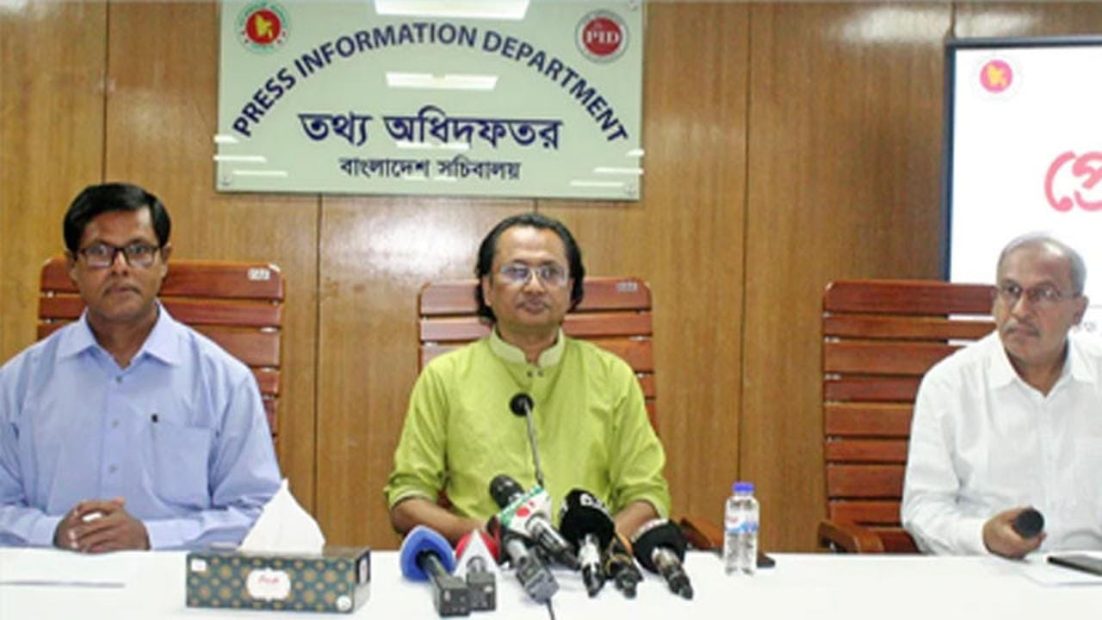
Prime Minister’s Information and Broadcasting Adviser Dr Jahed Ur Rahman has said that higher fuel prices in neighbouring countries create a significant risk of fuel smuggling across the border. Price comparisons are made to address that risk and understand the international context. However, comparing fuel prices with neighbouring countries is not logical. The government is aware of people’s purchasing power.
He said the government decided to adjust fuel subsidies to balance the country’s limited resources, considering rising fuel prices in the international market, saving foreign currency, addressing the risk of fuel smuggling to neighbouring countries and ensuring balanced budget allocation for social protection programmes, including healthcare and Family Cards. He also said there are some shortcomings in police morale, but he does not believe the police have become lax in maintaining law and order.
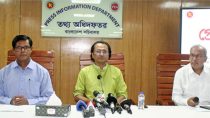
He made the remarks while responding to questions from journalists at the weekly press briefing held at the Press Information Department’s conference room at the Secretariat on Tuesday.
The information adviser said reducing fuel subsidies is a highly complex issue. The state cannot devote all its resources to providing relief to one particular sector. Maintaining economic balance in a country with limited resources is a major challenge. The government therefore has to ensure balanced allocation of resources while considering rising international oil prices and conserving foreign exchange reserves.
Regarding comparisons of fuel prices with neighbouring countries, he said higher prices there increase the risk of smuggling across the border. Price comparisons are therefore made to address that risk and understand the international context. However, the government is also aware of people’s purchasing power. To ease the pressure, the government is increasing the health sector budget, establishing specialised hospitals at the divisional level and ensuring balanced allocation for social protection programmes, including Family Cards.
On the government’s policy to address inflationary pressure caused by higher fuel prices, he said ensuring that ordinary people can meet their basic needs is the government’s main priority. The government is therefore expanding the Open Market Sale (OMS) and TCB food assistance programmes. It also plans to increase the number of families receiving Family Cards from 4.1 million in the next fiscal year to support people with fixed incomes.
Asked whether the decision was taken as a condition of an International Monetary Fund (IMF) loan, he said, “It is not being done because of any IMF condition. The government is taking these economic decisions according to its own priorities, considering people’s social welfare, saving foreign currency and the country’s financial capacity.”
Regarding domestic investment and employment, Dr Jahed Ur Rahman said domestic investment would increase once the temporary fuel crisis subsides. Family Cards and government assistance would create market demand and contribute significantly to employment generation for young people and the general population.
Responding to another question on law and order and the role of police, he said a culture of repression against ordinary people had been created through the police force under the previous government. “We want to move away from that and see the police as a genuinely service-oriented force for the people. Although there are some shortcomings in police morale at the field level, normal policing will return quickly if ordinary people stand by the police,” he said.
Dr Jahed Ur Rahman said Prime Minister Tarique Rahman had arrived in New York to attend the 81st session of the United Nations General Assembly. His official programme began on September 22, and he will address the General Assembly on September 24. During the visit, bilateral meetings will be held alongside discussions on the Rohingya crisis, climate change, sea-level rise, global inequality, and maternal and newborn health.
On September 22, the Prime Minister was scheduled to attend a breakfast hosted by UN Secretary-General António Guterres for heads of state and government. He would then attend the opening session of the UN General Assembly with other world leaders. In the evening, he would attend a reception hosted by the US President for heads of state and government and their spouses.
On September 23, the Prime Minister would hold a breakfast meeting and exchange views with representatives of international charitable and humanitarian organisations. He would also address a high-level meeting on the global inequality crisis, jointly organised by Brazil, South Africa, Norway and Spain.
Jahed Ur Rahman said international attention to the Rohingya issue had declined due to various global crises. However, the prolonged stay of a large number of Rohingyas in Bangladesh is creating both economic and security pressures. The Prime Minister will highlight this reality before the international community.
He said that on September 24, alongside addressing the UN General Assembly, the Prime Minister would deliver the opening remarks at a high-level meeting on addressing existential threats caused by rising sea levels. The meeting is also included in the UN’s official programme for that day.
Noting that Bangladesh is one of the countries most vulnerable to climate change, the adviser said, “Bangladesh’s position on climate finance, adaptation, technology transfer, loss and damage, and climate justice will be strongly presented there.”
On the sidelines of the General Assembly, the Prime Minister is scheduled to hold bilateral meetings with the Crown Prince of Kuwait and the prime ministers of Croatia, Bhutan, Thailand, Pakistan and Haiti. He is also scheduled to meet UN Secretary-General António Guterres, the President of the European Council, the President of the World Bank Group, the UN Secretary-General’s Special Envoy for Myanmar, the UN High Commissioner for Refugees, the UN High Commissioner for Human Rights and the President of the International Peace Institute.
He said Well No. 28 of the Titas Gas Field in Brahmanbaria was formally inaugurated on September 19. The well is supplying 12.5 million cubic feet of gas per day to the national grid.
The adviser said the government’s earlier statement that it could take two years to significantly improve the fuel sector did not mean it would take two years simply to recover from the recent crisis. The crisis caused by recent supply disruptions has largely subsided. The two-year plan is primarily aimed at creating a more sustainable and improved fuel situation.
Chief Information Officer of the Press Information Department Syed Abdal Ahmed and Joint Secretary of the Ministry of Information and Broadcasting Dr Md Alam Mustafa were present at the briefing.