
Alongside aman and Boro rice, interest is growing in high-value exotic fruits such as dragon fruit, Malta, longan, pomegranate, sugar apple and grapes
A Revolutionary Change in Farmers’ Fortunes and the Rural Economy
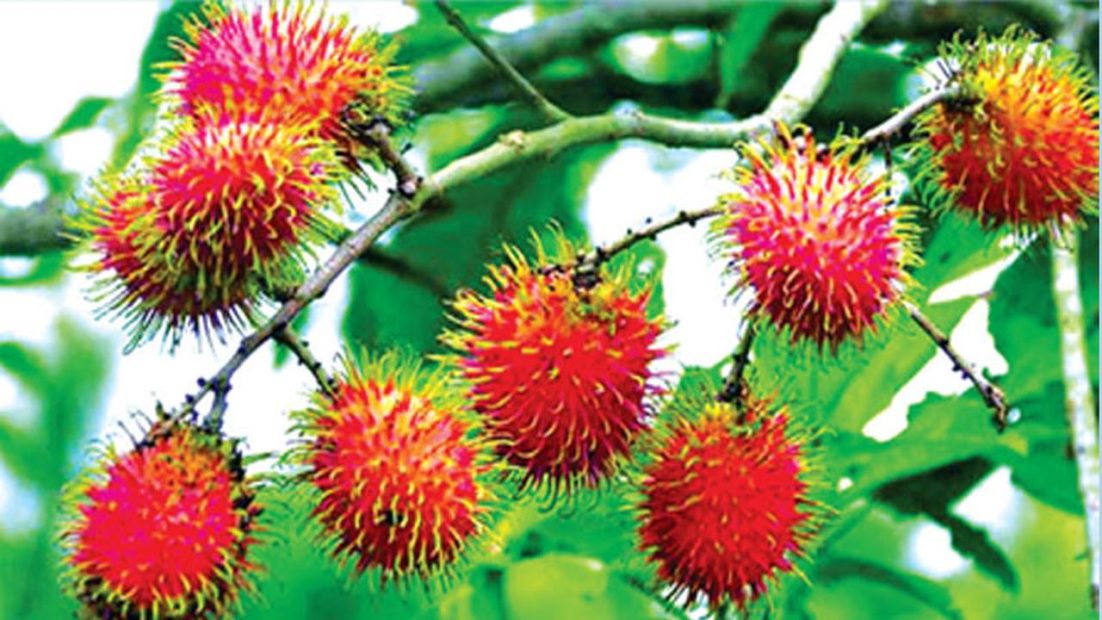
The cultivation of exotic fruits has changed the fortunes of many farmers in the region. Commercial production of these fruits, alongside traditional crops, is transforming the agricultural landscape and rural economy of the coastal areas of Khulna, Bagerhat and Satkhira.
Once largely dependent on Aman and Boro rice and conventional vegetables, farmers are now earning hundreds of thousands of taka through modern methods of exotic fruit cultivation. As a result, the practice is becoming increasingly popular.
Farmers in Khulna, Satkhira, Bagerhat, Narail and Jashore are achieving economic success by cultivating dragon fruit, Malta, longan, pomegranate and grapes. Once entirely dependent on imports, these fruits are now being produced commercially in the southwestern region with the use of modern agricultural technology.
Compared with traditional crops, exotic fruits offer higher returns. A single investment in dragon fruit cultivation can provide fruit for 15 to 20 years. In saline and semi-saline areas of Khulna, modern drip irrigation is helping farmers produce dragon fruit and Malta successfully while reducing water wastage and costs by around 50 to 70 percent.
Educated young people are also becoming involved in exotic fruit farming, creating new employment opportunities. Wholesalers often buy the produce directly from farmers’ fields. Strong year-round demand in the domestic market also ensures good prices.
The Department of Agricultural Extension is supporting farmers through modern training and advice on quality seeds and organic fertiliser.
According to sources, a silent revolution is taking place as farmers move from traditional crops to high-value exotic fruits. Despite salinity and climate change, successful cultivation of these fruits in Khulna’s soil and climate is contributing to changes in the rural economy.
Batiaghata farmer Bikarul Islam said he became interested in dragon fruit after learning about its nutritional value. With assistance from the agriculture department, he received 40 cutting saplings and started cultivation.
The plants were grown using pillars and discarded tyres for support. With proper care and organic fertiliser, the plants began producing fruit within 11 months.
“In the first year, I gave the fruit to relatives and neighbours. This year, I sold more than Tk 150,000 worth of fruit at Tk 400 per kg wholesale. If everything goes well, I hope to earn more than Tk 200,000 from the orchard next year,” he said.
“There is no harm in planting trees. They do not harm anyone. They benefit people and provide income. That is why I love planting and caring for trees,” he added.
Khulna District Deputy Director of the Department of Agricultural Extension agriculturist Md Abdul Latif said dragon fruit has strong potential in the region despite being an exotic fruit.
“Dragon fruit is still not widely known among people, so farmers face some difficulties in marketing it. We are working to raise awareness and create a market for the fruit. People are also being encouraged to consume it,” he said.
He expressed hope that the marketing problem would soon be resolved and farmers would benefit from its cultivation.
Dragon fruit is commercially produced on a large scale in Vietnam. The plant belongs to the cactus family and is a climbing plant without leaves. Its fruit has a soft skin and soft flesh containing numerous small black seeds.