Women and Children Act Cases Won’t Be Dismissed After 180 Days
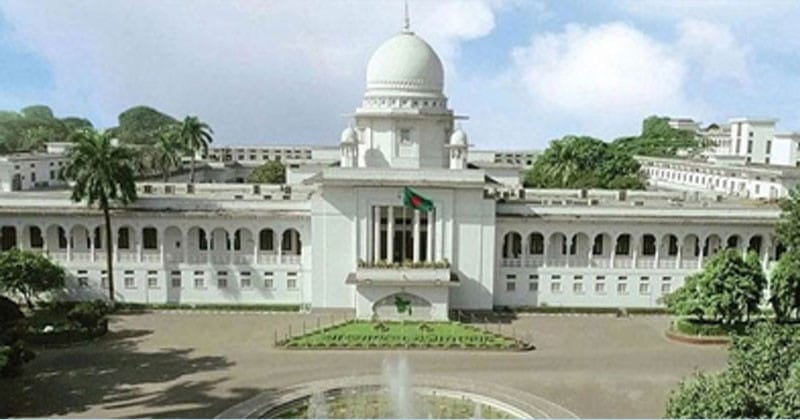
The High Court Division of the Supreme Court of Bangladesh has ruled that trial proceedings under the Women and Children Repression Prevention Act, 2000 will neither be stayed nor canceled due to a failure to conclude the trial within the stipulated 180 working days. Delivered by a former Division Bench comprising Justice K. M. Kamrul Kader and Justice Mohammad Showkat Ali Chowdhury, the verdict in the case of ‘Saiful Islam Pavel v. The State’ clarifies that no legal impediment remains to continuing the trial against an accused even after the specified timeframe has elapsed.
In its judgment, the High Court observed that the 180-day deadline specified in the law for completing a trial is directory rather than mandatory in nature. The court explained that while it remains the duty of the relevant tribunal to finish the trial within the set timeframe, exceeding the period does not automatically render the case proceedings void or draw adverse legal consequences. The bench noted that a careful review of the Act makes it clear that under no circumstances can judicial proceedings be halted simply because the tribunal failed to conclude the trial on time.
The landmark ruling originated from a case filed in January 2008 at Shyampur Police Station following the alleged rape of a first-year honors student of Eden Mohila College. According to case records, the accused, Mr. Saiful Islam Pavel, developed an intimacy with the student, promised marriage, and subjected her to repeated sexual assault, resulting in an unconsented pregnancy and a forced abortion at five months. After police submitted a charge sheet, the Women and Children Repression Prevention Tribunal No. 1 in Dhaka framed charges against Mr. Pavel on July 23, 2008, though he pleaded not guilty.
In May 2011, Mr. Pavel filed a writ petition before the High Court, seeking a stay on trial proceedings because the 180-day statutory limit under Section 20 had expired. He further argued that the tribunal, public prosecutor, and police failed to submit an explanatory report within 30 days to the Supreme Court and government as prescribed under Section 31A of the Act. Based on his application, the High Court initially granted a temporary stay on the trial, which was subsequently extended over the years before being finally re-evaluated by the bench.
Addressing the statutory provisions during the hearing, the High Court bench emphasized in its verdict written by Justice Mohammad Showkat Ali Chowdhury that Sections 20 and 31A of the 2000 Act contain no provisions for staying or canceling the judicial process if the trial is not completed within the specified period. The bench further observed that a review of Sections 20 and 31A shows that the case was not lingering unnecessarily, and criticized the petitioner for artfully concealing subsequent court orders after November 7, 2010, characterizing his petition as a mala fide act.
Represented by Advocate M. H. Rashid for the petitioner, alongside Deputy Attorney General Shaikh Saifuzzaman (Jaman) and Assistant Attorney General Md. Shafiquzzaman (Rana) for the State, the proceedings concluded with a complete dismissal of the petitioner’s claims. The court affirmed that the delay did not violate the accused’s fundamental rights, stating, ‘The grounds presented for staying the judicial proceedings do not constitute a violation of the petitioner’s fundamental rights, as no legal right accrued in favor of the petitioner.’
Ultimately finding no merit in the writ petition, the High Court discharged the rule and vacated the long-standing stay order, paving the way for the tribunal to resume prosecution. The signed verdict, which was originally delivered on June 7, 2023, was recently published on the Supreme Court website, establishing a clear judicial precedent that legal accountability under the Women and Children Repression Prevention Act cannot be evaded through procedural delays or administrative backlogs.