

Fertiliser Distribution Under Syndicate Control
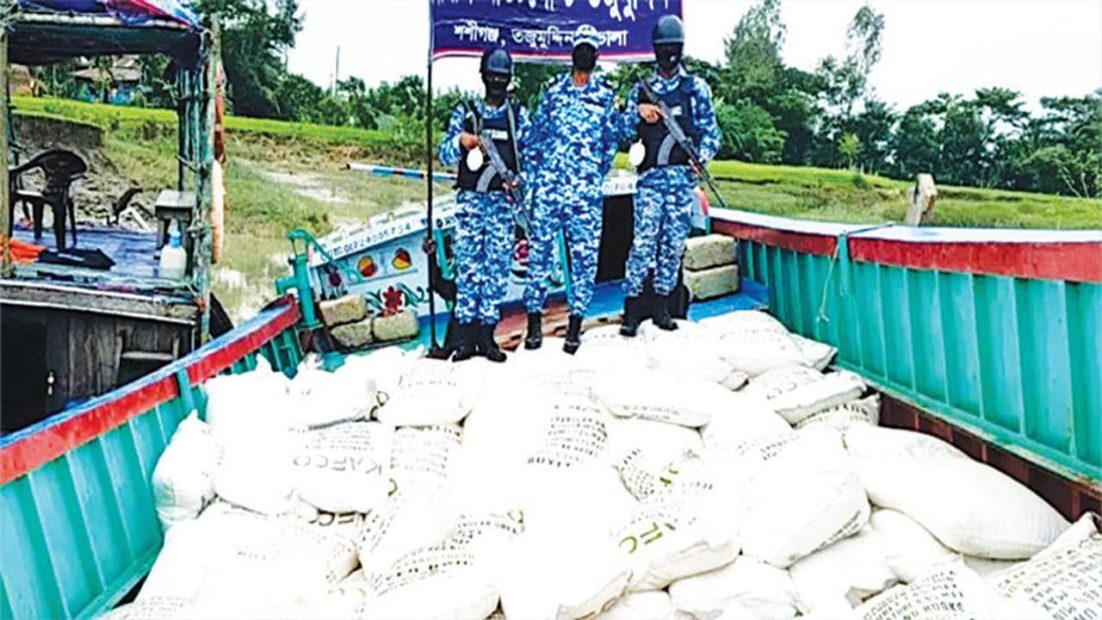
The current fertiliser situation has exposed a stark gap between documents prepared in government offices and the muddy realities of the fields. At the peak of the Aman rice season and ahead of the Rabi season, Bangladesh’s agricultural sector is facing serious disruption. Government records and statements insist that there is no shortage of chemical fertiliser in the country’s warehouses. But farmers tell a different story. Many stand in line for hours, sometimes through the night, outside dealers’ warehouses only to return home empty-handed. Their frustration has spilled into protests, highway blockades and even incidents of warehouse vandalism.
The artificial fertiliser shortage is not an isolated problem. It points to deeper weaknesses in the agricultural supply chain. Over the past few weeks, farmers in different parts of the country, particularly northern border districts, have staged protests demanding fertiliser. In some areas, they surrounded upazila executive offices; elsewhere, they blocked highways with tree trunks. In some cases, desperate farmers broke through dealers’ warehouse fences and took away fertiliser. When farmers are driven to such measures, it shows how deep the crisis has become.
Field-level reports suggest that fertiliser is not completely unavailable. Rather, its distribution appears to have been disrupted by an alleged syndicate. Farmers visiting authorised dealers are often told, “There is no fertiliser in the warehouse.” Yet the same fertiliser is reportedly being sent to local retail shops through back doors, where it is sold for several hundred taka more per bag than the government-fixed price. Citing higher transport costs and supply shortages, unscrupulous traders are taking advantage of farmers’ helplessness.
Government statistics, however, present a different picture. According to information from the Department of Agricultural Extension and relevant ministries, 1.2 to 1.4 million metric tonnes of chemical fertiliser are currently stored in warehouses across the country, including urea, TSP, DAP and MOP. From October to February next year, total demand for all types of fertiliser is estimated at slightly more than 4 million tonnes. During the same period, imports in the pipeline and local production are expected to provide nearly 5.4 million tonnes. On paper, therefore, there should be a surplus of around 1.3 to 1.4 million tonnes.
Why, then, is the situation on the ground so difficult? Economists and agricultural analysts say having fertiliser in government warehouses does not necessarily mean that it reaches farmers on time and at the right price. For years, fertiliser distribution was dominated by a system in which one principal dealer controlled each union, allowing influential local figures to exercise considerable control over farmers. The current administration has introduced a policy of appointing multiple dealers and retailers in each union to break this monopoly. Those fearing the loss of their monopoly profits are reportedly obstructing the new system, delaying fertiliser collection and contributing to artificial shortages.
New intermediary groups have also emerged in the fertiliser marketing system amid the political transition. Geopolitical factors and international market conditions have added to the problem. As fertiliser prices are considerably higher in neighbouring countries, authorities have taken note of allegations that subsidised fertiliser is being smuggled across the border. The combined effect of these factors has contributed to the present crisis.
The administration has taken measures to address the problem. Nationwide drives and mobile courts are being conducted against irregularities. Within a few days, hundreds of operations resulted in fines, licence cancellations and imprisonment. Special monitoring cells and tag officers have also been appointed in every district. Yet the situation on the ground has not improved sufficiently. Corruption and mismanagement extend beyond individual dealers, while manpower shortages and weak local monitoring allow irregularities to continue.
The distribution problem is only one side of the crisis. Bangladesh’s heavy dependence on imported fertiliser is another major structural weakness. The country requires around 7 million metric tonnes of chemical fertiliser annually, including more than 2.6 million tonnes of urea. But gas shortages, raw-material constraints and mechanical problems have limited production at state-owned fertiliser factories. As a result, around 80 to 85 percent of annual demand is met through imports, leaving Bangladesh vulnerable to international price increases and disruptions in global supply chains.
Scientists are now looking towards technology to address this weakness. Nanofertiliser has emerged as a potential option in modern agriculture. Conventional chemical fertiliser use has increased significantly over the past two decades, raising import costs while contributing to soil degradation and water pollution. According to the figures cited, conventional granular urea has a nutrient-use efficiency of around 30 to 40 percent, while nanofertiliser can reach 70 to 80 percent.
Agricultural scientists have found that 500 millilitres of liquid nano urea can provide nutrients equivalent to a 45-kilogramme bag of conventional granular urea. It can also reduce the carbon footprint of fertiliser production and transportation. Bangladesh is conducting research into nanotechnology, including biochar-coated nano urea, which can gradually release nutrients into the soil. If widely adopted, the technology could potentially reduce Bangladesh’s fertiliser imports by up to 30 percent by 2030, according to the projections cited.
However, several challenges remain. Bangladesh does not yet have a specific national policy governing nanofertiliser production and use. The country also lacks the large-scale industrial infrastructure required for commercial production. Quality control is another concern, as counterfeit products could enter the market. Strong quality-control mechanisms and modern testing laboratories are therefore essential. Further research is also needed into the long-term effects of nanoparticles on soil microorganisms and the environment.
The immediate priority, however, must be to address the existing distribution system. Keeping large stocks of fertiliser in government warehouses is of little benefit if the product does not reach farmers on time. During the peak Aman season, delays could affect crop yields, potentially increasing rice prices and adding to inflationary pressure.
The government must therefore move beyond official statistics and focus on the realities facing farmers. Stronger monitoring, greater transparency and fair distribution are essential. Protecting farmers’ rights and ensuring timely access to fertiliser are crucial to maintaining food security and building a self-reliant agricultural sector.
Author: Journalist and columnist
rintuanowar.com