
Iran Offers 7-Day Roadmap to Reopen Strait of Hormuz
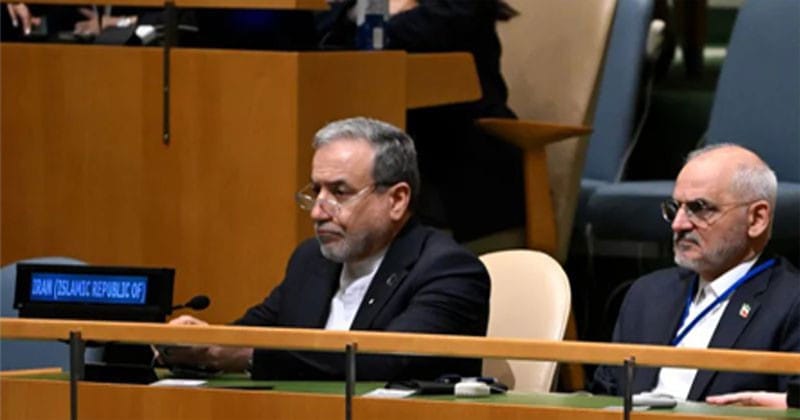
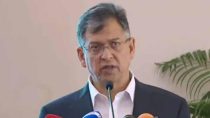
Iran has submitted a specialized seven-day roadmap proposal to the United States aimed at reopening the strategic Strait of Hormuz in the Persian Gulf. Iranian Foreign Minister Abbas Araghchi announced in New York that the proposal was delivered to Washington through indirect talks mediated by Qatar on the sidelines of the UN General Assembly session. Mr. Araghchi stated, ‘If the US accepts specific conditions, the Strait of Hormuz could be reopened within seven days, paved with the resumption of stalled peace talks between the two nations’.
Diplomatic sources indicate that Tehran’s confidential roadmap builds upon a framework established in a June 17 Memorandum of Understanding (MoU). That preliminary agreement outlined a temporary cessation of military operations alongside partial navigational access for maritime traffic. However, current negotiations remain complex as Iran demands the immediate lifting of economic sanctions and the US naval blockade while refusing to yield operational control of the vital waterway to Washington.
The ongoing crisis involving the US and Israel has now entered its seventh month, triggering a dramatic surge in global crude oil prices. Rising energy costs present significant political challenges for US President Donald Trump ahead of the upcoming US midterm elections. Iran is actively leveraging this situation to exert economic pressure, whereas Washington prefers a comprehensive deal addressing both the nuclear program and the Hormuz maritime standoff simultaneously.
In a concurrent diplomatic development, Iranian President Masoud Pezeshkian signaled Tehran’s willingness to reduce its enriched uranium levels up to 60 percent provided a broader agreement is reached with the United States. Speaking in an interview with US news outlet Fox News on Thursday, September 24, Mr. Pezeshkian confirmed Iran’s readiness to grant international verification access to its nuclear facilities. He emphasized, ‘Iran does not seek to develop nuclear weapons, and we remain interested in reaching an understanding through dialogue based on previously discussed frameworks’.
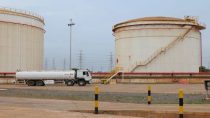
Tensions have also escalated further south as persistent missile and drone strikes by Iran-backed Houthi rebels in Yemen prompted direct military coordination between Saudi Arabia, Pakistan, and Turkey. In response to recent Houthi strikes targeting Riyadh, the Aramco oil refinery in Yanbu, and Taif, Saudi authorities invoked the ‘Makkah Joint Defense Agreement’ signed among the three nations on August 7. The pact dictates that an attack on any member state is treated as an attack on all.
To operationalize the joint defense pact, Chiefs of General Staff from Saudi Arabia, Turkey, and Pakistan convened an emergency meeting in Riyadh following preliminary foreign minister discussions at the UN General Assembly. Turkish Chief of General Staff General Selçuk Bayraktaroğlu and Pakistan’s Chief of Army Staff Field Marshal Asim Munir traveled to the Saudi capital. Citing Article 51 of the UN Charter, Saudi Arabia expects direct allied defense action, though Pakistan and Turkey are proceeding cautiously following warnings from Houthi official Mohammed al-Bukhaiti that any military intervention would be met with an iron fist.
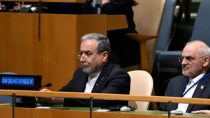
Amid these regional security developments, high-level diplomatic engagements between Russia and Iran underscored the importance of peaceful negotiation. Iranian Foreign Minister Abbas Araghchi met with Russian Foreign Minister Sergey Lavrov on the sidelines of the 81st UN General Assembly session. Following the meeting, the Russian Foreign Ministry issued a statement confirming that both diplomats conducted detailed discussions on regional tensions and unanimously declared that military or non-diplomatic measures would be completely ineffective.
Exerting a stabilizing influence on global markets, international crude oil prices eased slightly following these diplomatic signals between Washington and Tehran, combined with signs of de-escalation in US-China trade relations. Key global benchmarks including Brent Crude and West Texas Intermediate registered notable declines. Market analysts attributed the temporary price relief directly to reduced fears of major maritime energy supply disruptions and renewed investor confidence regarding global economic stability.
Expressing a broader regional perspective, Dr. Anwar Gargash, Diplomatic Advisor to the UAE President, stressed that resolving the crisis requires a long-term, sustainable framework rather than temporary stopgap ceasefires. In an exclusive interview with Foreign Affairs, Dr. Gargash noted, ‘Bilateral talks between Washington and Tehran alone are insufficient; direct and focused dialogue between Iran and the Gulf Cooperation Council member states is equally critical to prevent conflicts from reigniting’.
Dr. Gargash revealed that Iran directed nearly 3,300 missile and drone strikes toward the UAE during recent hostilities, with 95 percent targeting civilian infrastructure, although air defense systems successfully intercepted the majority. The senior Emirati diplomat stated that while diplomatic relations with Iran could eventually resume due to geographic realities, rebuilding shattered trust will require substantial time, emphasizing that regional security, geo-economic growth, and strategic self-reliance remain the primary focus for Gulf nations.
Sources: Al Jazeera, Reuters, TASS, Gulf News