Italy Bans Burqas and Niqabs in Schools, Imposes Fines Up to €1,000
The Italian government has introduced strict prohibitions on wearing burqas and niqabs across educational institutions, alongside a 30% cap on foreign students per classroom. The new “School Decree” was approved by the Italian Cabinet following Prime Minister Giorgia Meloni’s address at a Brothers of Italy rally, where she advocated for protecting Italian culture and fostering social integration. Italian national news agency ANSA confirmed the details of the decree.
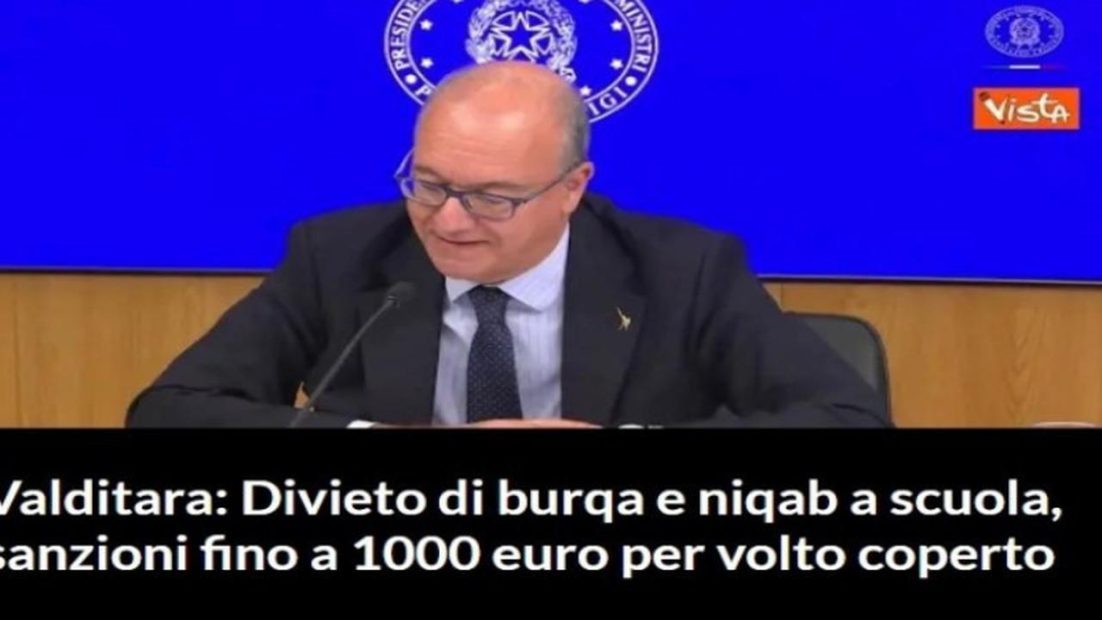
Under the new regulations, covering the face with garments such as burqas or niqabs is prohibited inside school premises unless required for health or safety reasons. Students with covered faces cannot participate in regular classes, extracurricular activities, or joint school-family events. Violations carry an administrative fine ranging from €200 to €1,000 (approximately $1,137 USD), payable by parents or guardians if the student is a minor. The restriction does not apply to standard hijabs that leave the face visible.
Education Minister Giuseppe Valditara outlined enforcement procedures, stating that students arriving with face coverings will be barred from classes and educational activities. He further warned that parents withholding children from school over these dress restrictions face up to two years’ imprisonment under the “Caivano” ordinance.
The decree also introduces enrollment limits for non-Italian citizens, capping foreign student representation at 30% in first-year classes. According to the Education Minister, over 34,000 classrooms currently exceed this threshold. The measure aims to prevent social isolation and segregated classroom environments. It applies to children born outside Italy without two years of pre-primary education, as well as secondary students with less than three years in the Italian school system.
Schools must notify social services if language barriers hinder a student’s integration. Social services will offer free Italian language courses to parents; non-compliance carries fines between €200 and €1,000. While the government maintains that these policies aim to integrate students into mainstream society, local Muslim communities and human rights organizations have voiced strong opposition, arguing that the restrictions infringe upon religious freedom and impose undue social and economic burdens on immigrant families.