

Court Approval Proposal to Be Included in Cyber Security Law Before Arresting Journalists: Home Minister
Cyber Security Law Without Amendments Could Turn the Country into a Vast Prison
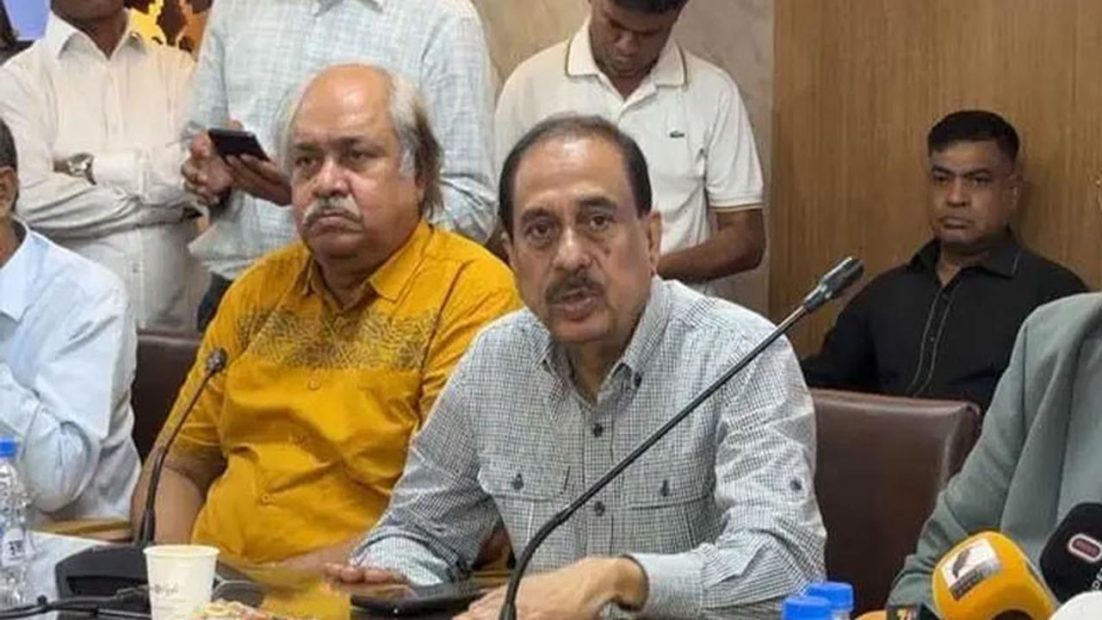
Leading media representatives have stressed the need for further amendments to the draft Cyber Security Law. Expressing concerns over possible misuse of the law, they demanded safeguards for the media and called for the formation of a media commission to address issues concerning the media.
Matiur Rahman Chowdhury, editor-in-chief of Daily Manabzamin, said, “I believe that if this law is passed without amendments, Bangladesh will turn into a vast prison.”
Meanwhile, Home Minister Salahuddin Ahmed said the proposal to require court approval before taking any action against or arresting journalists was acceptable. If the proposal is recommended by the committee reviewing the draft Cyber Security Law, it will be incorporated, he said.
The government held the second consultation meeting with stakeholders from the print and electronic media at the Secretariat yesterday to review the widely discussed and criticised draft of the “Cyber Security (Amendment) Act, 2026.”
Speaking at the meeting, Matiur Rahman Chowdhury made the remarks. Daily Star Editor Mahfuz Anam, Association of Television Channel Owners (ATCO) Secretary General and Ekushey Television Chairman Abdus Salam, National Press Club President Hasan Hafiz, BJC Member Secretary Ilias Hossain, Independent Television Head of News Mostafa Akmal, Amar Desh Managing Editor Zahed Chowdhury and ERF former president Sharmin Rinvi also spoke at the meeting.
After hearing the journalists’ views, Home Minister Salahuddin Ahmed presented the government’s position on the matter.
Post, Telecommunication and Information Technology Minister Fakir Mahbub Anam, Information State Minister Yaser Khan Chowdhury, the information secretary and relevant officials were present at the meeting.
Matiur Rahman Chowdhury said he was “very alarmed” about the Cyber Security Law. Referring to a statement made by an adviser to the prime minister, he said the statement was alarming and that discussion on the matter would be meaningless following such remarks.
“If this law is passed without amendments, Bangladesh will turn into a vast prison,” he said.
Matiur Rahman Chowdhury said several words had been used in the proposed law without specific definitions. Without clear definitions, he said, there could be scope for applying the provisions in different ways.
He also questioned the provision for mobile courts. “If a reporter is immediately sentenced through a mobile court after publishing a report, it will raise a major question about media freedom,” he said.
He described the mobile court provision as “the most unexpected” aspect of the draft. He questioned how such a provision concerning cyber security and the media came to be included in the proposed law and also raised questions about who drafted the bill and with what considerations.
Daily Star Editor and Publisher Mahfuz Anam said media representatives had expressed concern after reviewing the draft Cyber Security Law. If passed in its current form, the law would create major obstacles for the media, he said.
He said they were pleased that the government had provided an opportunity for further discussion on the law.
A proposal has been made to form an expert group comprising cyber security specialists and another group representing the media, including the Editors Guild. These groups would propose necessary amendments to ensure protection for the media, he said.
Mahfuz Anam said everyone was now part of cyberspace because of current technology. The media has online, multimedia and digital operations. Therefore, he said, a law designed to punish cyber criminals should not ultimately harm the media.
He said the government had given the media an opportunity to submit proposals. Taking advantage of this opportunity, proposals would be prepared involving print, electronic and online media representatives and cyber experts so that full protection for the media could be ensured and journalists could work more freely.
Abdus Salam, chairman and CEO of Ekushey Television, said there should be no scope for arresting or sending a journalist to jail merely because someone disliked an investigative report or claimed to have been defamed.
He said there was a need for a Cyber Security Law to deal with those committing various crimes in cyberspace. However, he said, if the law were applied to the media, a person dissatisfied with a report could file a case against the journalist and the media owner, potentially leading to arrest.
“If there is a mobile court and you publish a report and are then arrested while travelling on the road, that cannot happen,” he said.
Such application of the law against journalists would obstruct investigative journalism, he said. Although a law is necessary to combat cybercrime, protection must be ensured for mainstream media, digital media and media workers.
“There must be freedom for the media, and we must also have security and protection,” he said.
After hearing everyone’s views, Home Minister Salahuddin Ahmed said he considered the proposal to require court approval before taking any action against or arresting journalists acceptable.
“If this is recommended by the committee reviewing the draft Cyber Security Law, it will be included,” he said.
The home minister said the government had published the draft bill on its website to obtain opinions from all sections of society so that the Cyber Security Act did not become a repressive law.
“We have spoken with representatives, editors and prominent journalists from the country’s major print and electronic media, as well as representatives of newspaper organisations and various journalist associations,” he said.
Salahuddin Ahmed said the meeting had proposed taking more time to obtain opinions from media and cyber experts and introducing certain protections or saving clauses so that the media would not be harmed or victimised under the law.
“We have accepted this. We did not want to make this law targeting the media, we do not want to, and we do not want any journalist to become a victim of it or for the law to be misused,” he said.
The home minister said the government wanted to enact a law that would protect people from all sections of society, particularly young people.
“We want to protect them from those who are using cyberspace to commit various crimes, which are spreading through society like a serious contagious disease. We have to overcome this situation,” he said.