“Owner of this phone shot dead by police”
‘This phone belongs to him, and he has been shot dead by the police. Hurry to Suhrawardy Hospital immediately, or you won’t even get his body’. This ominous message was received by the family of martyr Mahamudur Rahman Saikat on July 19, 2024. The tragic details were shared by his sister, Sabrina Afroz Sebonti, while testifying before the International Crimes Tribunal-1 as the ninth witness in a crimes against humanity case involving nine deaths in Dhaka’s Mohammadpur area. The case names 28 accused, including former Minister Jahangir Kabir Nanak and former DSCC Mayor Sheikh Fazle Noor Tapas. Four accused are currently in custody, while twenty-four remain at large.
In her testimony, Ms. Sebonti explained that Mr. Saikat was deeply moved to join the anti-discrimination movement on July 18, 2024, after seeing bloodied photos of Dhaka University student Sanjida Ahmed Tonni on social media. Though initially dissuaded by his mother that day, Mr. Saikat remained distressed over the situation. His emotional distress intensified later that night following news of the death of Farhan Faiyaz, a student at Dhaka Residential Model College who succumbed to gunshot wounds. Driven by these events, Mr. Saikat resolved to participate directly in the ongoing public protests taking place across the city.
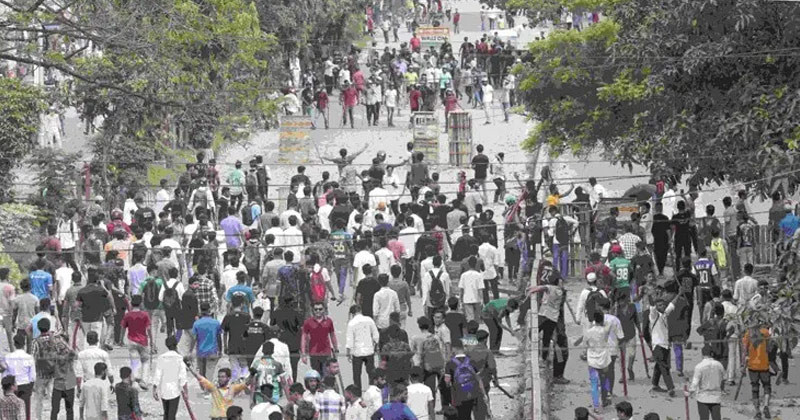
The following afternoon, July 19, after completing Friday prayers and lunch, Mr. Saikat left home to join protesters at Nurjahan Road in Mohammadpur. His final conversation with his sister took place at 3:26 PM, during which he promised he would return home shortly. Shortly after, his father made multiple attempts to reach him, but the calls went unanswered. Eventually, a fellow protester answered Mr. Saikat’s phone and informed the family that he had been shot by police, urging them to reach Shaheed Suhrawardy Medical College Hospital urgently before the body was moved.
Upon rushing to the hospital, the family found Mr. Saikat’s bloody body lying on a stretcher outside the morgue. Ms. Sebonti testified that she observed five other victims alongside her brother, all displaying severe gunshot wounds. She noted that a bullet had pierced directly through one side of Mr. Saikat’s head and exited through the other. That night, his body was washed at Markazul Islam in Mohammadpur. Due to the strict ongoing curfew, the body was brought home the next day and buried at the Mohammadpur Jame Mosque Graveyard, with the death certificate citing ‘gunshot’ as the cause.
The tribunal case centers on formal charges filed regarding the killings of nine individuals in Mohammadpur on July 18 and 19, 2024. Following the framing of charges, formal trial proceedings commenced, and witness testimonies are being recorded in phases. Concluding her account before the tribunal, Ms. Sebonti demanded the maximum legal punishment for all those responsible for the deaths of her brother and the other victims, seeking justice for the violent repression carried out during the movement.