After 129 Adjournments, Can the Task Force Unravel the Mystery of Sagar-Runi Murder?
Mobaiedur Rahman
For nearly 37 years, I have mainly written about politics for Dainik Inqilab. As far as I remember, I have rarely written about crime. But today, I am writing about two crimes that remain unresolved even after decades. One is the Sagar-Runi murder, which took place 14 and a half years ago. The other is the death of film actor Salman Shah, who died 30 years ago.
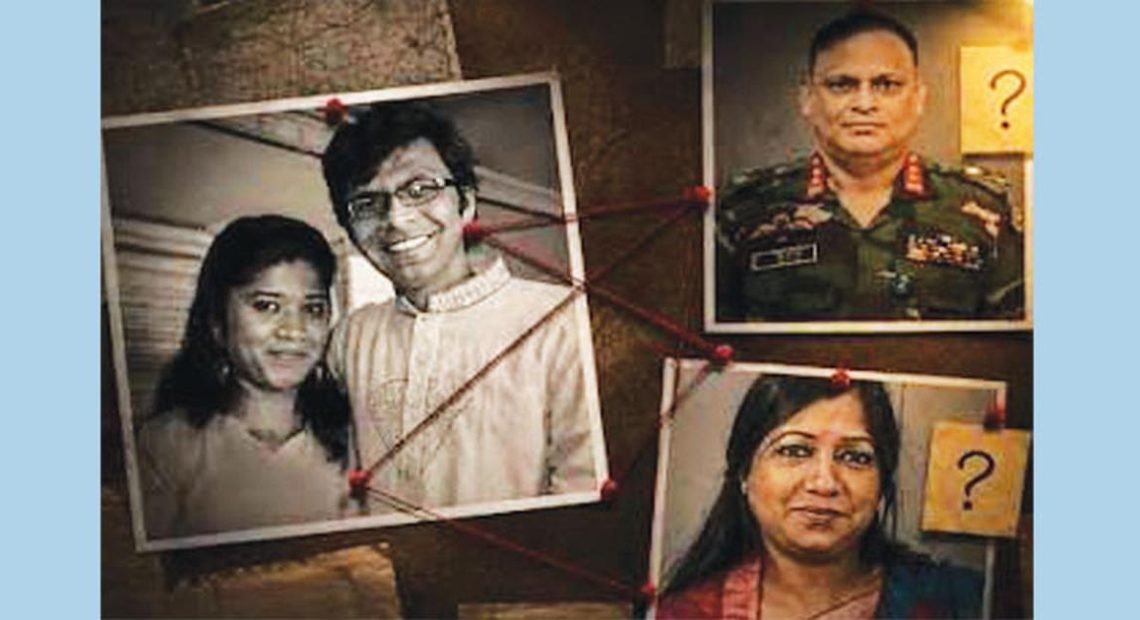
Mr. Sagar and Ms. Runi were a journalist couple. On February 11, 2012, they were brutally murdered at their rented home in West Rajabazar, Dhaka. Sagar was the news editor of Maasranga Television, while Runi was a senior reporter at ATN Bangla. Salman Shah, one of Bangladesh’s popular film stars, died on September 6, 1996, at the age of 25. Whether he committed suicide or was murdered remains unresolved.
The first remarkable aspect of the Sagar-Runi case is that the court has sought 129 adjournments over the past 14 and a half years. I spoke to several legal experts, who said they knew of no precedent in the world for a murder case being adjourned 129 times.
The case was eventually considered to have gone into cold storage. However, after the July Revolution, it was revived during the government of Dr. Muhammad Yunus. The government formed a task force to conduct an impartial and detailed investigation, and it is still working.
Meanwhile, opinions have been obtained from crime experts, criminal lawyers and journalists who have followed the case from the beginning. A recent statement by International Crimes Tribunal Chief Prosecutor Aminul Islam has created significant public interest.
He said ICT expert Tanvir Hasan Zoha discovered sensational information while examining call records related to another case. According to the information disclosed to journalists, evidence was found linking Major General (retd.) Ziaul Ahsan and a cultural figure to the murder. The chief prosecutor did not name the cultural figure. The following day, however, a national daily identified the person as actress and Awami League leader Rokeya Prachi, citing information from another tribunal prosecutor who requested anonymity.
A senior journalist who has investigated the case from the beginning said the main reason the mystery remained unresolved for 14 years was that there had been no opportunity to investigate the murder in depth before the July Revolution.
The day after the murder, then Home Minister Sahara Khatun publicly declared that the killers would be arrested and the mystery solved within 48 hours. Fourteen years have passed, but those 48 hours never came. Later, then Inspector General of Police Hasan Mahmud Khandaker said the clues obtained had led to “significant” progress in the investigation.
The journalist also recalled that journalists had united to demand justice and taken to the streets. But later, some reportedly became advisers to the prime minister, obtained television channel licences or received important appointments. Speaking on a Channel One talk show on September 5, he alleged that a television channel had been opened by “selling the blood of Mr. Sagar and Ms. Runi.” He further claimed that some journalists who had led the movement later began travelling in expensive new Prado vehicles, while those who did not accept such inducements faced threats. According to him, the movement eventually collapsed, with disputes even breaking out among journalists at the Press Club.
A retired brigadier general questioned why the investigation was transferred from the local police station to the Detective Branch (DB) only four days after the murder, taking with it whatever evidence had been collected. Before the DB could make progress, the case was transferred to the Rapid Action Battalion (RAB) on April 18, 2012.
The case remained with RAB for 12 years. The retired brigadier general questioned what RAB had done during that period and why the case was not closed if nothing had been found. He also questioned why it remains open.
According to him, information gathered by the police, DB and RAB during those years went to the National Telecommunications Monitoring Centre (NTMC). Since NTMC is now also being questioned, he asked whether there was a “ghost in the mustard”—whether the problem lay within the system itself.
Mr. Sagar and Ms. Runi reportedly operated a website called Energy Bangla. After their murder, suspicion turned toward the site. Questions arose over whether they had discovered or preserved information that could implicate powerful quarters.
ICT expert Tanvir Hasan Zoha said that while investigating Ziaul Ahsan, an electronic device/server and old documents containing information dating back to 2007 were found. Some deleted files were also reportedly recovered. After analyzing the information, three or four people were identified as suspects, and one was interrogated.
According to Mr. Zoha, the interrogation revealed that an official of RAB’s intelligence wing had been told on the night before the murder that “something is going to happen,” although he was not told what. The following morning, he learned of the Sagar-Runi murder. Mr. Zoha therefore described the incident as a “state-sponsored murder.”
Earlier, when suspicion focused on Energy Bangla, various claims circulated among journalists and at the Secretariat that information concerning the alleged looting by powerful quarters had been stored on Mr. Sagar and Ms. Runi’s laptop.
After Rokeya Prachi’s name emerged, another claim surfaced that she had a video clip related to the planning of the BDR massacre and that Ziaul Ahsan took the video from her two days later.
Brigadier General Ziaul Hasan also questioned on a Channel One talk show on September 5 why the High Court had granted the government more than 100 extensions. He referred to former Chief Justice SK Sinha’s account that Sheikh Hasina had summoned him to Bangabhaban and ordered him to deliver the verdict on the 16th Amendment in favor of the government. On September 6, Sinha himself reportedly recounted the incident on YouTube. The question therefore remains: At whose direction did the High Court grant so many extensions?
It is now clear that the Sagar-Runi murder was not an ordinary killing. A task force was formed on October 17, 2024, after the July Revolution. As September approaches, the task force is nearing its first anniversary, while the murder itself will soon complete 15 years.
When will the masterminds behind this horrific murder and those allegedly used to carry it out be exposed? Public expectations from the current elected government are immense.
There is no space to discuss Salman Shah’s murder in detail here. Until now, his death had been portrayed as suicide. However, following the arrest of Godfather Mr. Don, the circumstances surrounding his death have reportedly taken a new and dramatic turn.