Hundred Flight Cancellations Leave Passengers in Deep Crisis
Alternative Routes Being Arranged for Bangladeshi Passengers Amid Conflict in Saudi Arabia
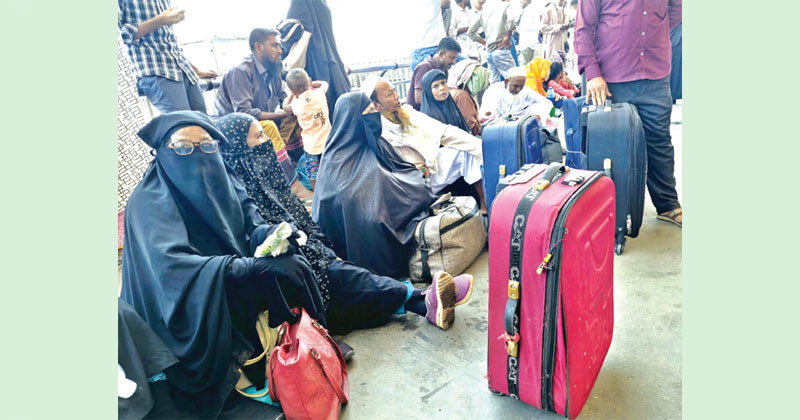
Flight operations connecting Bangladesh to Saudi Arabia remain severely disrupted following ongoing Houthi security threats targeting the Kingdom’s aviation infrastructure. This crisis has left approximately 15,393 passengers stranded, with around 100 flights canceled from Hazrat Shahjalal International Airport in Dhaka up to Wednesday. Thousands of expatriate workers, particularly those facing imminent visa expirations, are enduring immense anxiety, sleeplessness, and financial strain while staying in hotels or with relatives across Dhaka.
According to a Civil Aviation Authority of Bangladesh (CAAB) release, the canceled departures comprise 39 direct and 50 transit flights. Direct cancellations include 17 flights by Biman Bangladesh Airlines, 10 by US-Bangla Airlines, 7 by Riyadh Airways, and 5 by Saudia Airlines. Additionally, 50 transit flights via India and various West Asian carriers, such as IndiGo, Emirates, Qatar Airways, Flydubai, SalamAir, and EgyptAir, have been grounded, affecting travel to Riyadh, Dammam, Madinah, and Jeddah.
King Khalid International Airport in Riyadh remains entirely closed, while King Fahd International Airport in Dammam faces continuous disruptions and suspensions. Consequently, Biman Bangladesh Airlines has suspended all flights to Riyadh and Dammam until October 17. In contrast, operations at Prince Mohammad bin Abdulaziz International Airport in Madinah are running smoothly, and King Abdulaziz International Airport in Jeddah has successfully resumed regular take-offs and landings after initial weekly disturbances.
In response to government directives, state-owned Biman and other commercial carriers have initiated ticket rebooking procedures to reroute passengers to operational airports in Madinah and Jeddah, subject to seat availability. A Biman official emphasized that passengers with near-expiry visas are receiving top priority for free rebooking to mitigate their losses. The official noted, ‘To ensure no seats go vacant on Biman flights, overbooking sometimes occurs. Even after crossing immigration, some passengers had to be brought back, though they departed on subsequent flights.’
Despite these relief measures, airline officials caution that the rebooking process remains slow and heavily constrained because these crucial Middle Eastern routes were fully booked well in advance. As stranded workers wait anxiously at the airport and surrounding areas, authorities continue coordinating alternative travel arrangements to help them reach Saudi Arabia before their legal documentation expires.