Azerbaijan In Turmoil Over Ban On Wearing Hijab In Schools
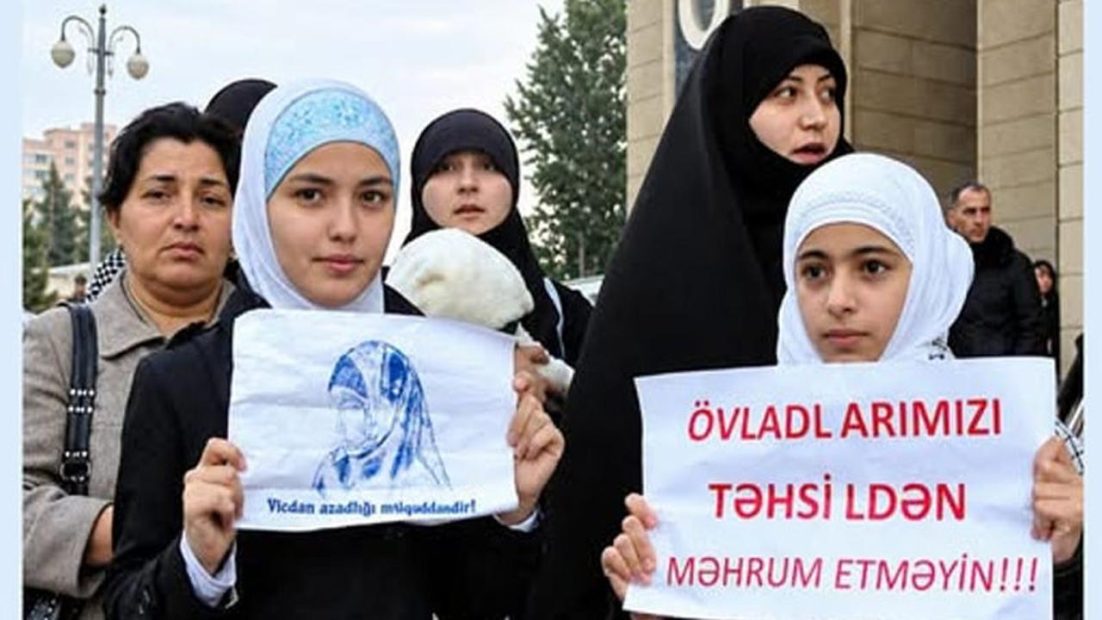
Protests have spread across Azerbaijan after students and teachers wearing hijabs were reportedly denied entry to schools. The government has introduced a new dress code to enforce secular principles in educational institutions. Although the rules do not explicitly ban hijabs, several schools have reportedly barred students and teachers wearing them. The restrictions have prompted class boycotts, street protests and criticism on social media.
According to Al Jazeera, Azerbaijan’s Cabinet of Ministers approved amendments to the dress code for students in public schools on September 21. The government says the new rules aim to ensure that clothing in educational institutions aligns with secular principles. However, reports have emerged of hijab-wearing female students being denied entry to schools in the capital, Baku, and other areas. Similar restrictions have reportedly been imposed on teachers.
Teacher Zahra Hasanova told Al Jazeera that she had been informed she could not wear a hijab to school. Saying the decision had upset her, she argued that wearing a hijab was a matter of personal choice. Even if she decided to remove it in the future, she said, that decision should be her own.
About 96 percent of Azerbaijan’s population is Muslim. The country’s Constitution defines the state as secular while guaranteeing freedom of religion. The controversy over the new dress code has therefore raised questions about both maintaining secular education and protecting the freedom to wear a hijab and the right to education.
Meanwhile, imprisoned journalist Polad Aslanov has begun a hunger strike to protest the new restrictions. He has been serving a prison sentence after being convicted of treason in 2020. In a message posted on Facebook, his wife, Gulmira Aslanova, said he had chosen a hunger strike to protest what he considers a violation of constitutional rights.
Reports have also circulated about disruptions to internet access and social media in the country. However, data from the Open Observatory of Network Interference and NetBlocks did not confirm reports of a widespread internet shutdown. Independently verified information on the issue remains limited.
Protests against Azerbaijan’s decision have also spread to neighbouring Turkey. Last week, demonstrators gathered outside Azerbaijan’s consulate in Istanbul, demanding that restrictions on Muslim women wearing hijabs be withdrawn and urging the authorities in Baku to reconsider the decision.
Some protesters compared the situation with restrictions imposed on women wearing hijabs in Turkey after the country’s 1997 “postmodern coup,” when hijab-wearing women faced barriers to entering universities and working in public-sector jobs.
Although he did not directly name Turkey in his remarks on the protests, Azerbaijani President Ilham Aliyev appeared to criticise the country indirectly. Speaking at a congress of the ruling New Azerbaijan Party, he said, “Do not interfere in our way of life.” Turkish authorities have not issued an official response to the remarks.
Earlier, Turkish President Recep Tayyip Erdogan said in an address to the United Nations General Assembly on September 23 that Muslim women were increasingly facing discrimination. Although he did not mention Azerbaijan by name, his remarks have been viewed in the context of the ongoing international debate over hijabs and religious clothing.
Source: Al Jazeera