Bangladesh Gains Competitive Edge over Rivals under US’ Proposed New Import Tariffs
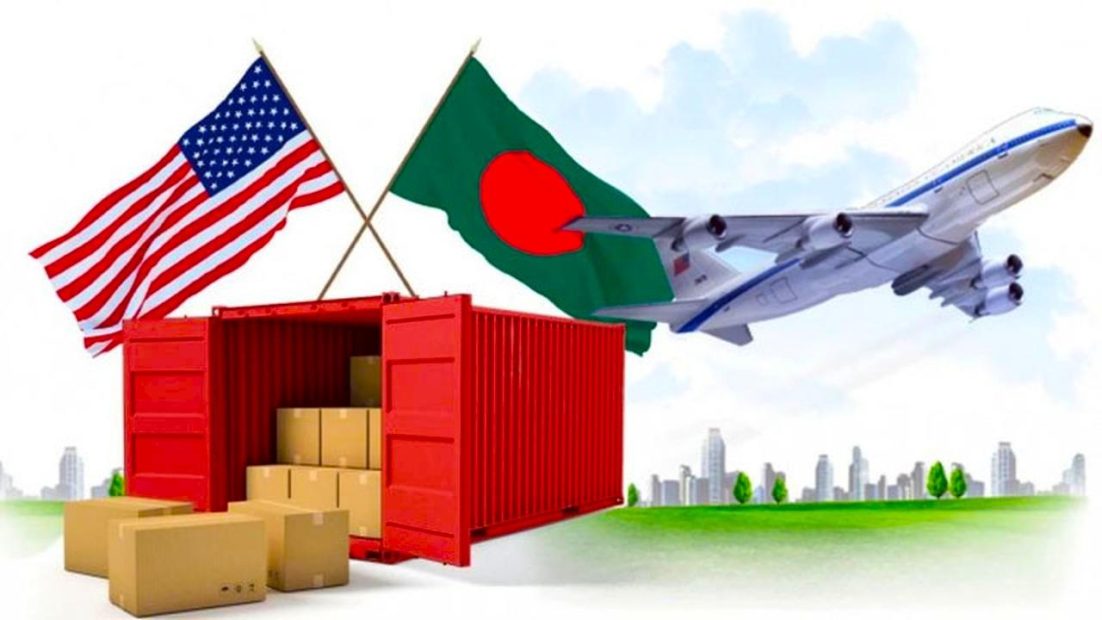
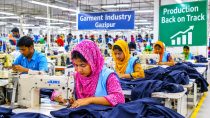
Bangladesh is currently in a relatively favourable position compared with major Asian competitors under the United States’ newly proposed import tariffs. The proposed tariff rate for Bangladesh is lower than those for China, Vietnam and India. Bangladesh is in the same position as Cambodia. This difference could create new opportunities for Bangladeshi exporters, particularly garment manufacturers, to compete in the US market.
The Office of the United States Trade Representative (USTR) proposed the new tariffs last Wednesday. The move is based on allegations of excess industrial production capacity, government subsidies for manufacturing, labour rights violations and discriminatory trade policies. However, the proposed 18 per cent tariff on Bangladeshi products has not yet been finalised. Following a public consultation process, the hearing process is expected to conclude on January 25, 2027.
Under the proposal, Vietnamese products would face a tariff of 35 per cent, Indian products 25 per cent and Chinese products 20 per cent. The proposed rate for Bangladesh is a maximum of 18 per cent. Cambodia would face the same rate.
The United States is the largest single export market for Bangladesh’s readymade garments. In 2024, Bangladesh exported goods worth around $8.40 billion to the US, including $7.34 billion in readymade garments.
The lower proposed tariff compared with those of competing countries could create opportunities for Bangladeshi garment exporters to secure more orders. Bangladeshi products may become more price-competitive, particularly against goods from China and Vietnam.
However, the extent to which Bangladesh can benefit will depend on production costs, workers’ wages, energy prices, transportation and port management. A tariff advantage alone is not enough to remain competitive in the international market.
Moreover, the proposed 18 per cent tariff would not represent Bangladesh’s total tariff burden. If the United States’ regular Most Favoured Nation (MFN) tariff, averaging 15.62 per cent, remains in place, the combined average tariff burden could reach 33.62 per cent. The current figure is 25.62 per cent.
M A Razzaque, chairman of Research and Policy Integration for Development (RAPID), said: “Handling this tariff issue is beyond our capacity alone. Many countries are involved. Therefore, something may be possible if all the countries can take action together. This will increase uncertainty. If the new tariffs are imposed, the US market will become smaller. This will put pressure on our exports. Since tariffs will also be imposed on our competing countries, we will not necessarily fall behind in terms of competitiveness.”
Dr Selim Raihan, executive director of the South Asian Network on Economic Modeling (SANEM) and a professor of economics at the University of Dhaka, said the US initiative had further exposed the growing trend of unilateral and policy-inconsistent measures in global trade. As a result, the global trading system was becoming increasingly uncertain.
He said frequent changes in tariff policies created uncertainty among exporters, investors and businesses dependent on international markets. Mr. Raihan identified three priorities for Bangladesh. First, the country should challenge the justification for the proposed tariffs through evidence-based discussions with the United States and seek a favourable decision. Second, it should accelerate the diversification of export products and markets to reduce dependence on the US market and the readymade garment sector. Third, it should increase investment in industrial productivity, technological modernisation, infrastructure and labour standards to strengthen export competitiveness.
Responding to questions about the US tariffs at the Foreign Ministry on Thursday, State Minister for Foreign Affairs Humayun Kabir said there was room for discussion. Bangladesh could raise issues it considered unreasonable with the United States.
He said a public hearing on the matter would be held on January 25, providing an opportunity for Bangladesh to present its arguments. Bangladesh had reservations and objections on several issues, which would be clearly communicated to the US authorities through discussions and negotiations.
As an example, the state minister said Bangladesh could discuss the use of US cotton in manufacturing products for export back to the American market. Taking this into account, Bangladesh could negotiate for tariff exemptions.