Bangladesh Stolen Asset Recovery: Taskforce Targets 40+ Money Laundering Cases, Repatriation Could Take 5 to 10 Years
Bangladesh’s Stolen Asset Recovery Taskforce faces a long legal battle to bring back money laundered abroad, with cases spanning five to 10 years. Even through civil legal action, recovering stolen assets may take three to five years.
This is because Bangladesh first needs to find out which countries received the money, who holds it and how it was moved through different channels. The country must then prove in the courts of those countries that the assets were obtained illegally.
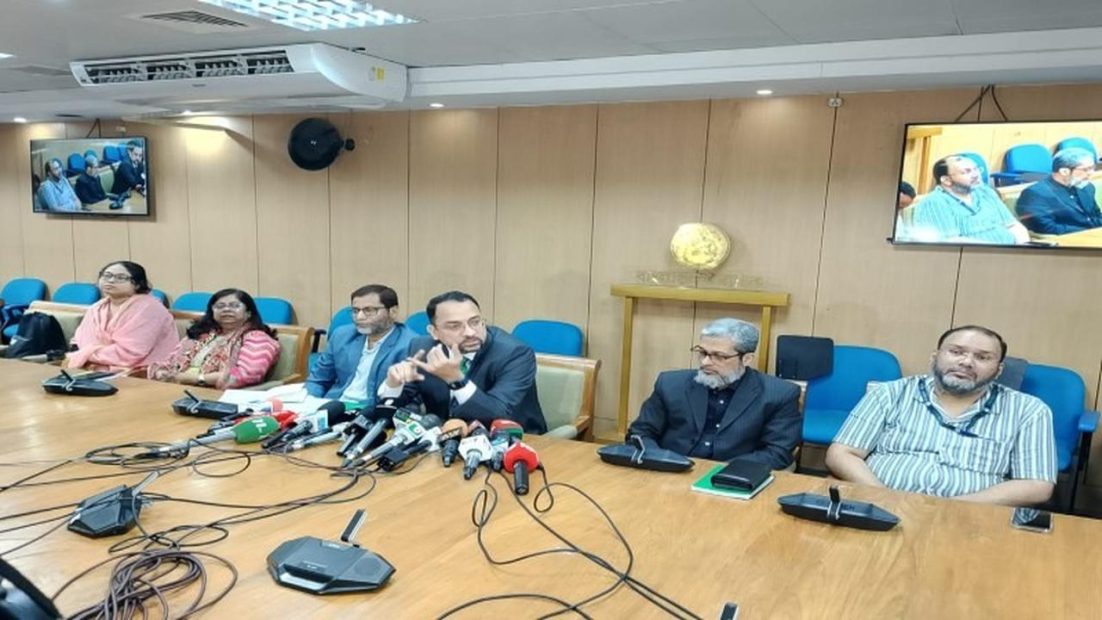
Stolen Asset Recovery Taskforce Adviser Farhanul Gani Chowdhury said this at a press conference organised by Bangladesh Bank on Monday (November 16).
He said Bangladesh Bank’s Stolen Asset Recovery Taskforce was planning to change its legal strategy to recover money laundered abroad. The taskforce plans to appoint experts with international experience. It also wants to involve international law firms and litigation funders.
The taskforce has also started work on around 40 more cases in the second phase. These cases are related to loan defaults in the banking sector and money laundering.
He further said that investigations and legal steps taken only in Bangladesh would not be enough to bring back money sent abroad. Cooperation from the laws, law enforcement agencies and courts of the countries where the assets are held is also necessary.
An act that is illegal in Bangladesh may not be treated in the same way under the laws of another country. Therefore, Bangladesh must follow the legal process of each country and prove that the assets were obtained illegally.
Bangladesh Bank spokesperson Arif Hossain Khan said the taskforce formed by Bangladesh Bank was working with experts who have international experience in recovering laundered money and assets.
He said an expert with international experience in money laundering and asset recovery had been appointed as an adviser to the taskforce.
He added that the laundered money had been moved through different countries and several layers of transactions. As a result, finding the current location of the money, identifying the countries through which it passed and tracing how the assets were transferred were difficult and time-consuming tasks.
On why the taskforce does not regularly share updates about its work, he said money laundering was a sensitive issue. If every detail of an investigation and its progress were made public, those involved could become alert in advance and adopt new methods to hide their activities. This could make it harder to recover the money.
For this reason, the taskforce is continuing its work while keeping necessary information confidential.
Explaining the process of recovering money laundered abroad, taskforce adviser Farhanul Gani Chowdhury said the recovery of assets in other countries largely depends on their laws and law enforcement agencies.
An act that is illegal in Bangladesh may not be considered illegal in the same way in another country. Therefore, the authorities must prove that the assets were obtained illegally under the laws of the country concerned before taking steps to recover the money.
He said international experience showed that criminal cases of this type could take five to 10 years. Recovering assets through civil legal action could also take three to five years.
Farhanul Gani Chowdhury further said Bangladesh had started this work without any previous experience. Now, the strategy is being updated based on lessons learned over the past two years. The taskforce is identifying cases where progress has not met expectations and trying to adopt more effective methods.
The taskforce began its work to recover money laundered abroad in October 2024. At first, it worked on cases given priority by the then government.
Those involved in the process consider the first two years a period of learning and developing strategies. The experience gained from those cases is now being used to move forward with further work.
Bangladesh Bank’s taskforce is giving importance to civil legal action alongside criminal cases to recover money sent abroad. It has already started working on cases related to loan defaults in the banking sector and money laundering in two phases.
In the first phase, several cases related to loan defaults were given priority. Later, around 40 more cases were added in the second phase in August.
The taskforce has selected cases where banks have information about money being transferred abroad and there is a possibility that the borrowers or owners concerned are living in other countries.
The recovery efforts are being led by the banks. This is because a large part of the money was sent abroad through the banking system. The plan is to involve the affected banks more actively in the legal battles.
On this matter, the taskforce adviser said there were plans to involve international law firms and litigation funders in civil cases.
Bangladesh has limited experience in recovering assets across borders. For this reason, the taskforce is seeking help from organisations that have experience handling such cases in different countries.
He also said talks were underway with international organisations interested in working in Bangladesh. Some confidential documents were being shared at the initial stage. A final decision on agreements would be made after reviewing these documents.
Bangladesh Bank wants to be careful about sharing information on the amount of money laundered, the location of the assets and the legal strategies being used.
Those involved in the process fear that if such information becomes public, the accused may move their assets to other places. They may also try to hide the location of their assets through new transactions. This could make it harder to recover the money.
Bangladesh Bank spokesperson Arif Hossain Khan said the bank would answer questions from the media. However, it would not be possible to share all information because of technical and strategic reasons.
Bangladesh Bank expects that bringing back the laundered money will help strengthen the country’s weak economy and improve its economic capacity.
However, the success of this effort depends on international cooperation, legal capacity and a long legal battle. As a result, Bangladesh may have to wait several more years to recover the money.