Tasteless and odorless hilsa is coming from Gujarat-Myanmar, 4 lakh 27 thousand kg of hilsa has come from India in the last 9 and a half months of this year, 500 taka kg of hilsa from India-Myanmar is sold in the country for 1500-1800 taka!, Imported Indian tasteless and odorless hilsa is being sold in the market as 'Barisal hilsa', Hilsa harvest in Padma has decreased by 537 metric tons, a percentage decrease of 46.33 percent Urgent research is now needed on this issue, giving more importance to climate change and pollution: Researcher Anisur Rahman The Department of Consumer Rights Protection should take prompt action on market monitoring and control: CAB
Beware of Indian Hilsa in the Market
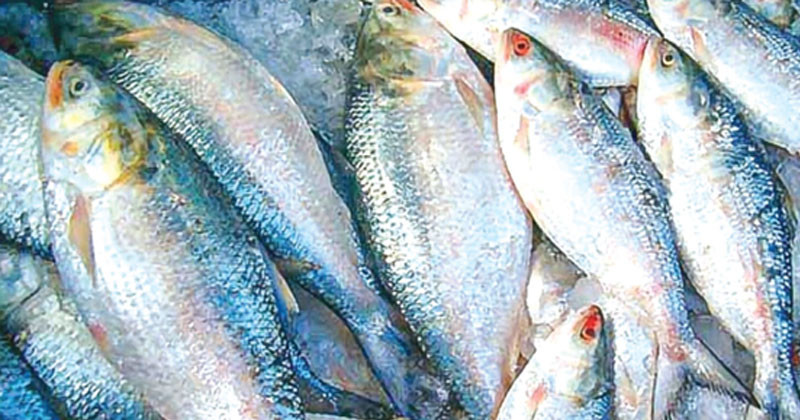
Bangladesh’s national fish, hilsa, has become increasingly scarce. Hilsa production in the country has declined due to the adverse effects of climate change and various human activities. Production has fallen by 12.49 percent over two years, a decline of more than 71,000 tonnes.
Hilsa catches in the Padma River, widely known as the fish’s natural habitat, have also fallen by 46.33 percent, or 537 metric tonnes. During the first two months of the current 2026-27 fiscal year (July-August), hilsa catch or production reportedly declined by 30 to 40 percent compared with the same period last year.
Researchers identify four major reasons behind the decline: excessive and unplanned fishing, reduced river navigability and siltation, pollution, and the spread of submerged sandbars. The widespread use of very fine fishing nets, current nets and behundi nets in rivers and the sea is resulting in the indiscriminate catching of juvenile and breeding hilsa. Climate change and siltation of riverbeds are reducing navigability and damaging the natural flow of rivers and the environment around their mouths.
Industrial waste, plastic pollution and changes in water temperature and pollution caused by power plants near fish sanctuaries are also having negative effects. The emergence of submerged sandbars is seriously disrupting hilsa movement and breeding grounds. As hilsa supplies have declined, retail prices have risen sharply. A 1kg hilsa is currently selling for around Tk2,400 to Tk3,400, putting it beyond the reach of many ordinary consumers.
To address the shortage and meet market demand, Bangladesh has taken steps to import hilsa from abroad. Taking advantage of the shortage, traders are now importing hilsa from India that, according to the report, lacks the taste and aroma of Bangladeshi hilsa. Indian hilsa is also reportedly entering Bangladesh illegally across the border in addition to legal imports.
As a result, Indian hilsa has flooded local markets. Hilsa from Gujarat, India, which is described in the report as lacking the taste and aroma of Bangladeshi hilsa, is reportedly being sold as “Barishal hilsa” or “Padma hilsa.” This is causing serious losses to consumers.
An analysis of data from the Department of Fisheries shows that Bangladesh produced 295,000 tonnes of hilsa in the 2007-08 fiscal year. Production increased every year after that and reached a record 571,342 tonnes in 2022-23.
However, production declined for two consecutive years. It fell by 7 percent to 529,487 tonnes in 2023-24 and by around 12 percent to 500,000 tonnes in 2024-25. The final production figure for the current fiscal year will be available later.
However, traders estimate that production could be 30 to 40 percent lower than last year. Renowned Bangladeshi hilsa researcher Anisur Rahman said, “It is unimaginable that hilsa catches have fallen so much this year. I did not think the rate of hilsa production would start declining so quickly. The excessive use of behundi nets, overfishing and the dominance of submerged sandbars, above all pollution, may be responsible for this. Climate change and pollution need to be given greater importance, and urgent research is now needed. Based on that, plans must be made to increase production.”
Taiefa Ahmed, chief scientific officer at the Fisheries Research Institute in Chandpur, said the excessive use of very fine nets and overfishing are considered major reasons behind the decline in hilsa production. Several teams from the Fisheries Research Institute in Chandpur have started working in different hilsa habitats to understand the current situation. One team recently visited Hatiya and found behundi nets spread across a large area near the mouth of the estuary.
She said, “There are nets spread across such an area that it looks like a mouth. If such a large net is spread across that opening, how can hilsa move through it? We are working on all these issues. Initiatives will soon be taken to identify and remove the causes of the decline in hilsa production.”
People in West Bengal, India, traditionally look forward to Bangladeshi hilsa during Durga Puja. For the past seven years, the Bangladesh government had allowed a specific quantity of hilsa to be exported to India before the festival as part of a special initiative.
However, the situation has now changed. Regular imports of hilsa from India began last year. Indian hilsa is also entering Bangladesh during the peak season this year. According to National Board of Revenue (NBR) data, hilsa imports from India began in July last year. Around 17,850kg was imported over five months that year. In the current year, 427,000kg has arrived in nine and a half months.
Bangladesh has also been importing hilsa from Myanmar for many years. NBR data for the past decade shows that hilsa has regularly been imported from Myanmar in varying quantities. The largest amount, 1.025 million kg, was imported in the last fiscal year. Since the 2019-20 fiscal year, Bangladesh has imported a total of 3.062 million kg of hilsa from Myanmar.
Hilsa from India and Myanmar is also being imported through the Benapole land port. According to available data, 352,787kg of hilsa was imported through Benapole in the first two months of the current fiscal year. Official records confirm that 352,786kg entered through the port during July and August, with 29,440kg arriving in July and 323,346kg in August.
These fish look similar to Bangladeshi hilsa. Fish purchased for around Tk500 per kg are reportedly being sold in local markets as “Padma hilsa” for Tk1,500 to Tk1,800 per kg, causing serious losses to consumers. Recent reporting has also documented concerns that imported fish is sometimes being sold as locally caught hilsa.
According to Customs and Fisheries Quarantine Office sources, 352,787kg of hilsa was imported through Benapole in the first two months of the 2026-27 fiscal year. Of this, 29,440kg arrived in July and 323,346kg in August. The declared value of the imports was Tk6.92 crore.
A total of 22 importers, including Famous Traders, Satata Fish Feed, Sharif Trade International, Swarnali International and Rabbi Enterprise, imported the fish during the two months. According to the report, hilsa imported from India through letters of credit costs around Tk252 per kg. After adding government duties of Tk162, truck transportation, LC charges and other costs of around Tk100 per kg, the total cost comes to approximately Tk514 per kg.
However, the fish is reportedly being sold as Padma or Barishal hilsa for Tk1,500 to Tk1,800 per kg. Recent reports have similarly found a wide price gap between imported and local hilsa.
Not only in Bangladesh, but markets in West Bengal are also receiving tonnes of hilsa from Gujarat, Mumbai and Myanmar. However, hilsa traders have been accused of selling these fish as Bangladeshi hilsa despite differences in taste and aroma.
Consumers say dishonest traders often pack Indian or Myanmar hilsa and sell it as “Bangladeshi Padma hilsa.” After taking the fish home and cooking it, they find that it does not have the expected taste or aroma of hilsa. The imported fish looks similar to local hilsa and is often larger in size. However, it is much cheaper. Supplies of such fish have increased in Benapole, Jashore and various other fish markets across the country.
Indian hilsa is reportedly being sold not only in Barishal, known as the home of hilsa, but also in the capital. Traders generally identify these fish as Indian or Myanmar hilsa. Some also refer to them as “Rohingya hilsa” or “fake hilsa.” The demand for Bangladeshi hilsa remains very high, and its price is also significantly higher. Taking advantage of this price difference, many traders are reportedly importing fish from India and Myanmar and selling it as “Padma hilsa.”
Ashwadul Alam, inspector at the Fisheries Quarantine Office at Benapole Land Port, said, “In the first two months of the current fiscal year alone, records show that 352,787kg of hilsa was imported through Benapole Land Port. A total of 22 importers brought in these fish. We are issuing quarantine certificates only after properly examining the fish.”
According to traders, local hilsa weighing between 1.2kg and 1.3kg is currently selling for Tk3,300 to Tk3,400 per kg. In contrast, Indian and Myanmar hilsa of a similar size is selling for Tk1,500 to Tk1,800 per kg. Although the imported fish is often larger, its price is much lower than that of local hilsa. As a result, a large number of consumers are naturally turning to the cheaper fish.
Zahirul Haque, a consumer who was buying hilsa at a market, said, “Sometimes traders sell hilsa claiming that it is from Chandpur, sometimes Barishal and sometimes Chattogram. But all these hilsa are imported from India and Myanmar. Some fish traders are selling these fish at three to four times the price. As a result, consumers are being deceived. We want the administration to take action against the fish traders involved according to the law. This kind of deception must be stopped immediately.”
Attempts were made to contact Md. Zahirul Islam, Director General (Additional Secretary) of the Directorate of National Consumer Rights Protection, by phone, but no response was received.
However, A H M Shafiquzzaman, president of the Consumers Association of Bangladesh (CAB), said, “At present, there is no visible success in the government’s market monitoring. The prices of essential goods are rising sharply. The government has no control over the situation. Taking advantage of the decline in hilsa catches in the country, traders are importing hilsa from India that lacks the taste and aroma of Bangladeshi hilsa and selling it in the market as local hilsa at three to four times the price. This is a major deception of consumers. The Directorate of National Consumer Rights Protection and other relevant authorities should take quick action on this matter.”