The Awami League government’s 1996 Ganges Water Treaty is about to expire in December, which has led to a heated national discussion about its renewal and its highly unequal historical background. The thirty-year agreement has continuously been criticized by water experts and analysts as Continue Reading

By Al Shaharia In the final week of April, farmers in Sunamganj’s haor wetlands were preparing to harvest their Boro rice when flash floods from upstream and persistent rain submerged nearly 46,000 hectares of Boro farmland in Sunamganj and surrounding areas. The incident immediately raised fears of a shortfall of nearly 200,000 metric tonnes in […]Continue Reading
By Rintu Anwar The lifeblood of any emerging economy is uninterrupted and affordable energy security. Yet Bangladesh’s macroeconomy, industrial sector and daily life are now caught in a severe energy and power crisis. The current government assumed office with an ambitious pledge to create 10 million new jobs. But the reality of the past six […]Continue Reading
We have been hearing about the immense potential of the country’s economic development for a long time. But in reality, we do not see it manifesting itself in a visible form. In the past, we have seen those in power being satisfied with the story of imaginary high growth. We have not seen them paying […]Continue Reading
Dr. Syed Tariquz-Zaman The current nationwide load-shedding crisis is an outcome of ongoing mismanagement and corrupt capitalism carried over from the previous Awami League government, not a sudden phenomenon brought about by the current administration. Analysts note that the establishment of rapid rental power plants by individuals such as Mr. Faruk Aziz Khan and his […]Continue Reading
Dr. Md. Mozaffar Hossain A serious moral and socioeconomic question mark that challenges the government, society, and human conscience is the extended hand for charity on the streets of metropolitan areas. Although every person of Bangladesh is legally ensured fundamental rights, equality, and dignity by the Constitution, there is still a significant gap between what […]Continue Reading
Professor Md. Mujibur Rahman Bangladesh’s land administration is, however, constrained by bureaucratic complexity, systematic delays, and extensive corruption. This is mostly because the Ministry of Land lacks a specialized, dedicated administrative structure. Although land is the fundamental building block of the country’s economy, agriculture, and social Continue Reading
The International Monetary Fund (IMF) has projected that Bangladesh’s economy could reach $677 billion by 2030. During this period, the country’s GDP could surpass those of Malaysia, Vietnam and Thailand, according to a report titled The $150 Trillion Global Economy in 2030, published by Canadian media outlet Visual Capitalist. The projection offers hope amid Bangladesh’s Continue Reading
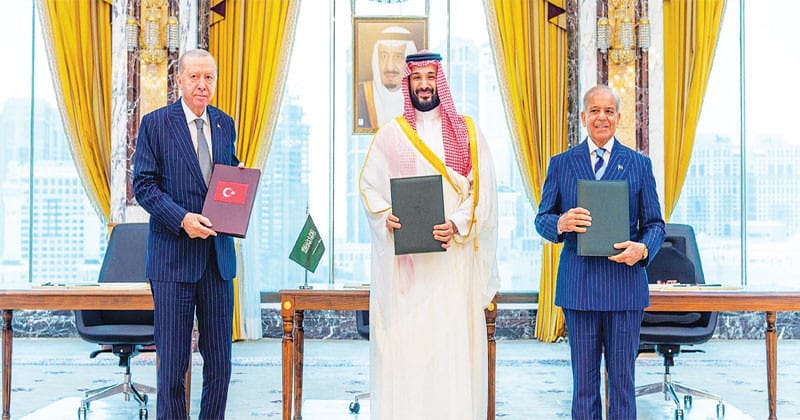
Dr. Muhammad Asadullah Al Galib A historic trilateral agreement was inked at the Al-Safa Palace in the holy city of Makkah against the backdrop of quickly changing geopolitics and regional security. This historic initiative, known as the Makkah Joint Defense Agreement, unites the top leadership of three major Muslim powers: Turkey, a NATO member with […]Continue Reading
Md. Mamun Hassan From August 16 to August 30, Bangladesh will observe National Fisheries Week-2026 with the theme ‘Self-reliant country in silver fish, Bangladesh first,’ emphasizing the industry’s vital and diverse role in rural employment, national nutrition, and the overall economy. The official Bangladesh Economic Review 2025 states that during the Continue Reading