Chattogram to Come Under Full Modern Sewerage Network, WASA Aims for Partial Operation by June
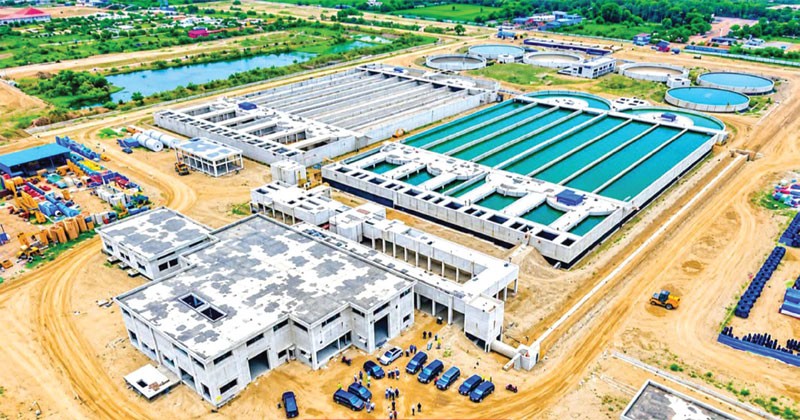
Though very late, the port city of Chattogram is coming under a full modern sewerage network as the first city in the country. The first phase of this sewerage project is 78 percent complete. In this situation, public suffering from digging on main roads will continue. Chattogram WASA, the agency implementing the project, has sped up work to partly open the project before the next monsoon. When it opens, about 2 million people of the city will come under the modern sewerage system.
The project will collect household sewage, treat it and then release the water into the sea. This will stop pollution of the Karnaphuli, which holds the Chattogram port, and the Halda river, known as a mine of fish.
According to the master plan, the whole city has been divided into six catchments to build a modern sewerage network. In four catchments, the project is being carried out at a cost of Tk 15,332 crore. Two more projects costing Tk 13,258 crore for the other two catchments are in the process of approval.
The project is named “Chattogram Metropolitan Sewerage Installation Project (First Phase)”. Its cost was set at Tk 3,808 crore and later raised to Tk 5,219 crore. This is the first sewerage project of Chattogram WASA, which was established in 1963.
The sewerage project is being set up on 163 acres of WASA land in Halishahar of the city. Under the project, a sewage treatment plant with a capacity of 100 million litres a day is being built. A faecal sludge treatment plant with a capacity of 300 cubic metres a day is also under construction. About 200 kilometres of sewerage pipeline is being laid. At the same time, work is going on to set up 28,000 household connections.
According to WASA, the city produces about 400 million litres of sewage every day. This waste flows through drains and canals into the Karnaphuli and Halda rivers. At present, 539 cubic metres of human waste (faecal sludge) collects in septic tanks every day. Of this, 15 cubic metres is treated by the city corporation and 20 cubic metres by the NGO DSK. The rest mixes into rivers and the sea.
Chattogram WASA made its first sewerage master plan in 2017, 54 years after it was established. As recommended in the master plan, work began in the first catchment in 2018. The first sewerage treatment project is being built on WASA’s 163 acres of land in Halishahar. The project period is set until June 2027. The project got approval on 7 November 2018, but work began on 22 January 2022.
Digging on the main roads of the city has caused suffering over a huge area. Digging is still going on on several roads including Bandar Fakir Hat, Agrabad Access Road, Port Connecting Road, Kadamtali, Pathantuli Road, Nur Ahmed Road and Bata Li Road, among the main roads of the city. A large part of the road is occupied to lay pipelines. This disrupts vehicle movement and causes daily traffic jams.
Because of slow work, suffering has continued in those areas for months. In this situation Chattogram WASA wants to finish digging on the roads before the monsoon, to complete the work quickly. WASA Chief Engineer Mr. Maksud Alam said work slowed somewhat because the monsoon disrupted pipe laying. But he said work has been sped up with the aim of opening the project partly by next June. He said he hopes it can be opened partly by June. He said the project period runs until 2028 and the work will be finished by then.
Project people say about 140 kilometres of the 200 kilometre pipeline has already been laid. In some areas, work has to go slowly because roads are narrow and densely populated. Pipe laying work is 65 percent complete. Civil work of the sewerage treatment plant is about 86 percent complete and installing equipment is 45 percent complete. The overall progress of the project is 78 percent.
Under this sewerage project, the city will have no septic tanks. Sewage from every home will go directly to the sewerage treatment plant through pipelines. Rainwater will go to drains, while all other water, meaning waste from the kitchen, bathroom and toilet, will flow into the sewerage line through pipelines.
In the first phase, residents of a large part of the city will get the benefit of this project. These include Kotwali, Batali Hill, Lalkhan Bazar, Enayet Bazar, Reazuddin Bazar, Alkaran, Firingi Bazar, Sadarghat, Madarbari, Majhirghat, North and South Agrabad, Pathantuli, Mansurabad, Eidgah, Nayabazar, North and South Halishahar and Anandabazar.
WASA officials said the second sewerage project, “Chattogram Sewerage System Development Project (Catchment 2 and 4)”, got approval on 25 November last year. This project, costing Tk 5,152 crore, is being carried out to bring residents of the Kalurghat and Baklia areas under the central sewerage system. Under it, a sewage treatment plant of 60 million litres a day, 151 kilometres of pipeline, 14,000 household connections and 14,000 catch pits will be set up in the Hamidchar area of Kalurghat.
Another project of Tk 2,163 crore has been approved to acquire and develop 74.11 acres of land for these two catchments. Last February, the Catchment 5 project costing Tk 2,797 crore was approved to bring residents of the Kattali area under the central sewerage system. Under this project, a treatment plant of 50 million litres a day capacity, 90 kilometres of pipeline and 81,000 household connections will be set up on the same land of the first sewerage project in Halishahar.
Besides this, EDCF of South Korea, which is interested in financing the Fatehabad Catchment (STP 3) project costing Tk 3,360 crore, has completed a feasibility study. Under it, there are plans for a sewage treatment plant of 60 million litres a day, a faecal sludge treatment plant of 100 cubic metres capacity, and 58.30 kilometres of pipeline and connections.
Marubeni Corporation has shown interest in carrying out the Patenga Catchment (STP 6) project, costing Tk 9,897 crore, through a public private partnership (PPP). These two projects are now under review by various government committees including the Planning Commission. They may get approval within this year.