China Is More Important for Bangladesh
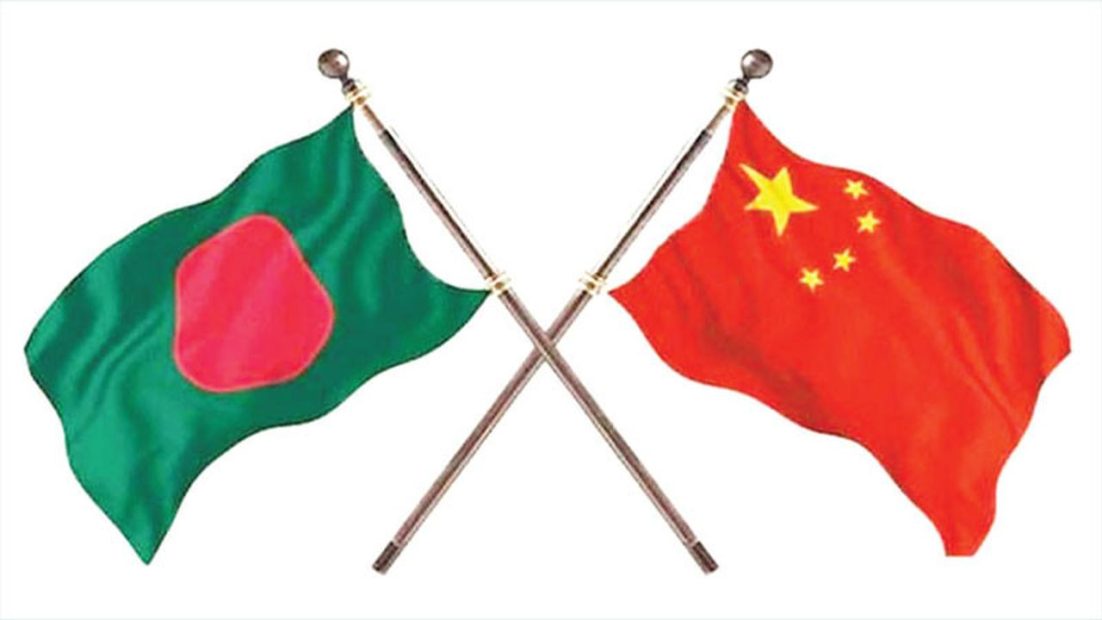
Last Thursday, September 24, the world witnessed a rare and unprecedented scene. Chinese President Xi Jinping received an unusually warm welcome during his state visit to the United States. US President Donald Trump personally received Mr. Xi at Joint Base Andrews in Maryland. Usually, a US president welcomes a visiting head of state at the White House rather than at an airport. But Mr. Trump went to the airport to receive Mr. Xi.
A 100-foot-long red carpet was laid out for the Chinese president. A B-1 bomber also flew overhead as part of the security arrangements. These developments prove that China has reached a unique position in the world and has become a superpower. Otherwise, an arrogant superpower like the United States would not have welcomed the Chinese president in such a manner.
Why did the United States set such a rare example? There is only one reason. It has realised that China will have dominant influence in the world in the coming days. There is little benefit in remaining in conflict with China.
The United States has also realised that its policy of trying to dominate the world by attacking one country after another is not popular. Many developed and developing countries are avoiding it. It is increasingly being viewed as a war-mongering power.
Another reason is the Iran war. The war has exposed the real strength of the United States. It has become clear that it cannot always deliver what it promises. The United States and Israel expected to destroy Iran quickly through their combined military strength. But Iran launched counterattacks and put both powers in a difficult situation. As a result, the United States is now looking for a way to leave the war while saving face.
Two
It has become clear that the United States is a declining superpower. Although it remains a major military power, it has no record of winning the wars it has fought. It can cause huge damage to lives, property and infrastructure, but it cannot always achieve victory.
The United States fought in Afghanistan for 20 years but failed to win the war. Instead, it withdrew, leaving behind billions of dollars worth of weapons and equipment. Its defeat in the Vietnam War is also recorded in history. Now, after becoming involved in the Iran war, it is facing another difficult situation.
Iran has a history of warfare and military strategy spanning 3,000 years. Its military capabilities and strategies have developed further in the modern era. It is said that Iran has received support from major powers such as China and Russia. China’s support, in particular, has strengthened Iran.
The United States understands China’s growing influence. But it cannot ignore China because its own interests are closely linked to the country. If it antagonises China, its own economy could suffer.
China is a major holder of US debt and is also closely linked to the United States through trade and technology. According to figures, US debt held by China stood at $618 billion as of July this year. China is one of the largest foreign holders of US debt. If China puts pressure on its US debt holdings, the US economy could face a major shock.
The world today is no longer dependent only on military power. The number of bombs, missiles or soldiers a country possesses is not the only measure of development or global influence. Economic strength is now a major source of global power.
China is one of the world’s leading economic powers and ranks second after the United States. At its current pace of development, it is expected to overtake the United States in the coming decade. It is also advancing rapidly in military power and technology.
Artificial intelligence (AI) is one of the most important areas of technological competition. China’s progress in AI has been remarkable. It has even moved ahead of the United States in some areas. As a result, the United States has been forced to engage in dialogue with China on the issue.
At their meeting, Mr. Xi said both China and the United States have the ability to develop AI technology. However, AI must remain under human control for the benefit of humanity. China has already made clear that it will prevent US dominance in AI technology.
Three
China’s progress in technology, business, trade and military power is being seen as a major global development. Yet China does not display an aggressive or expansionist attitude.
It does not threaten countries with military action or seek to destroy them through war. Instead, it seeks to establish friendly relations with developed and developing countries through investment, technology and trade. In this way, it is working to promote global peace.
China has therefore become popular among developing and poor countries. Many countries want to strengthen ties with it because it does not behave like the United States. It does not threaten others or interfere in their internal affairs. Instead, it extends a hand of friendship.
China has become a silent global power. It does not feel the need to display its strength by intimidating others. A truly powerful country does not always need to demonstrate its strength. China is following this approach.
China does not directly send troops to fight on behalf of other countries or alliances. It also does not support attacks on other countries. When US-led forces attacked Iraq, Iran, Yemen, Libya and Afghanistan, China did not support such actions. Instead, it called for peace and extended support for rebuilding war-torn countries.
China’s policies show that it seeks its own development while also contributing to the development of its friends. It wants to benefit itself while allowing its partners to progress.
The situation is different with India. India, according to the article, wants to keep its neighbours under its influence and expects them to follow its interests. It seeks to secure its own interests from neighbouring countries without giving enough in return. It also does not want its neighbours to develop faster or establish strong relations with other countries.
China is different in this regard. It extends a hand of friendship and seeks to benefit itself while also allowing its partners to develop.
Four
During the 15-year rule of Sheikh Hasina, Bangladesh was completely under India’s influence. India secured its interests through Ms. Hasina, while Bangladesh received little in return. Ms. Hasina herself once said that India would never forget what she had given it.
She abandoned Bangladesh’s foreign policy of “friendship to all, malice towards none” and adopted a one-sided policy towards India to remain in power. She effectively placed Bangladesh at India’s disposal.
The people of Bangladesh did not accept this India-oriented policy. The July uprising ended Ms. Hasina’s rule as well as India’s influence over Bangladesh.
The current BNP government is following Bangladesh’s constitutional foreign policy of maintaining friendly relations with all countries. As a developing country, Bangladesh should naturally give greater importance to countries from which it can receive more support while maintaining mutual interests and dignity.
In this regard, China is the most suitable country for Bangladesh. China’s policy is not to interfere in the internal affairs of other countries or dictate whom they should or should not engage with. It believes in mutual development.
China considers Bangladesh a close friend and is also one of its leading development partners. When Prime Minister Tarique Rahman visited China in June, the country gave him an unprecedented welcome. This reception and the discussions during the visit have opened new opportunities for Bangladesh’s development.
However, Bangladesh’s geographical position in the Indo-Pacific has created strategic competition among China, the United States and India. The BNP government is maintaining a balance in this situation. It is keeping the United States satisfied, avoiding confrontation with India and strengthening ties with China for economic development.
This is what should be done. If the United States and countries around the world are seeking China’s cooperation, there is no reason for Bangladesh to remain behind.
The main point is that whoever has the most economic strength has the greatest influence in the world. China has that economic strength, and everyone is turning to it. Bangladesh, too, must turn to China.