Hilsa Fishing Resumes After 22-Day Ban, With Tk 150 Billion in Revenue Expected
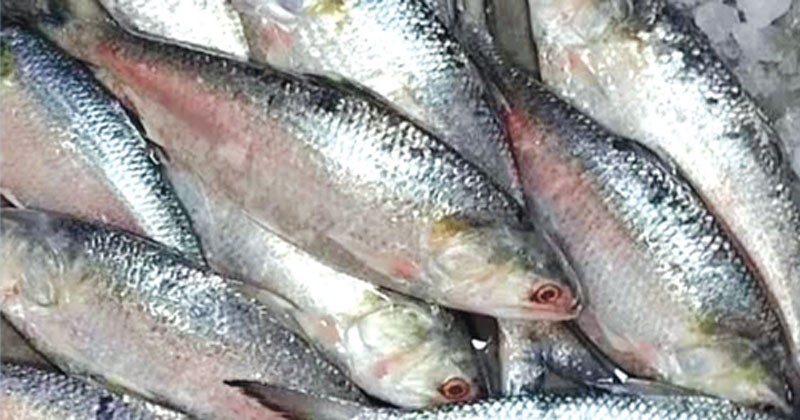
The 22 day ban on catching mother hilsa during the breeding season ended at midnight. It ran across the country to raise hilsa production. Fishers took their nets and boats back to the sea and rivers yesterday. According to the Department of Fisheries, hilsa production has grown a lot in recent years because of the ban, which helps hilsa lay more eggs and increases the number of jatka (young hilsa).
Production was 5.65 lakh metric tons in the 2020 21 fiscal year and 5.71 lakh metric tons in 2022 23. It fell slightly to 5.29 lakh metric tons in 2023 24 and to 5 lakh metric tons in 2024 25. Researchers say river pollution, falling dissolved oxygen in water, climate change and the killing of jatka and mother hilsa caused the dip in the last two years. This year, close monitoring in the breeding season let mother hilsa lay eggs safely. If jatka killing can be stopped, they expect about 6 lakh tons this year.
Hilsa researcher and fisheries scientist Dr. Md. Anisur Rahman said they hope production will reach about 5.75 lakh metric tons this year. He said the fish got good protection, so production should be good. The fisheries department has already issued rules to follow while catching hilsa. For seven months, from the start of next month until the end of June, catching, moving and selling hilsa fry and jatka will be banned across the country.
Dr. Md. Motaleb Hossain, Director of the Inland Fisheries Division of the Department of Fisheries, said it is not possible to say right away how much production will rise from the mother hilsa campaign. He said total hilsa production grows each year when breeding succeeds. He said production fell to 5 lakh tons in 2024 25 because of natural and environmental reasons, but it may rise to about 6 lakh tons this time.
Experts say production may be about 1 lakh tons higher than last year. Currently the lowest average price of hilsa in wholesale and retail markets is Tk 1,200 to Tk 1,500 per kg, depending on size and quality. At that rate, 1 lakh tons (10 crore kg) of hilsa would be worth Tk 12,000 crore to Tk 15,000 crore.
About 70 to 80 percent of all hilsa in the world is produced in Bangladesh. A mother hilsa that lays eggs undisturbed can release 20 to 25 lakh eggs. Thanks to the ban, more than 50 percent of mother hilsa get the chance to lay eggs each year. Thousands of crores of jatka hatch from these eggs and add to the total number of hilsa. They grow into big hilsa that are later caught in rivers and the sea. Because of this, Bangladesh now ranks first in the world in hilsa production and is a leader in fish production in open inland waters. Since fishers stop fishing each year, they later find enough big hilsa in the rivers.
This year, the administration enforced the breeding season ban very strictly. About 9 crore 92 lakh meters of illegal current nets were seized across the country. Large amounts of mother hilsa and fishing boats were also seized during the 22 days. Hundreds of cases were filed and fines imposed on lawbreakers across the country.
In Laxmipur, 150 fishers were held in 229 operations. Mobile courts jailed 73 of them and fined 77 a total of Tk 1.95 lakh. In Bhola, 80 people were jailed and about Tk 4.5 lakh was collected in fines. In Shariatpur, 169 fishers were jailed in the 22 days and Tk 1,79,600 was collected in fines under the fisheries law. In Rajbari, fishers were jailed for different terms and fined through mobile courts during a 15 day drive. Joint drives in Chandpur, Jhalakathi, Faridpur and Patuakhali also held over a hundred fishers, who were jailed or fined. Our correspondents sent the following district reports.
Nachim Ul Alam reports from Barishal that fishers began casting nets in the Meghna, Tetulia, Sandhya, Sugandha, Bishkhali and Baleshwar rivers and at the sea mouths. This came after the 22 day ban on catching, moving and selling hilsa ended at midnight. From the start of next month until the end of June, catching, moving and selling hilsa fry and jatka will be banned for seven months across the country. The government has declared hilsa up to 10 inches as jatka.
During the ban, the Department of Fisheries ran about 1,500 mobile courts through executive magistrates in the Barishal coastal area, with help from law enforcement. About 1,400 fishers were jailed for breaking the ban, and about Tk 55 lakh was collected in fines. A total of 1,650 cases were filed. About 6 crore meters of nets were seized and burned. About 7,000 drives were held, with many fish landing sites, markets and depots inspected. About 54 tons of hilsa were seized and given to orphanages and Lillah boardings.
Md. Zahirul Haque reports from Bhola that fishers were jailed for different terms for breaking the ban in the Meghna and Tetulia rivers. In 72 mobile courts and 339 drives, 215 people were held in 152 cases and sentenced. About Tk 6,46,800 was collected in fines. Sixteen trawlers and 38 boats were seized, and Tk 1.45 lakh from the auction of the seized trawlers went to the state treasury. In total, 3.175 metric tons of mother hilsa and 40 lakh meters of current nets were seized and burned. The net value is given as about Tk 11, which appears to be a printing error. During the ban, 25 kg of VGF rice per person, 3,591 metric tons in all, was given to 1,43,656 registered fishers.
SM Babul (Babor) reports from Laxmipur that fishers on the Meghna coast are getting ready to fish again after the 22 day break. The fish landing sites are busy again. Traders, ice factory workers, shopkeepers and others who depend on the sites are waiting for more fish to arrive. In Laxmipur, 256 mobile courts were run and 153 fishers were held. Authorities seized 4,180 kg of fish and 42,41,100 meters of nets. In 106 cases, 83 fishers were jailed for different terms, and the rest paid Tk 1.95 lakh in fines. They also seized 23 boats and one speedboat.
Jahangir Kabir Mridha reports from Barguna that fishers in Barguna are going to sea after the ban to catch hilsa and other sea fish. Last minute preparations are on at the fish sites in Patharghata, Taltali, Amtali and Barguna Sadar. In all, 325 drives and 84 mobile courts were held. They jailed 30 people, filed 10 cases, collected Tk 81,000 in fines and seized about 6 lakh meters of nets. During this time, 39,469 fishers got a total of 986.725 metric tons of rice as aid.
Anwar Zahid reports from Faridpur that the 22 day ban has formally ended on the Padma. A joint task force of the district administration, the fisheries office, river police and the Coast Guard patrolled the Padma day and night and ran strict drives. The task force worked together in the four main upazilas along the Padma, which are Faridpur Sadar, Sadarpur, Charbhadrasan and Bhanga. About 15 to 20 people were jailed and fined under the fisheries protection law. River police and police stations also filed at least 25 to 27 cases.