Is the war of the US and Israel with Iran heading toward a “frozen conflict”?
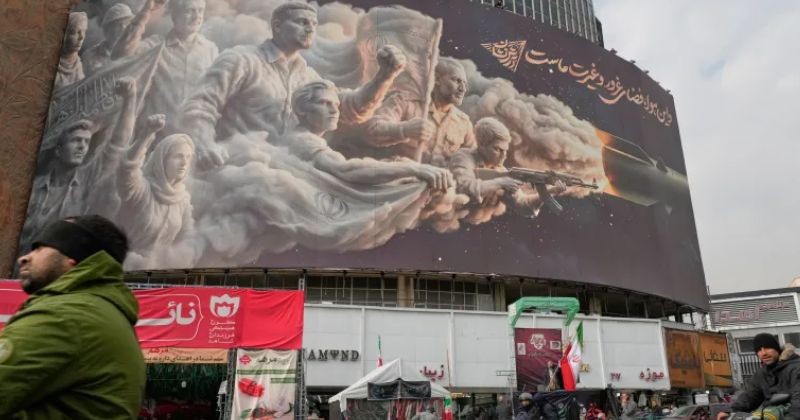
Is the ongoing war of the United States and Israel with Iran turning into a long “frozen conflict”? International analysts are asking this question more strongly after the recent mixed statements of US President Mr. Donald Trump and the hard position of Tehran. Mr. Trump has made it clear that Washington does not need any deal with Tehran. On the other side, Iran says it will never accept a situation of “neither war nor peace.”
Late last week, Mr. Donald Trump wrote a post on his social media platform Truth Social. He said, “We do not need a deal with Iran. That day ended long ago. Their hundreds of billions of dollars and their Strait of Hormuz are all under our control now.”
In the same post, he told Vice President Mr. JD Vance to stop talks with Iran. He asked him to focus fully on stopping “crime and corruption” in US cities run by Democrats. Last June, a temporary ceasefire with Iran came through Mr. Vance’s mediation. It collapsed within a few weeks.
Earlier, Mr. Trump had also said the war was almost over in military terms. But he said he would not hesitate to attack again if diplomacy fails. Analysts say the Trump administration is under heavy pressure. The Republican Party lost badly in the midterm election on 3 November and lost control of the US Congress.
Mr. JD Vance sees the sky high fuel oil prices and this unpopular war as the reasons for the election defeat. A survey by the Chicago Council on Global Affairs in October found that about 70 percent of Americans think there is no good reason to fight this war.
What are the current positions of the two sides?
Observers say one part of the Trump administration wants the conflict to stay unresolved. This means keeping the US naval blockade of Iranian ports and the economic sanctions. But Tehran has made it clear that it will not fully open the Strait of Hormuz until the blockade and sanctions are lifted. It also says it will not sit for peace talks until then.
On 9 November, Iranian President Mr. Masoud Pezeshkian said Supreme Leader Mr. Mojtaba Khamenei had ordered officials to end the situation of “neither war nor peace.” He said Iran is ready to hold talks but will not bow to any force.
Iran’s Parliament Speaker and chief negotiator, Mr. Mohammad Bagher Ghalibaf, said, “The ball is now in America’s court. They must decide whether they will sit for talks by accepting the terms or continue the war.”
What is a “frozen conflict,” and is this war heading that way?
In international politics, a “frozen conflict” means a situation where the main fighting has stopped but no lasting peace deal or political solution has come. The main causes of the war stay unresolved. Small attacks, blockades and economic warfare continue from time to time.
This war began in February this year, when the United States and Israel attacked Iran. Talks were held in Pakistan in April. A memorandum of understanding was signed in June, but it collapsed because of disagreement over control of the Strait of Hormuz. Then on 14 July, Washington again imposed a naval blockade on Iranian ports.
Mr. Muhanad Seloum is an assistant professor at the Doha Institute for Graduate Studies. He says the war has been stuck in diplomatic terms since July. But he says it is hard to call it fully “frozen,” because ships are attacked in the Strait of Hormuz every day and both sides keep hitting back. In his view, the war has now changed from an air war into a “war of blockade.”
The calculations of Washington and Tehran
Mr. Talha Abdulrazaq is a researcher at the University of Exeter. He thinks Mr. Trump is now in a tight spot between two bad choices. Because of opposition from the American public and the loss of his majority in Congress, a ground operation in Iran is almost impossible for him. But if he lifts the blockade and ends the war now, the United States will have gained nothing from eight months of war. That would be like a defeat for Mr. Trump.
So the new Congress takes office next January, and Washington has two months before that. Mr. Abdulrazaq says that unless it takes a major military step in this time, Washington will want to keep this stalemate.
On the other side, the US naval blockade and the sanctions have pushed Iran’s economy into deep crisis. According to the country’s official figures, the economy shrank by 10.1 percent from March to June. Annual inflation reached 83.8 percent in September. The Iranian rial has also fallen to a record low.
Tehran has set seven conditions for a ceasefire and for opening the Strait of Hormuz. These include lifting the blockade, returning the seized money and stopping attacks on Iran’s allies in Lebanon, Yemen and Iraq. But Mr. Ghalibaf has warned that even if the strait opens, it will no longer be free of tolls as before.
What does history say, and how is this conflict different?
In history, the Korean War and the conflict in eastern Ukraine from 2014 to 2022 stayed on as “frozen conflicts” for decades. But analysts say this conflict with Iran is completely different from the others. The Korean and Ukrainian conflicts were centered on specific pieces of land. But the conflict between the United States and Iran is directly tied to the Strait of Hormuz, one of the world’s most important energy routes. Before the war, about one fifth of the world’s oil and gas passed through it.
Kpler is a trade intelligence firm. Its data shows that on 7 November only five cargo ships crossed the Strait of Hormuz, even though the US Navy claims to escort ships. The next day, no ship moved at all. Analysts say the global economy cannot bear such a stalemate in a key waterway for long. Every tanker attack creates the risk of a big regional war.
So mediating countries such as Qatar and Pakistan are trying hard to break the stalemate.