Liberation War and July Uprising Carry the Same Aspirations
Jamaluddin Bari
August carries a deeply contested history for Bangladesh and the Indian subcontinent. Pakistan and India gained independence on August 14 and 15, 1947, after nearly two centuries of British rule. A year earlier, the Great Calcutta Killing had left thousands dead and forced many Muslim families to migrate from Kolkata, Assam and Bihar to East Bengal, strengthening support for the Pakistan movement among Muslims in the region. Pakistan’s rulers soon pursued discriminatory policies and replaced democratic politics with military rule. Their failure to resolve political disputes democratically pushed East Bengal toward confrontation. The 1971 Liberation War became inevitable as people demanded political rights, democracy and freedom from discrimination.
Yet independence did not fulfil all those aspirations. Sheikh Mujibur Rahman’s government established one-party rule, suppressed opposition and closed democratic space. Political malpractice, bureaucratic corruption, incompetence and discrimination intensified. State mismanagement contributed to a devastating famine in which hundreds of thousands died. Public confidence in the government collapsed. Sheikh Hasina later returned to power and established another increasingly authoritarian system. Her politics of revenge weakened democratic institutions, restricted political competition and narrowed space for dissent. After nearly 15 years of Awami League rule, public anger again reached a breaking point.
July Uprising and the Fall of Hasina
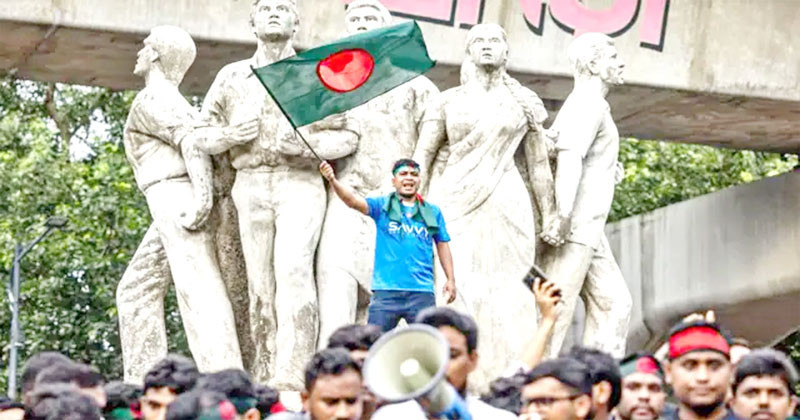
Students and ordinary citizens challenged Ms. Hasina’s government in July 2024. The killing of university student Abu Sayed in Rangpur on July 16 became a turning point. His death intensified the movement and strengthened demands for Ms. Hasina’s removal. After July 31, protesters called August 1 “July 32” and later August 5 “July 36”, the day Ms. Hasina fell and fled the country. No political party organised the July uprising. Students and ordinary citizens led the movement across the country. The established opposition’s earlier failures highlighted this reality. On October 28, 2023, police dispersed the BNP’s massive Paltan rally within minutes using blank shots, sound grenades and tear gas. Mr. Tarique Rahman’s slogan, “If you are afraid, you are finished; if you stand up, you are Bangladesh,” captured a spirit that the anti-discrimination movement eventually put into practice. Students and ordinary people confronted the state directly and succeeded where established opposition forces had failed.
Political groups must therefore not claim ownership of July or replace its frontline fighters with their own narratives. At a state ceremony marking the uprising’s second anniversary, a documentary reportedly failed to properly highlight frontline fighters such as Abu Sayed. Mentioning Mr. Tarique Rahman’s role in announcing the “one-point” movement also sparked controversy and prompted foreign diplomats to leave the venue. Such actions diminish the dignity of July and distort its history.
The Common Goals of 1971, 1975 and 2024
We must not place July on the opposite side of 1971. Doing so divides the nation through competing historical narratives and prevents Bangladesh from completing the political objectives of independence. Ordinary people have repeatedly made the greatest sacrifices for Bangladesh’s political and economic liberation. Meanwhile, ruling and opposition parties, oligarchs and elites have often competed for power and protected vested interests. This struggle for political control threatens national unity and economic progress.
The Threat of Political Division
Bangladesh now faces another danger in the political divisions emerging after July. The country must not replace one form of authoritarianism with another. BNP, Jamaat, NCP and other political forces must reject intolerance and violence. Political activists who attack opponents or demand another uprising before political stability develops could undermine the very movement that brought change. Although the Awami League has lost power, it retains substantial financial resources accumulated during its years in government. It may use those resources to preserve its political existence and seek rehabilitation. Bangladesh therefore needs national unity and political stability to prevent authoritarian politics from returning.
India also remains a major factor in Bangladesh’s political crisis. For decades, Indian political, economic and cultural influence has shaped Bangladesh’s internal politics, including its bureaucracy, media and cultural narratives. Bangladesh can overcome excessive external influence only by strengthening its national and cultural identity while protecting its pluralistic and democratic traditions. The July uprising created an opportunity to build a Bangladesh capable of defending its sovereignty and national interests.
Shaheed Sharif Osman Hadi’s political message reflected this national and cultural consciousness. His killing and allegations that his killers received shelter in India have intensified concerns about external interference. Such conflicts could be exploited by forces seeking to divide Bangladesh and weaken the spirit of July. Bangladesh has already experienced the consequences of political division, and continued instability could create opportunities for external forces to expand their influence.
Protecting the Spirit of July
Bangladesh must not allow political parties to turn July into another source of division. The people created the uprising, and political parties must respect its original spirit. The government must resolve political disagreements over the implementation of the July Charter and the referendum. Political leaders must prevent violence, intolerance and attempts to monopolise the history of the movement. Bangladesh must now complete the unfinished work of independence by protecting its sovereignty, establishing genuine democracy and building a state free from discrimination. National unity and political stability are essential.
The spirit of 1971 lives in the people’s democratic aspirations, and the July uprising renewed those aspirations. Bangladesh must now transform that spirit into lasting democratic institutions and a just political order.