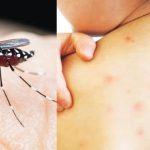

Measles and Dengue Outbreaks Out of Control

At the start of the year, measles-rubella infections took a severe turn. As the death rate, particularly among children, suddenly rose to an alarming level, allegations emerged in media discussions about the previous interim government’s negligence in implementing the measles vaccination program. However, it is not possible to manage a worsening situation by dwelling on the past or on past successes and failures. Although the previous government is being blamed for the rise in measles cases in the country, those currently responsible in government have also failed to take the necessary steps to address and overcome the situation. Even after more than 6 months since the elected BNP government took office, the procession of deaths from the measles-rubella virus has not stopped.
A report published last Wednesday shows that the number of measles deaths in the country has crossed one thousand. Most of these deaths are children. Children’s lives are being cut short by an invisible viral disease even before they have had the chance to grow up in the light and air of this world. This is a matter of concern for the entire society and state. On the other hand, while the death rate from dengue infection has somewhat decreased, the situation remains concerning. In 2023, 1,705 people died from dengue infection in the country. In 2024, 575 people died from dengue, and last year 413 died. Although the dengue infection rate through August this year was somewhat lower compared to previous years, it has again begun rising alarmingly since the start of September. On September 8 alone, reports emerged that more than 1,500 people were hospitalized with dengue and 9 people died in a single day.
Although the realities of children’s measles-rubella infections and dengue cases are entirely different, in both cases the picture of negligence and failure to take effective action by the relevant government departments or authorities is clear. There is no longer any room to shift blame for the failure of the child vaccination program onto the previous government. Likewise, there is no reason the government’s adopted programs to combat the Aedes-mosquito-borne dengue outbreak could not have been implemented. A published report indicates that dengue is on the rise in certain areas under Dhaka South City Corporation. When the BNP government took office, emphasis was placed early on on effective measures for measles outbreak control, treatment, and dengue prevention. Directions were issued for Dhaka North and South City Corporations to conduct cleanliness drives in areas identified as breeding grounds for dengue-carrying Aedes mosquitoes, sewer lines, wetlands, institutions, and residences.
After more than 6 months of the BNP government, the picture of increasing dengue and measles outbreaks across Dhaka and the rest of the country shows that the government’s routine initiatives to curb these outbreaks have not been particularly effective. Given the experience and changed realities, more sustainable and effective initiatives must be taken to prevent measles infection and dengue outbreaks. The outbreak of measles and dengue infections cannot be called a natural disaster. Over the past two decades, the country reaped the benefits of a fully successful measles vaccination program covering all children from 9 months to 10 years of age. The negligence or lapses in the vaccination program during the interim government’s tenure have tarnished that success.
The fact that measles-related deaths this year have exceeded one thousand can be described as a measles epidemic. Such heartbreaking incidents of children dying in hospitals cannot normally be accepted. A report by the international media outlet Reuters states that Bangladesh is currently experiencing the world’s largest measles outbreak, and that such measles deaths have never occurred in Bangladesh before. Those responsible cannot avoid accountability by simply placing blame on the previous government. Instead of adopting a science-based program grounded in proper statistics to combat the measles outbreak, the government has failed to reduce measles infections by emphasizing unplanned initiatives.
While 6 months is not sufficient time for the government to control such an outbreak, and while the benefits of the two Dhaka city corporations’ three-month cleanliness drives, mosquito-control efforts, and public awareness campaigns have been reflected in the steady decline in dengue cases over recent years, the deaths of 9 people from dengue in a single day this week are an ominous signal for our public health. Children are paying the price for faulty statistics in the special measles vaccination program for children aged 6 months to 5 years, which began last April. It is estimated that at least 4.6 million children have been left off the vaccination list under this program.
As a data point, while 22.6 million children of the same age group were included in the Vitamin A campaign last June, only 18,015,000 (1 crore 80 lakh 15 thousand) children were included in the measles vaccination program. If millions of children remain outside the government vaccination program due to faulty statistics, and hundreds of children die from measles as a result, the relevant department must bear responsibility for this. On one hand there is the responsibility for miscalculation in the vaccination program, and on the other, a severe lack of adequate facilities for treating measles and dengue in hospitals across Dhaka and the rest of the country is glaringly evident. Through an impartial review of the overall situation, the government must take effective action on an urgent or priority basis.