Muslim Candidates Make Strong Gains in US Elections: 37 Win
Muslim candidates have made significant gains in the 2026 US midterm elections, with at least 37 winning across different states. Their success in Congress, state legislatures and local government positions reflects the growing participation and representation of Muslims in American politics.
Among the winners and candidates leading in the polls, eight are heading to Congress. One has been elected to the Senate and seven to the House of Representatives. In addition, 27 Muslim candidates have won or are leading in state legislative races, while two others have secured victories or are leading in judicial and county-level positions.
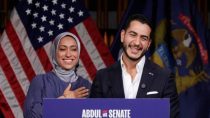
Michigan recorded the biggest success for Muslim candidates in this election. Democratic candidate Abdul El-Sayed defeated Republican candidate and former Congressman Mike Rogers in the state’s Senate race. With this victory, he has become the first Muslim elected to the US Senate.
The 42-year-old Mr. El-Sayed is a physician and public health expert. He previously served as director of Michigan’s Department of Health. His campaign focused on ensuring healthcare for ordinary people, reducing medical expenses, curbing corporate influence and opposing unconditional US military aid to Israel.
Mr. El-Sayed faced various political attacks over his religious identity during the campaign. President Donald Trump and several Republican leaders even accused him of having links to the Muslim Brotherhood. However, no evidence was found to support the allegations, which Mr. El-Sayed also rejected. Democrats criticised the remarks as Islamophobic political campaigning. Despite the controversy, he secured victory.
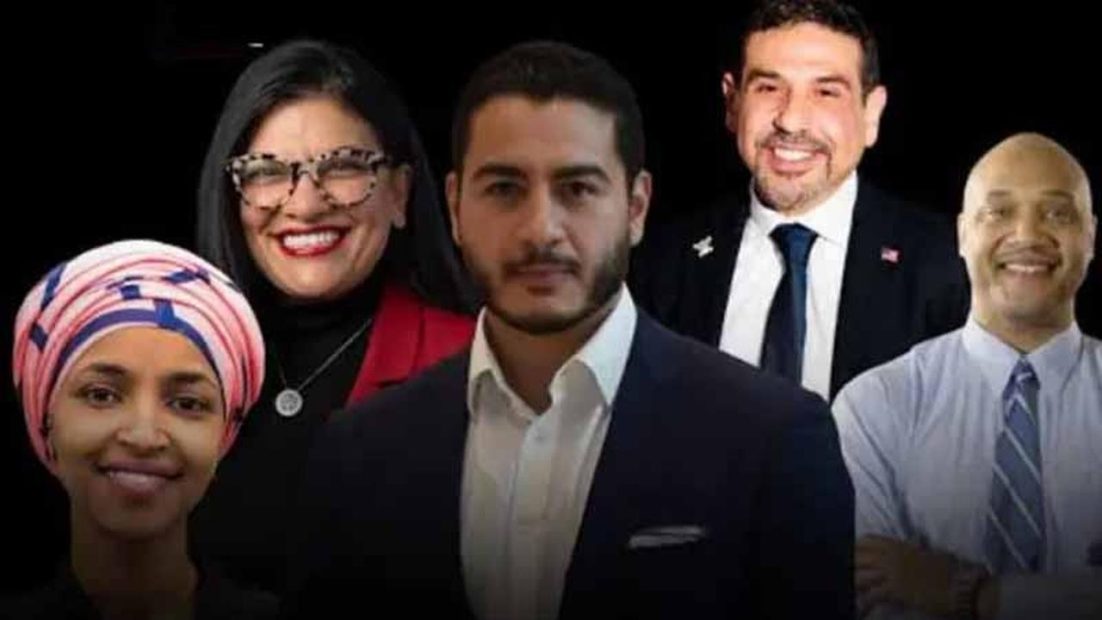
Muslim candidates also performed well in House of Representatives races. Ilhan Omar from Minnesota, Rashida Tlaib from Michigan, André Carson from Indiana and Lateefah Simon from California were re-elected.
Adam Hamawy won from New Jersey’s 12th Congressional District, becoming the state’s first Muslim member of Congress. A physician by profession, Mr. Hamawy also served as a doctor in the US Army and took part in the Iraq War. During his campaign, he supported universal healthcare, reducing the burden of medical and student loans, and ending US military aid to Israel.
Daryleiza Avila Chevalier won from New York’s 13th Congressional District. She came into the spotlight after defeating longtime Congressman Adriano Espaillat in the Democratic primary. With her victory, she has become the first Latina Muslim woman elected to Congress.
Ayesha Wahab was elected to a full term from California’s 14th District. She had previously entered the House of Representatives through a special election in August.
Muslim candidates also achieved notable success in state legislatures. In Michigan, Abbas Alawieh, Alabas Farhat and Jalal Abdullah won or were leading in their respective races. Munira Abdullahi and Ismail Mohamed secured victories in Ohio.
In Illinois, Nabeela Syed flipped a Republican-held seat for the Democrats by defeating Republican candidate Darby Hills in the 26th State Senate District. Meanwhile, Abdelnasser Rashid retained his seat in the state House of Representatives. Mariam Saad Bazzi was leading in the Michigan Court of Appeals election.
Omar Fateh and Zaynab Mohamed won in Minnesota. Mahmoud Noor and Samakab Hussein were elected unopposed. In Oregon, State Senator Kayse Jama retained his seat unopposed. However, Nafisa Fai was trailing Pam Treece in the Washington County chair election. Meanwhile, Osman Salahuddin was leading with nearly 69 per cent of the vote in the House of Representatives race in Washington state’s 48th District.
Muslim candidates also made gains in the northeastern United States. Abeer Kawas was elected from New York’s 12th State Senate District, while Robert Jackson retained his seat unopposed. In Connecticut, Maryam Khan and Saud Anwar won their state Senate races. Medina Wilson-Anton in Delaware and Tarik Khan in Pennsylvania were re-elected to their respective legislatures. Meanwhile, Md. Rahman was contesting for re-election in Connecticut’s 4th Senate District, but the result had yet to be finalised.
Muslim candidates also recorded victories in southern states. Ruwa Romman won in Georgia’s 7th State Senate District, while Sheikh Rahman was elected unopposed. Farooq Mughal also reclaimed his former seat from the Republicans.
Salman Bhojani and Suleman Lalani were re-elected in Texas. Letitia Plummer won the Harris County judge election, becoming the highest-ranking elected Muslim woman official in Texas. State Senator Mujtaba Mohammed retained his seat in North Carolina. Iman Jodeh was elected from Colorado’s 29th State Senate District, while Yusuf Hakeem was re-elected in Tennessee.
However, not all Muslim candidates emerged victorious. Republican candidate Juhdi Jasser lost in Arizona’s 4th Congressional District. Imtiaz Mohammad was defeated in Florida’s 103rd House District. Sharon El-Amin was also trailing incumbent Commissioner Irene Fernando in the Hennepin County Commission race in Minnesota. Results in several other constituencies remained undecided as vote counting continued.
Muslim Political Participation on the Rise
The growing participation of Muslims in American politics has been particularly evident in this election. According to the Council on American-Islamic Relations (CAIR), more than 160 Muslim candidates contested elections at the local, state and federal levels in 2026. The number was 145 in the 2022 elections.
The increase is not limited to the number of candidates. Their victories in several important contests also point to the growing influence of the Muslim community in American politics.
Civil rights, healthcare, humanitarian assistance and US military aid to Israel featured prominently in the campaigns of Muslim candidates. In particular, calls for a change in US policy over Israel’s military operation in Gaza became an important campaign issue for several candidates.
Overall, the success of Muslim candidates in this year’s midterm elections marks a significant development in political representation in the United States. Abdul El-Sayed’s victory in the Senate, in particular, has created a new chapter in the country’s history. However, the number of winners and candidates leading in the polls may change as vote counting and official results remain pending in several races.
Sources: Reuters, Anadolu Agency, Religion News Service, CBS News and Muslim Network TV.