Public Outrage Over Fresh ‘Militant’ Branding to Serve Banned Awami League’s Agenda
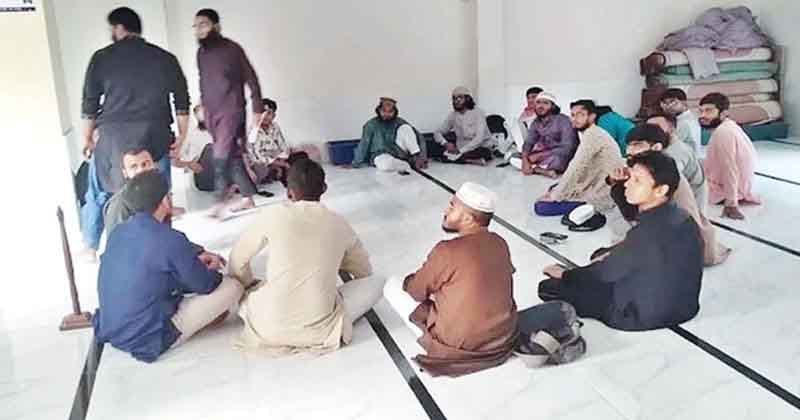
A recent crackdown targeting individuals based on their appearance at a Dhaka mosque has ignited widespread public outrage across Bangladesh. On Friday, law enforcement officers detained 23 ordinary citizens from the Tejgaon College Mosque in the capital’s Farmgate area while they were engaged in business discussions. Critics and social media users reacted furiously to the raid, alleging that the individuals were targeted solely for wearing caps and beards. Public indignation further intensified after police released 11 of the detainees late at night on bond while placing the remaining individuals on remand under the Anti-Terrorism Act without presenting concrete evidence, raising severe concerns over human rights violations.
The incident has drawn sharp criticism from civil society, with many viewing it as a resurgence of fabricated anti-militancy operations previously used by the former regime. Observers allege that accomplices of the ousted Awami League administration entrenched within the police force are executing scripts orchestrated by controversial former police official Mr. Monirul Islam from his refuge in India. Analysts suggest these staged operations serve a dual purpose: masking the current administration’s failure to contain rising domestic crime rates and furthering a foreign agenda to brand Bangladesh as a radicalized nation on the international stage to benefit the fallen political regime.
Human rights advocates and student leaders have strongly condemned the action, pointing out the administrative double standards and constitutional breaches. Mr. Mahmudul Hasan, a human rights activist, questioned the police’s motives, stating, ‘Is this drama an attempt to cover up the total collapse of law and order? At a time when murders and crimes are escalating nationwide, the police are attempting to mask their failures by branding innocent people as ‘militants’ instead of catching actual criminals. If they were truly offenders, why were 11 of them released on bond?’ Similarly, student Mr. Ariful Islam remarked that sending ordinary citizens to remand on baseless pretexts proves accomplices of fascism remain comfortably entrenched within the administration.
Expressing deep concern over foreign influence and political exploitation, commentators warned against the unchecked authority of certain law enforcement figures. Mr. Tarek Monowar highlighted the geopolitical nexus, noting, ‘When controversial former official Mr. Monirul Islam sends messages while sitting in Indian media and social platforms, and the domestic police begin acting exactly according to that script, it leaves no doubt about how deep this conspiracy runs.’ He added that specific officials are continuing a long-standing strategy to politically exploit Bangladesh by portraying it as an extremist state to global audiences, compromising the nation’s international standing.
Demands are mounting rapidly for immediate administrative reform and the removal of compromised personnel from public service to prevent further instability. Educator Ms. Nasrin Sultana stated, ‘In an independent country, detaining people merely for sitting in a mosque or wearing caps and beards is completely unacceptable. Accomplices of mass murderers are engaging in these provocations to discredit the current government. The allies of autocracy within law enforcement must be identified and dismissed immediately.’ Security analysts warn that unless prompt investigations are launched to identify the responsible officers, such arbitrary detentions will exacerbate the security crisis and spark broader public unrest.