Safe Water Crisis in the Southern Region and Sustainable Solutions- 3
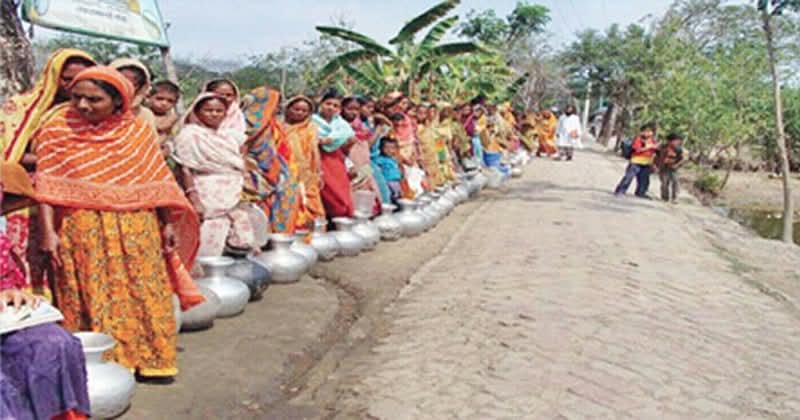
Solar-powered Reverse Osmosis (RO) technology is emerging as a promising solution to combat the acute safe drinking water crisis across Bangladesh’s salinity-prone coastal belt. With abundant year-round sunlight and limited grid connectivity in remote coastal areas, operating RO treatment plants on solar energy can drastically cut electricity expenses. Integrating solar systems with battery storage and the national grid can further ensure uninterrupted water supply during cloudy weather or at night. Setting up community-based, medium-sized plants at the union or village-cluster level could make safe drinking water affordable and accessible for marginalized coastal populations.
Such initiatives already have a promising foundation in the country, led by development organizations working in vulnerable districts. By 2022, the Palli Karma-Sahayak Foundation (PKSF) reported the installation of 70 RO plants across six coastal districts: Khulna, Satkhira, Bagerhat, Barguna, Patuakhali, and Pirojpur. A crucial advantage of these existing plants is that they collect and treat surface water from open reservoirs rather than depleting fragile underground aquifers. Experts note that there is substantial scope to expand and modernize these community-driven models to reach a much wider segment of the coastal population.
Despite its potential, experts warn that merely installing RO machinery will not guarantee a permanent fix without addressing key operational and environmental challenges. Regular cleaning and maintenance are critical because excessive mud, iron, and organic matter can quickly clog or damage expensive RO membranes. High initial setup costs, battery replacements, and hiring skilled technicians must also be factored into long-term budgets. Furthermore, discharging highly concentrated saltwater byproduct, or brine, into nearby rivers or farmland risks severe ecological damage, making proper disposal or industrial edible-salt production essential alongside remineralizing treated water with calcium and magnesium.
To navigate these technical hurdles, specialists emphasize the urgent need to integrate experienced local scientists into large-scale desalination projects. Researchers at the Institute of National Research and Services under the Bangladesh Council of Scientific and Industrial Research (BCSIR) possess vital expertise for this role. As a premier multidisciplinary government laboratory, the institute has earned ISO/IEC 17025 accreditation across 100 water parameters. Involving BCSIR scientists directly in project planning, water quality monitoring, and environmental impact assessments could help the government avoid costly technical failures and ensure long-term operational sustainability across coastal installations.
Modernizing water treatment through artificial intelligence (AI) and machine learning also offers transformative potential for lowering operational costs and extending equipment life. While AI cannot directly remove salt from water, it can analyze real-time data on salinity, temperature, pressure, flow rate, and power consumption to optimize plant performance. Predictive algorithms can forecast ideal production schedules, alert operators before membrane efficiency declines, and minimize energy waste. Collaborations among local universities, research institutes, and industries could help deploy these smart water-management systems across rural coastal treatment facilities.
However, water resource planners stress that desalination cannot serve as a one-size-fits-all solution for every corner of the southern region. Where geographically viable, traditional and alternative methods such as modern rooftop rainwater harvesting systems need substantial expansion to store water for the dry season. Purifying pond water using Pond Sand Filters (PSF) and storing treated rainwater underground through Managed Aquifer Recharge (MAR) technology also remain vital options. Combining rainwater harvesting, pond purification, sustainable groundwater management, and solar RO into an integrated strategy will provide a far more resilient defense against seasonal water scarcity.
Because climate change is steadily worsening salinity intrusion, stakeholders urge immediate, coordinated action rather than temporary relief measures. Engineering universities, research bodies, the Department of Public Health Engineering (DPHE), local governments, and non-governmental organizations must collaborate on long-term regional planning. Launching pilot solar-powered RO plants in heavily affected areas will allow authorities to evaluate production capacity, operational expenses, water quality, and ecological impacts before scaling up. Establishing clear data from these pilot projects will ensure that future investments are both financially viable and environmentally sound.
Ultimately, experts and rights advocates insist that safe drinking water must be treated as a fundamental human right rather than a commercial commodity. Technological advancements will fail if clean water remains unaffordable for low-income coastal residents who struggle daily against natural calamities. Ensuring targeted subsidies, low-cost distribution, local maintenance training, and routine quality testing must remain top priorities for policymakers. Guaranteeing that safe, affordable water reaches every impoverished household in the south through science-based planning and inclusive management is now an urgent national imperative.