Research and Awareness Campaigns Fail to Address Alarming Vape Addiction
Serious Risks of E-Cigarettes Hidden Behind Image of Sophistication
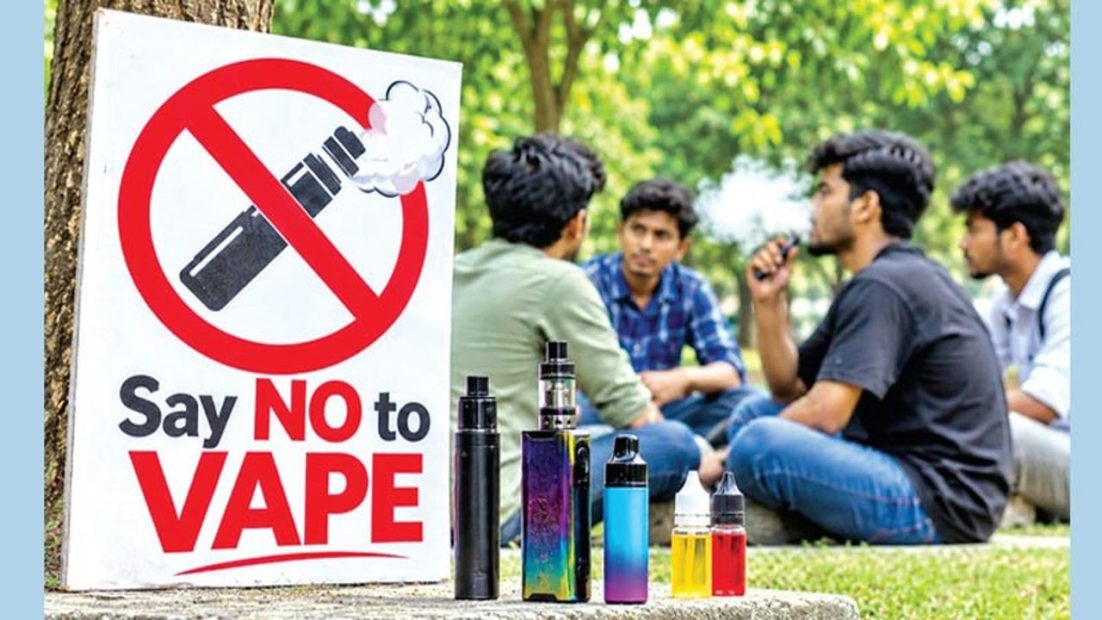
Young people are increasingly becoming addicted to e-cigarettes or vapes in the name of sophistication, modernity and fashion. Devices in hand, a variety of flavours and smoke-like vapour have become expressions of personality and modern lifestyle for many. These products are widely used at social gatherings, university campuses and among friends.
Attractive designs, fruit, chocolate and mint flavours, and the sight of vapour clouds are making vapes increasingly appealing to young people. Promotional content on social media is exposing them to serious risks. However, concerns are growing over the severe health hazards hidden behind this modern image.
Public health experts and anti-tobacco organisations say e-cigarettes are creating a new trap of nicotine addiction among young people. What begins as temporary curiosity or an attempt to fit in with friends can eventually turn into long-term dependence.
Experts say nicotine is one of the most harmful ingredients in e-cigarettes. It is highly addictive and can adversely affect the normal brain development of adolescents. In particular, it may impair concentration, memory, learning and emotional regulation.
In addition, harmful chemicals, heavy metals and ultrafine particles in vape aerosols can damage the lungs and pose long-term risks to the heart and respiratory system.
The Anti-Tobacco Media Alliance (ATMA), research and advocacy organisation PROGGA and the National Heart Foundation of Bangladesh, among others, have expressed concern over the growing use of e-cigarettes.
Farhana Zaman Liza, project coordinator of the Tobacco Control and Research Cell at Dhaka International University, told Inqilab that new tobacco and nicotine products, including e-cigarettes, vapes, heated tobacco products and nicotine pouches, were rapidly spreading alongside conventional tobacco products.
She said companies were promoting these products using around 16,000 flavours, with adolescents and young people as their primary targets. Yet, these products contain harmful chemicals that cause nicotine addiction and increase health risks.
She said 132 countries worldwide had regulated or banned e-cigarettes, with 46 countries imposing a complete ban.
Syeda Anannya Rahman, chief of WBB Trust, told Inqilab that tobacco companies were spending huge amounts of money to popularise new tobacco and nicotine products. Alongside promotional campaigns, they were attempting to influence public opinion through misleading research. In contrast, studies highlighting the health risks of these products received little publicity, she said.
PROGGA Executive Director ABM Zubair said the decision was a landmark step for public health, particularly in preventing nicotine addiction among young people.
Meanwhile, on April 1, 2026, ATMA, PROGGA, the National Heart Foundation and several other anti-tobacco organisations issued a joint statement expressing concern over an initiative to remove the provision banning e-cigarettes. They said such products put young people at risk of nicotine addiction and could undermine public health protection efforts.
Professor Dr Md Rafiqul Islam, chief adviser of the Anti-Tobacco Club at Jagannath University and a faculty member of its Sociology Department, said flavours and misconceptions had created a false perception among young people about tobacco products and electronic cigarettes or vapes.
He said e-cigarettes could contain nicotine and various harmful chemicals that might adversely affect physical health as well as brain development among young people. Attractive flavours, colours and modern designs were particularly being used to draw adolescents towards vaping, which was alarming for the future generation.
Highlighting the need for legal measures to curb the spread of e-cigarettes and vapes, Professor Dr Md Rafiqul Islam said the authorities concerned were not giving equal importance to conventional smoking and electronic cigarettes.
Although laws exist to control tobacco and tobacco products, effective regulation of e-cigarettes and vapes has not been ensured. Instead, these products are being portrayed as fashionable through various platforms, raising concerns about the future of young people, he said.
While e-cigarettes have been banned or strictly regulated in various countries, they have become readily available in Bangladesh, he said. He added that although the current government had enacted several laws at the beginning of its tenure, failure to introduce effective legislation banning e-cigarettes and vapes was deeply regrettable.
He said clear legislation was needed to regulate the production, import, marketing, sale and online promotion of vapes. The easy availability of online marketing was attracting many people to these products. Without legal measures to curb online promotion and accessibility, it would be difficult to effectively prevent their spread, he said, adding that responsible media could play an important role in this regard.
Aminul Islam Sujan, technical adviser of Vital Strategies, told Inqilab that nicotine in new tobacco and nicotine products caused addiction and harmed users’ health. Young people needed to be aware of the risks and speak out against tobacco companies’ tactics, he said.
He also said incidents of using the drug MDMB in e-cigarette liquids had begun to emerge. In this situation, young people should come forward to build pressure on the government to ban these products, he added.
Hamidul Islam Hillol, project director of the Bureau of Economic Research at the University of Dhaka, told Inqilab that imposing taxes on e-cigarettes and nicotine pouches as a means of legitimising these products could be self-destructive for the country.
He said creating a new market for addiction in the hope of short-term revenue could eventually impose a greater economic burden through rising healthcare costs and declining productivity.