This November 7: Tarique Rahman Reflects the Legacy of Shaheed Zia and Khaleda Zia
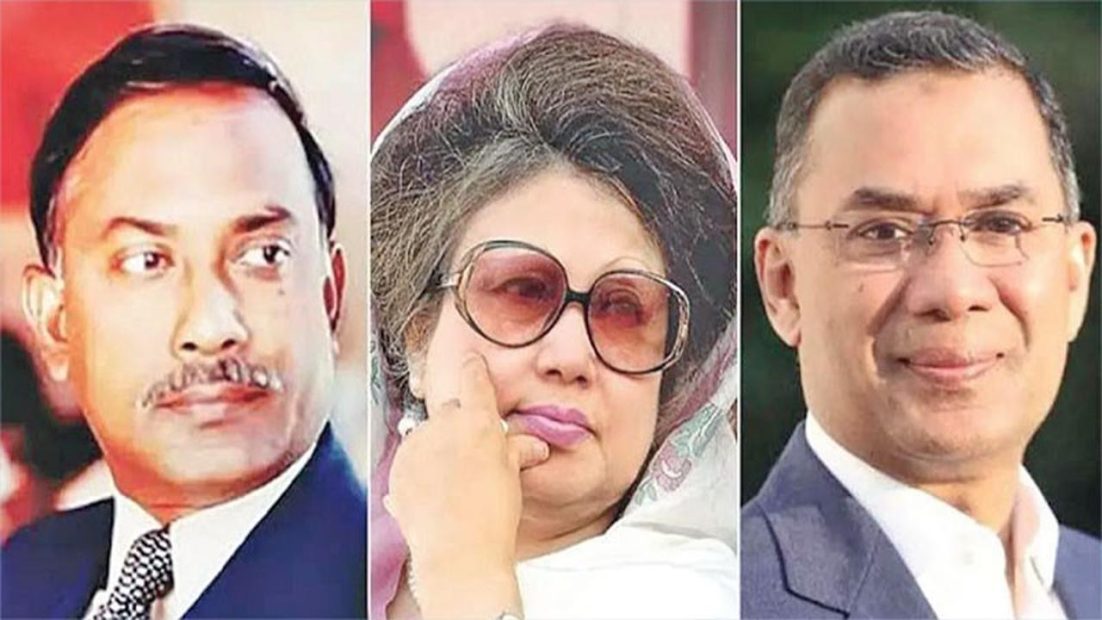
On Saturday, November 7, Prime Minister Tarique Rahman delivered four speeches and statements at four different venues to mark the historic Revolution and Solidarity Day. The first was his address to the nation on November 6 ahead of the occasion. The second, third and fourth were delivered at the Army Stadium, Manik Mia Avenue and a pre-rally gathering in Nayapaltan.
I have read these four speeches repeatedly and with great attention. I have closely followed Tarique Rahman’s political journey, from the tenure of Begum Khaleda Zia to his political activities in exile in London, his leadership of the party from abroad, the electoral victory and, finally, his activities and statements during his first eight months as prime minister.
There was a time when he used to sit at the Daily Dinkal office. I had several face-to-face discussions with him during that period and came to know him closely. Since his departure for London, however, I have had no opportunity to communicate with him.
After reading his four speeches, I have developed a firm belief that he has become much more mature as a politician. During his eight months in office, particularly through his remarks on November 7, he has presented himself as a thoughtful and experienced statesman. I also believe that the image of his father, Shaheed President Ziaur Rahman, has become increasingly visible in Prime Minister Tarique Rahman I will briefly explain the reasons behind these observations.
Shaheed Zia’s Politics Opened a New Horizon
The people of Bangladesh certainly wanted freedom from the brutality of the Pakistani military junta. However, they could never have imagined that Sheikh Mujibur Rahman would introduce a political system that, in the name of independence, would lead to subservience to India and, in the name of secularism, would promote a politics detached from religion.
The people’s vision of independence was different from the political direction pursued by Sheikh Mujibur Rahman. This marked a fundamental conflict between the people’s aspirations for freedom and the form of independence they eventually received.
Why Was Secularism Introduced All of a Sudden?
From the establishment of the Awami League in 1949 to the Proclamation of Independence in 1971, secularism was never mentioned in the party’s manifesto or election pledges. There was also no commitment to banning religious politics. Yet secularism was suddenly incorporated into the Constitution of 1972, and religious politics was banned.
The people of Bangladesh wanted to free themselves from Pakistan’s domination, not to come under Delhi’s control. However, after December 16, 1971, they were stunned to see what they considered a transfer of sovereignty from Pakistan to India. From that time, a slogan emerged: “We have left Pindi, but we will not go to Delhi.”
A similar sentiment, expressed in a different form, was later reflected in the words of the late national leader Khaleda Zia: “This country is neither Sikkim nor Bhutan; this is my Bangladesh.” On November 7 this year, Tarique Rahman echoed the same spirit, saying: “Neither Delhi nor Pindi, nor any other country; Bangladesh comes first.”
Countless people sacrificed their lives, and countless women lost their dignity during the Liberation War. They made these sacrifices for genuine independence. However, just three months after independence, in March 1972, Sheikh Mujibur Rahman signed a 25-year treaty with Indian Prime Minister Indira Gandhi aboard the pleasure vessel Mary Anderson on the Shitalakkhya River. The author describes it as a treaty of subservience to India.
J.N. Dixit, India’s first Deputy High Commissioner in Bangladesh and later its Foreign Secretary, provided significant details about the agreement in his book Liberation and Beyond. Dixit was aboard the Mary Anderson and was involved in the entire process of signing the agreement.
According to Dixit, Indira Gandhi was initially reluctant to sign such an agreement. However, she eventually agreed following repeated requests from Sheikh Mujibur Rahman. On November 7, Tarique Rahman made it clear through his statements that Bangladesh would no longer be a subordinate state.
Conspiracies Have Started Again
In his statements marking Sipahi-Janata Revolution Day, Prime Minister Tarique Rahman warned the people that conspiracies to undermine the country’s independence were once again underway. In this regard, he is following in his father’s footsteps.
The fall of Sheikh Mujibur Rahman on August 15, 1975, came against the backdrop of alleged subservience to India, the establishment of one-party BAKSAL rule, widespread looting and a devastating famine. The post-Mujib government was the first to begin official statements with “Bismillahir Rahmanir Rahim” and end them with “Bangladesh Zindabad”.
On August 3, 1975, Brigadier Khaled Mosharraf and Colonel Shafaat Jamil staged a counter-coup. During the coup, General Ziaur Rahman and his family were placed under house arrest. Before the coup, Khaled Mosharraf’s mother and brother, Rashed Mosharraf, took part in a procession in support of the Awami League, chanting the slogan “Joy Bangla”.
On the night of November 5, the BBC reported that a pro-India coup had taken place in Dhaka. To thwart what the author describes as a pro-India uprising, brave Bangladeshi soldiers rose up after midnight on November 6, in the early hours of November 7, against the possible return of India and the Awami League. Their first action was to free General Zia.
Although General Zia held the position of Deputy Chief Martial Law Administrator on November 7, he emerged as the central figure of power with the support of soldiers and civilians. During his tenure, the author argues, Ziaur Rahman completely broke the chains of subservience to India. He also set an exceptional example of honesty by rising above bribery and corruption in the eyes of the international community.
The author further alleges that India has launched a proxy war against Bangladesh by backing Sheikh Hasina and the Awami League. Against this backdrop, Tarique Rahman has warned the people that conspiracies have started again. He has urged them to remain alert so that Bangladesh does not once again become a subordinate state.
The Reflection of November 7 in Tarique Rahman
Through his speeches on November 7, Tarique Rahman has reflected not only the image of his father but also the qualities of Ziaur Rahman as a statesman. The author alleges that India has begun a new political game involving Sheikh Hasina. On one hand, it is encouraging its Awami League allies to resume arson attacks. On the other, attacks on the leading figures of the July uprising are part of what the author describes as a conspiracy to undermine the movement.
Against this backdrop, Prime Minister Tarique Rahman has linked the events of November 7, 1975, the 1990 mass uprising and the July 2024 uprising. By giving particular importance to the July uprising, he has strategically called on the people to unite against what he describes as Indian conspiracies.
July 2024 Revolution: A Victory Banner of November 7
A section of people is spreading the narrative that the BNP is ignoring the July uprising. Statements by some BNP lawmakers, including Fajlur Rahman of Kishoreganj, may have contributed to such confusion among the public.
However, just as Shaheed Zia brought both right-wing and left-wing political groups together under one platform and introduced them to his own political philosophy of Bangladesh nationalism, Tarique Rahman is also seeking to embrace the July uprising and bring others under its banner.
That is why, in his address to the nation on November 7, he said:
“Just as people from all walks of life took to the streets in 2024 to protect the independence of the country and its people, soldiers and civilians also united and took to the streets in 1975 to thwart all conspiracies against the country’s independence and sovereignty. Let our main pledge on this November 7 be that no one will ever again be able to take away the rights of the country and its people or turn Bangladesh into a subordinate state. National unity is essential to fulfil this commitment.”
Faith in Allah
Sheikh Mujibur Rahman banned religious politics in the Constitution while allowing socialist and communist political activities. The post-Mujib government in 1975 began its journey with the sacred phrase “Bismillahir Rahmanir Rahim”. The 1972 Constitution remained in force during the tenures of Khondaker Mostaq Ahmad, Khaled Mosharraf and Shaheed Ziaur Rahman.
However, Zia’s rise to power was not merely a change of government. It marked a fundamental transformation of the country’s state structure, political philosophy and national direction. While Sheikh Mujibur Rahman had banned religious politics and introduced secularism, Shaheed Ziaur Rahman brought about a major change in the country’s constitutional framework through the Fifth Amendment.
Through this amendment, he removed secularism from the fundamental principles of the state and added “Bismillahir Rahmanir Rahim” to the beginning of the Constitution. He also replaced Sheikh Mujib’s concept of socialism with the objective of establishing social and economic justice. Another landmark initiative of Shaheed Zia was the introduction of Bangladesh nationalism in place of Bengali nationalism.
The author argues that Bengali nationalism raised questions about the identity of people in West Bengal and the indigenous communities of Bangladesh. Through Bangladesh nationalism, Zia established a distinct national identity for the country, drawing a geographical and political distinction between the two Bengals while bringing indigenous communities under a broader Bangladeshi national identity.
Since taking charge of the BNP, Tarique Rahman has moved away from secularism and upheld the banner of Bangladesh nationalism. Many people in Bangladesh believe that, in future constitutional amendments, Tarique Rahman will uphold the preamble and fundamental principles introduced through his father’s Fifth Amendment, proving himself a worthy successor to his father.
The Pilkhana Massacre
Just one month and 20 days after Sheikh Hasina assumed power on January 5, 2009, 74 patriotic citizens, including 57 highly skilled army officers, were killed in the Pilkhana massacre on February 25 and 26. According to a report by General Fazlur Rahman, the Awami League and India were directly involved in the killings.
After coming to power, Tarique Rahman has not forgotten the brutal massacre at Pilkhana. In his speeches at different events on November 7, he described the incident as a planned massacre of army personnel and said it had undermined the dignity of the armed forces.
The people of Bangladesh expect that justice for the Pilkhana massacre will be ensured during Tarique Rahman’s tenure and that those involved in the conspiracy, both at home and abroad, will be brought to justice.
A Mature Politician and Statesman
I would like to conclude with the point I made at the beginning. This November 7, Tarique Rahman emerged as a mature politician, a thoughtful and experienced statesman, and a leader carrying forward the ideals of Shaheed Ziaur Rahman and national leader Khaleda Zia.
Email: journalist15@gmail.com