Jamuna’s Worsening Navigability Crisis Threatens Livelihoods, Agriculture and transport
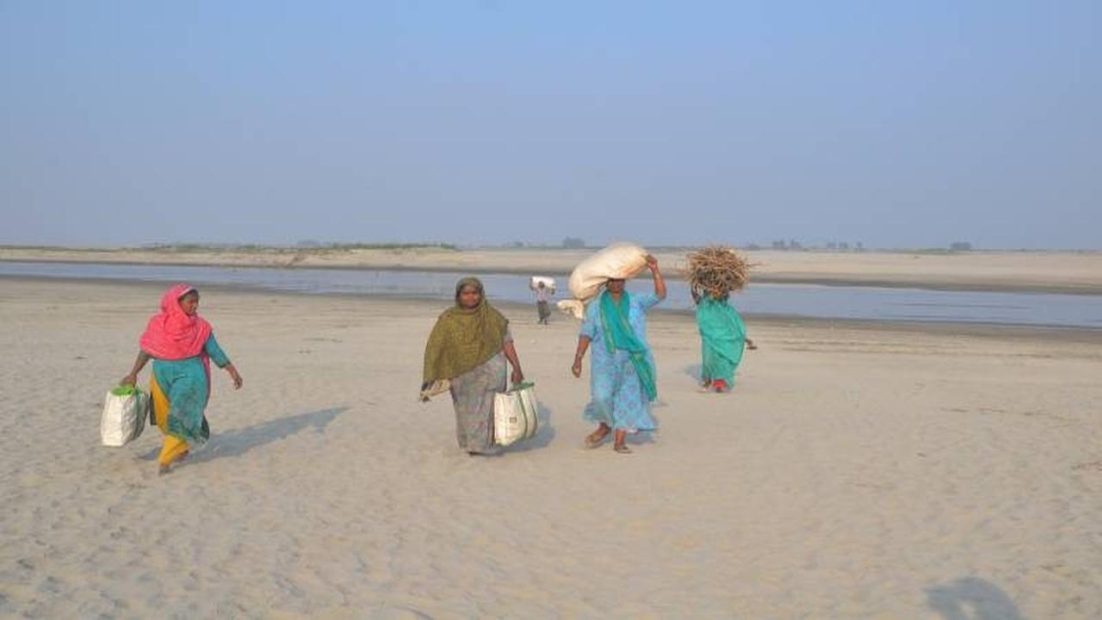
The Jamuna River is facing a severe navigability crisis at the beginning of the dry season in Sarakandi, Sonatala and Dhunat upazilas of eastern Bogura. The river’s water level has dropped sharply, exposing numerous sandbars and bringing boat services to a halt. As a result, life in the riverine areas has become increasingly difficult, while transporting agricultural produce has also become a major challenge.
In some parts of the river, the water is only knee-deep, while in others it reaches just the ankles. The water level has remained extremely low for the past several months, worsening the navigability crisis in the three upazilas. With boat movement disrupted, people in remote char areas are now travelling on foot.
Meanwhile, there are expectations that Prime Minister Tarique Rahman may visit different parts of the Jamuna River to assess whether dredging these sections at a cost of around Tk 1,600 crore could restore normal water flow throughout the year. He is expected to inspect the areas during his visit to Bogura this month.
According to sources at the Bangladesh Water Development Board (BWDB), a project proposal worth around Tk 1,600 crore for dredging the river and preventing riverbank erosion has been submitted to the directorate. If approved, the project could help prevent erosion in Dhunat, Sarakandi and Sonatala upazilas of Bogura. Dredging would also improve the river’s navigability.
Farmers in the char areas said they cultivate peanuts, maize, lentils, Boro rice and sweet potatoes during the dry season to earn their livelihoods. However, due to the lack of roads, they have to carry agricultural produce on their shoulders to transport it to markets. The local administration said construction of a river port in Sarakandi was underway. Once operational, the port would ensure year-round dredging of the waterways.
Farmers struggle to transport crops
The Jamuna River in Sarakandi has long faced navigability problems during the dry season. However, the situation is deteriorating day by day. Extensive sandbars have emerged across the entire areas of four unions and parts of another four unions. Vehicles cannot move across these sandy stretches, leaving farmers struggling to transport their produce.
Rafiqul Islam, a resident of Partitparal village in Sarakandi upazila, said horse-drawn carts were being used to transport agricultural produce and other goods. Farmers have to pay higher fares to transport their crops to markets using these carts. They also depend on horse-drawn carts to carry fertilisers and pesticides to their fields.
This is increasing production costs, while farmers are also paying additional transport charges when selling their produce. He said crops worth nearly Tk 1,000 crore, including maize, chilli, sweet pumpkin and onions, had been produced in the char areas during this year’s Rabi season. Farmers have no alternative but to transport all these crops using horse-drawn carts.
Abdul Kafi Mondal, chairman of Sarakandi Sadar Union, said farmers had to pay Tk 120 to transport a sack of chilli over a distance of three kilometres by horse-drawn cart. After reaching the riverbank, they had to pay additional fares to transport the produce to markets using battery-powered autorickshaws.
He said the government should consider constructing special roads across the sandbars. Such roads would allow battery-powered autorickshaws to operate and reduce agricultural production costs. This could also help keep the prices of different vegetables affordable for consumers.
Meanwhile, several ferry ghats in Sarakandi have been closed due to the navigability crisis. These include Altaf Ali’s ferry ghat in Partitparal village, Hasnapara, Nijbalai, Dighapara and Charalkandi ferry ghat. People now have to walk several miles across the riverbed to reach their agricultural land.
Alamgir Hossain, a farmer from Char Batiar in Sadar Union, said he had cultivated various crops, including chilli, on 10 bighas of land this year. Large quantities of maize and other crops are also being cultivated in the char areas.
However, the lack of water during the dry season has halted boat movement. Farmers are now forced to transport their produce using horse-drawn carts at several times the usual cost. He said transporting a sack of chilli over three kilometres by horse-drawn cart costs Tk 120. Farmers then have to pay another fare to transport the produce to markets by autorickshaw. As a result, their profits are declining.
Tk 1,600 crore dredging proposal awaiting approval
Nazmul Haque, supervising engineer of the Bogura Water Development Board, said a project proposal worth around Tk 1,600 crore for dredging the river and preventing riverbank erosion had been submitted to the directorate. He said approval of the proposal would help prevent riverbank erosion in Dhunat, Sarakandi and Sonatala upazilas. Dredging would also restore the Jamuna’s navigability and improve water flow.